






Manila Bulletin
 Philippines
National
'Hindi nagpadaig': Diokno stands ground vs Cayetano on bank records debate
Philippines
National
'Hindi nagpadaig': Diokno stands ground vs Cayetano on bank records debate
Philippines
National
'Hindi nagpadaig': Diokno stands ground vs Cayetano on bank records debate
'Hindi nagpadaig': Diokno stands ground vs Cayetano on bank records debate
Published Jul 21, 2026 12:06 pm


At A Glance
- Rep. Chel Diokno rebuts Sen. Alan Peter Cayetano, asserting that unexplained wealth from Sara Duterte's earlier years in office is relevant to the impeachment case.
- Diokno argues the Supreme Court's statement on incumbency is obiter dicta and not binding, emphasizing that integrity must be judged from a public official's first day in service.
- The Senate impeachment court grants the prosecution's subpoena request for Duterte's bank and tax records, strengthening their case on alleged disproportionate wealth.
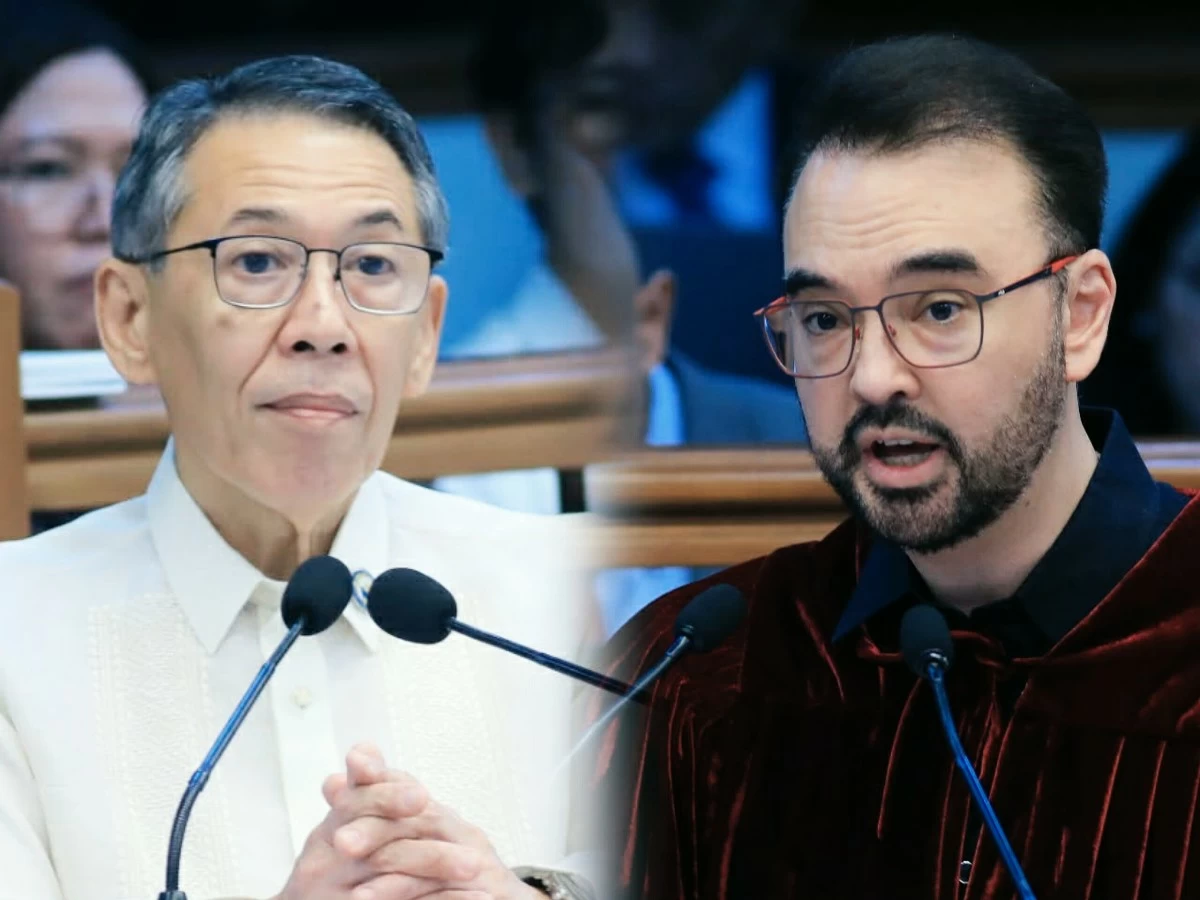
Akbayan Party-list Rep. Chel Diokno (left), Senator Alan Peter Cayetano (Senate PRIB)
Akbayan Party-list Rep. Chel Diokno's calm but stern rebuttal of the points raised by Senator-judge Alan Peter Cayetano--a perceived supporter of Vice President Sara Duterte--has become a highlight of the House prosecutor's successful bid in the oral arguments of the Senate impeachment court.
Diokno--currently the toast of the prosecution team thanks to the Senate impeachment court's ruling on late Monday afternoon, July 20 to grant its subpoena request for the bank and tax records of impeachment trial respondent Duterte--rejected Cayetano's assertion financial records from Duterte’s years as Davao City vice mayor and mayor may fall outside the scope of the impeachment trial.
“I would have to respectfully disagree. Ang pinag-uusapan po natin kasi dito ay (what we're talking about here is) betrayal of public trust, and I think it's very clear that when we speak of betrayal of public trust, essentially we are looking at whether the public official is fit or unfit to continue in service,” Diokno said as he was being quizzed by Cayetano.
The prosecution had earlier pointed out that Duterte’s net worth saw a whopping elevenfold jump from P7 million in 2007, when she was Davao City vice mayor, to P88.4 million in 2024 as Vice President.
Cayetano, himself a lawyer and ex-Senate President, repeatedly pressed the prosecution on whether evidence predating Duterte’s vice presidential term could be examined. He invoked a Supreme Court (SC) statement that an impeachment charge must relate to the incumbency of the official.
Duterte was elected as the second highest official of the land in 2022.
“Kung siya po ay nakapag-amass ng unexplained wealth noong siya ay vice mayor o mayor na umaabot sa bilyong-bilyones (If he amassed unexplained wealth when he was vice mayor or mayor amounting to billions upon billions), I think that would have a very big impact on the court's decision whether that person should continue in office or whether they are fit to have that office,” Diokno said.
The subpoena request covers bank and financial records from periods before Duterte became Vice President, which the prosecution wants to compare with her reported lawful income and declared assets.
“The court said the basis of the charge must relate to the incumbency of the impeachable official. Which does not rule out the presentation of evidence of acts or omissions that occurred before the person became unimpeachable,” explained the lawyer-legislator.
Obiter dicta
Diokno also disputed Cayetano’s reading of Duterte v. House of Representatives, and maintained that the statement cited by the senator-judge was not necessary to the SC’s resolution of the case.
“Yun pong nabanggit nila, that the basis of any charge must relate to the incumbency of the official, in my view that is obiter dicta, not necessary for the decision,” Diokno explained.
(That which they mentioned, that the basis of any charge must relate to the incumbency of the official, in my view that is obiter dicta, not necessary for the decision.)
Obiter dicta means “said in passing”. In law, it refers to remarks or opinions made by a judge that are not essential to deciding the case and therefore not legally binding.
He said the ruling principally addressed the mode of initiating impeachment and the constitutional one-year prohibition, and not the question on if evidence from an official’s earlier years in government may be presented in a later trial.
“At no time in that case was it ever a fact in issue about the mode of impeachment that is involved in our case today,” Diokno stressed.
Even if the statement were treated as binding, Diokno said the prosecution had met the test because alleged unexplained wealth bears directly on Duterte’s integrity and continued fitness for office.
“Even if we assume, Your Honor, that that is not obiter, the statement that the basis of the charge must relate to the incumbency of the impeachable officer, we submit that that still applies, and we have satisfied that test,” he maintained.
“As I mentioned in my opening statement, integrity cannot be divided, hindi po pwedeng biyak-byakin ang integridad,” he added.
Diokno said an unexplained wealth inquiry necessarily begins from a public official’s first day in government because the court must determine whether accumulated assets are manifestly disproportionate to lawful income.
“If we are speaking about unexplained wealth, Your Honor, I have repeatedly cited the cases of the Supreme Court that provide that we must look from the reckoning of the first day of service of that public official, look at all the income that person has amassed, and determine whether it is manifestly disproportionate to the lawful income that he has reported,” he said.