ADVERTISEMENT

Baguio raises garbage fees to boost waste reduction efforts

Published Jul 21, 2026 04:39 pm
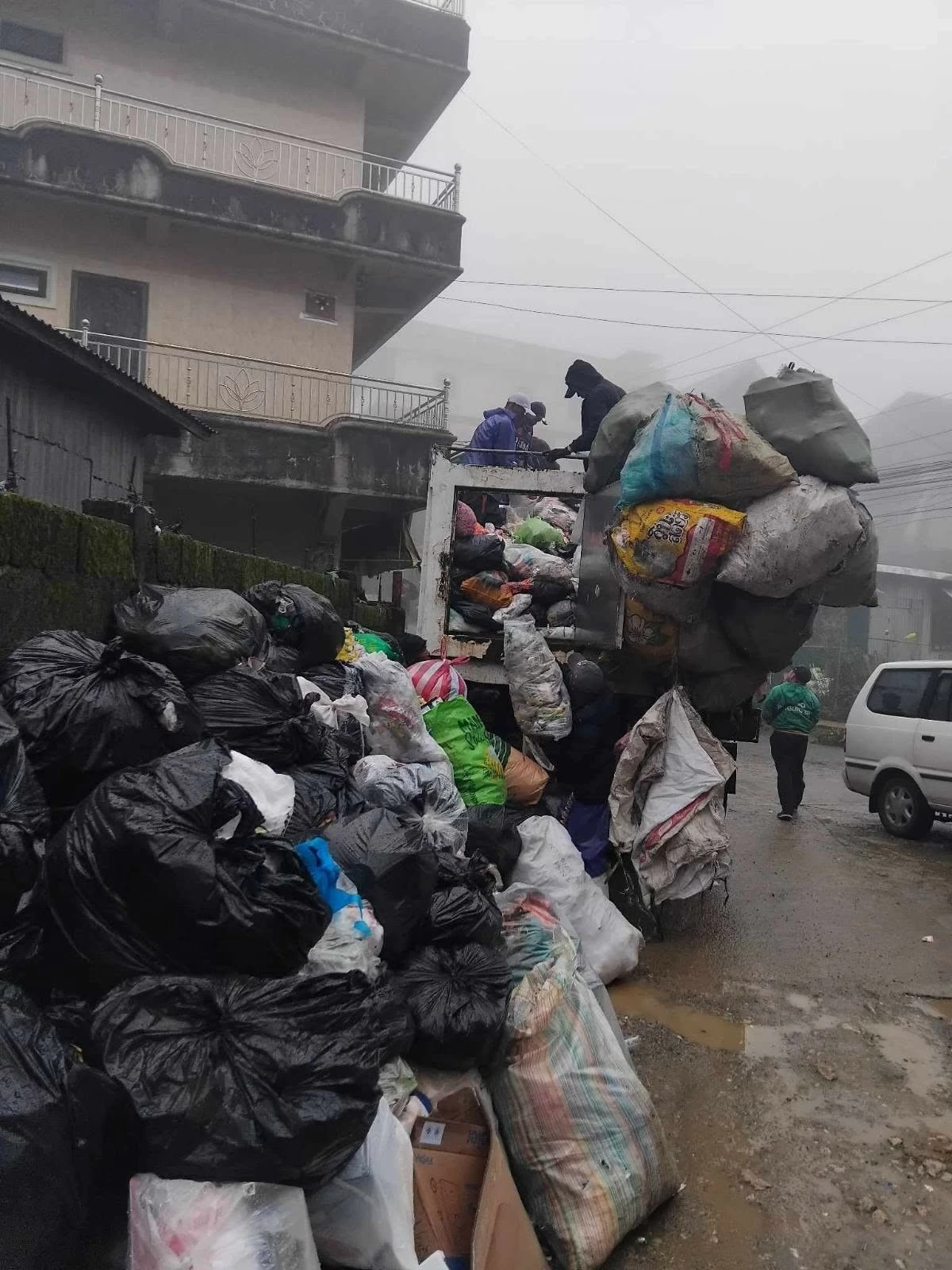
GARBAGE collectors at work in Baguio City (Baguio City PIO FB)
BAGUIO CITY – The city government has approved an increase in garbage fees to help fund its 10-year Solid Waste Management Plan and encourage residents and businesses to reduce waste generation.
The City Council approved on final reading Ordinance 69-2026 on July 13, which sets new monthly garbage fees for households, commercial establishments, institutions, business enterprises, and other waste generators covered by the city's garbage collection system.
The new fees range from P200 to P1,200 per month, depending on the classification, waste capacity, and clientele of the generator. Households will pay P75 monthly.
Association of Barangay Councils President Councilor Rocky Aliping, one of the ordinance's authors, said the fee adjustment is needed to encourage greater participation in waste reduction efforts.
"It is about time that we adjust the garbage fees to encourage everyone to exert more effort to minimize their garbage," Aliping said.
The ordinance provides for an automatic 10 percent increase in fees every three years starting in 2027, subject to review and further adjustments by the City Council based on waste management strategies and operational needs.
Taxpayers who pay their annual garbage fees on or before April 20 will receive a 10 percent discount, including business owners who settle their fees during business permit renewal.
Late payments will be charged a 25 percent surcharge and two percent monthly interest until fully paid.
The ordinance replaces Section 32 of Tax Ordinance No. 2000-01 and aligns the garbage fee schedule with the city's approved Solid Waste Management Plan.
It also seeks to strengthen waste reduction, recycling, and sustainable garbage collection and disposal programs in compliance with Republic Act No. 9003, or the Ecological Solid Waste Management Act of 2000.
The city currently spends about P250 million annually on waste management, with billions already spent over the decades to address its garbage problem.
Mayor Benjamin Magalong on Tuesday said the city's intensified waste segregation campaign has helped reduce the volume of garbage transported to sanitary landfills.
"We have reduced the garbage we bring to the lowland, from an average of 220 tons a day, there are days when we are down to 170 tons but most of the time, we are at 190 tons," Magalong said in a mix of English and Filipino.
The city transports residual waste to engineered sanitary landfills in Region 1 or Region 3, incurring transportation and tipping fees based on the volume disposed.
Magalong said the reduction reflects progress in the city's recycling, reuse, and repair initiatives aimed at minimizing waste generation.
The city also plans to recover 60 percent of plastic waste through a circular economy program, with materials recovery facilities selling recovered plastics directly to manufacturers.
The initiative is expected to increase income for barangays managing the facilities.
Magalong said the long-term goal is to reduce waste generation to 20 percent through the expansion of the city's circular economy program. (PNA)

Related Tags

Baguio Garbage Mayor Benjamin Magalong
ADVERTISEMENT
.most-popular .layout-ratio{ padding-bottom: 79.13%; } @media (min-width: 768px) and (max-width: 1024px) { .widget-title { font-size: 15px !important; } }

{{ articles_filter_1561_widget.title }}

.most-popular .layout-ratio{ padding-bottom: 79.13%; } @media (min-width: 768px) and (max-width: 1024px) { .widget-title { font-size: 15px !important; } }

{{ static_articles_1562_widget.title }}

.most-popular .layout-ratio{ padding-bottom: 79.13%; } @media (min-width: 768px) and (max-width: 1024px) { .widget-title { font-size: 15px !important; } }

{{ articles_filter_1563_widget.title }}

{{ articles_filter_1564_widget.title }}

.mb-article-details { position: relative; } .mb-article-details .article-body-preview, .mb-article-details .article-body-summary{ font-size: 17px; line-height: 30px; font-family: "Libre Caslon Text", serif; color: #000; } .mb-article-details .article-body-preview iframe , .mb-article-details .article-body-summary iframe{ width: 100%; margin: auto; } .read-more-background { background: linear-gradient(180deg, color(display-p3 1.000 1.000 1.000 / 0) 13.75%, color(display-p3 1.000 1.000 1.000 / 0.8) 30.79%, color(display-p3 1.000 1.000 1.000) 72.5%); position: absolute; height: 200px; width: 100%; bottom: 0; display: flex; justify-content: center; align-items: center; padding: 0; } .read-more-background a{ color: #000; } .read-more-btn { padding: 17px 45px; font-family: Inter; font-weight: 700; font-size: 18px; line-height: 16px; text-align: center; vertical-align: middle; border: 1px solid black; background-color: white; } .hidden { display: none; }
function initializeAllSwipers() { // Get all hidden inputs with cms_article_id document.querySelectorAll('[id^="cms_article_id_"]').forEach(function (input) { const cmsArticleId = input.value; const articleSelector = '#article-' + cmsArticleId + ' .body_images'; const swiperElement = document.querySelector(articleSelector); if (swiperElement && !swiperElement.classList.contains('swiper-initialized')) { new Swiper(articleSelector, { loop: true, pagination: false, navigation: { nextEl: '#article-' + cmsArticleId + ' .swiper-button-next', prevEl: '#article-' + cmsArticleId + ' .swiper-button-prev', }, }); } }); } setTimeout(initializeAllSwipers, 3000); const intersectionObserver = new IntersectionObserver( (entries) => { entries.forEach((entry) => { if (entry.isIntersecting) { const newUrl = entry.target.getAttribute("data-url"); if (newUrl) { history.pushState(null, null, newUrl); let article = entry.target; // Extract metadata const author = article.querySelector('.author-section').textContent.replace('By', '').trim(); const section = article.querySelector('.section-info ').textContent.replace(' ', ' '); const title = article.querySelector('.article-title h1').textContent; // Parse URL for Chartbeat path format const parsedUrl = new URL(newUrl, window.location.origin); const cleanUrl = parsedUrl.host + parsedUrl.pathname; // Update Chartbeat configuration if (typeof window._sf_async_config !== 'undefined') { window._sf_async_config.path = cleanUrl; window._sf_async_config.sections = section; window._sf_async_config.authors = author; } // Track virtual page view with Chartbeat if (typeof pSUPERFLY !== 'undefined' && typeof pSUPERFLY.virtualPage === 'function') { try { pSUPERFLY.virtualPage({ path: cleanUrl, title: title, sections: section, authors: author }); } catch (error) { console.error('ping error', error); } } // Optional: Update document title if (title && title !== document.title) { document.title = title; } } } }); }, { threshold: 0.1 } ); function showArticleBody(button) { const article = button.closest("article"); const summary = article.querySelector(".article-body-summary"); const body = article.querySelector(".article-body-preview"); const readMoreSection = article.querySelector(".read-more-background"); // Hide summary and read-more section summary.style.display = "none"; readMoreSection.style.display = "none"; // Show the full article body body.classList.remove("hidden"); } document.addEventListener("DOMContentLoaded", () => { let loadCount = 0; // Track how many times articles are loaded const offset = [1, 2, 3, 4, 5, 6, 7, 8, 9, 10]; // Offset values const currentUrl = window.location.pathname.substring(1); let isLoading = false; // Prevent multiple calls if (!currentUrl) { console.log("Current URL is invalid."); return; } const sentinel = document.getElementById("load-more-sentinel"); if (!sentinel) { console.log("Sentinel element not found."); return; } function isSentinelVisible() { const rect = sentinel.getBoundingClientRect(); return ( rect.top < window.innerHeight && rect.bottom >= 0 ); } function onScroll() { if (isLoading) return; if (isSentinelVisible()) { if (loadCount >= offset.length) { console.log("Maximum load attempts reached."); window.removeEventListener("scroll", onScroll); return; } isLoading = true; const currentOffset = offset[loadCount]; window.loadMoreItems().then(() => { let article = document.querySelector('#widget_1690 > div:nth-last-of-type(2) article'); intersectionObserver.observe(article) loadCount++; }).catch(error => { console.error("Error loading more items:", error); }).finally(() => { isLoading = false; }); } } window.addEventListener("scroll", onScroll); });

Sign up by email to receive news.