






Manila Bulletin
 Business
Trade & Industry
Philippines taps AI to unlock bank loans for small businesses
Business
Trade & Industry
Philippines taps AI to unlock bank loans for small businesses
Business
Trade & Industry
Philippines taps AI to unlock bank loans for small businesses
Philippines taps AI to unlock bank loans for small businesses
Published Jul 20, 2026 03:53 pm


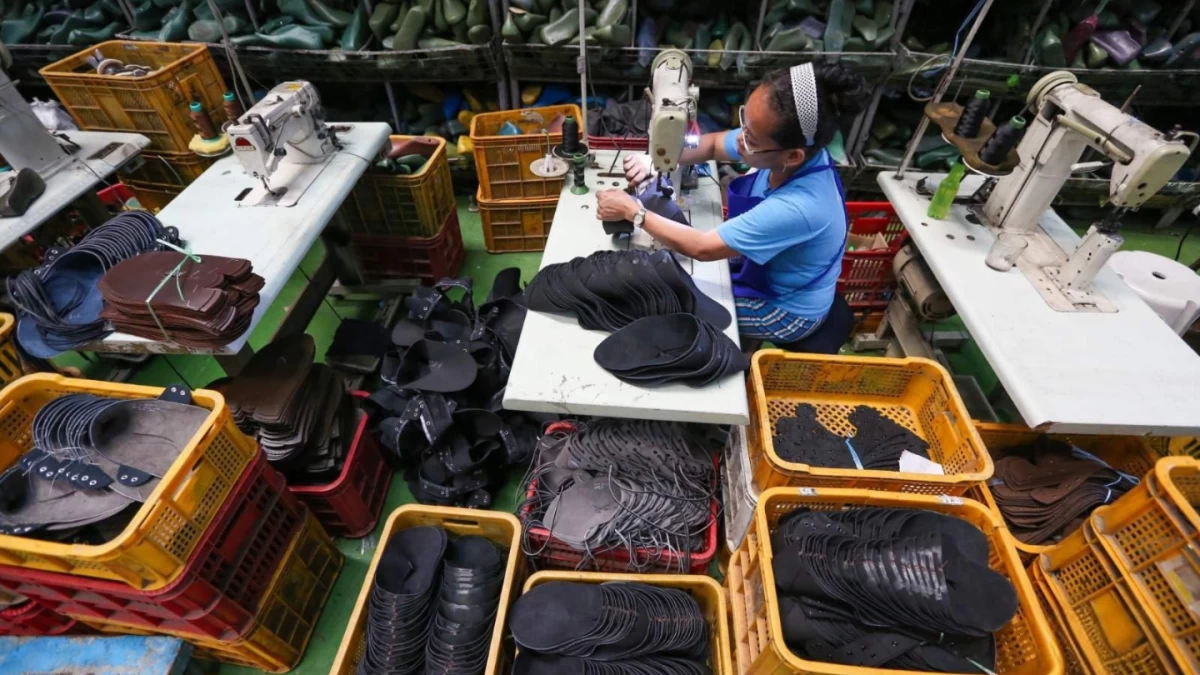
The Philippines is turning to artificial intelligence (AI) to help small businesses secure loans and digitize operations, bridging a critical financing gap for the enterprises that form the backbone of the country’s economy.
The Department of Information and Communications Technology (DICT) and state-run Land Bank of the Philippines signed a memorandum of understanding on Monday, July 20, to jointly develop AI-enabled digital tools for micro, small, and medium enterprises.
The agreement aims to strengthen creditworthiness, boost productivity, and streamline loan application processes for local entrepreneurs.
The initiative aligns with the Philippines’ push as chair of the Association of Southeast Asian Nations to advance region-wide digital transformation. Under the broader ASEAN Priority Economic Deliverable on AI-Powered MSME Growth, the country is spearheading efforts to make low-cost AI technology accessible across Southeast Asia.
Small and medium-sized businesses account for the vast majority of Philippine commercial establishments and employ millions, yet many struggle to secure institutional capital due to rigid documentation requirements and informal credit profiles. The collaboration will explore practical applications of machine learning to assist borrowers with financial planning, streamline documentation, and refine internal bank credit assessments.
Central to the program is the DICT’s MSME AI Tech Stack, a mobile-first suite of AI assistants designed to guide small business owners through routine administrative and financial hurdles. The platform assists entrepreneurs in drafting bankable business plans, satisfying regulatory requirements, calculating profitable pricing models, interpreting contracts, and crafting marketing strategies. To lower operational barriers, the interface is accessible in English, Filipino, and several major regional languages.
The project was spearheaded by the DICT Office of the Chief of Staff, led by Undersecretary Faye Condez-de Sagon, who oversees the agency’s ASEAN Technical Working Group. The group is working alongside the DICT Emerging Tech Group to translate regional policy targets into local commercial applications.
“Artificial intelligence must create real opportunities for our people, especially our MSMEs that serve as the backbone of the economy,” said DICT Secretary Henry Aguda, noting that the deal reflects the government's mandate to leverage emerging technology to expand capital access.
Condez-de Sagon added that the partnership moves the ASEAN agenda from abstract policy to functional tools that make small firms investment-ready and competitive in an increasingly digital regional market.