






 Philippines
National
Philippines rejects criticism of ASEAN's Myanmar engagement, reaffirms Five-Point Consensus
Philippines
National
Philippines rejects criticism of ASEAN's Myanmar engagement, reaffirms Five-Point Consensus
Philippines rejects criticism of ASEAN's Myanmar engagement, reaffirms Five-Point Consensus


At A Glance
- The Philippines rejected criticism that ASEAN's recent engagement with Myanmar's military-backed government undermines the regional bloc's peace efforts, insisting its approach remains anchored on the Five-Point Consensus.
- The ASEAN Chair's Special Envoy said the recent meeting with Myanmar's foreign minister was mandated by ASEAN leaders and aimed at advancing dialogue and humanitarian assistance.
- Myanmar will be among the key issues when ASEAN foreign ministers meet in Manila this week.
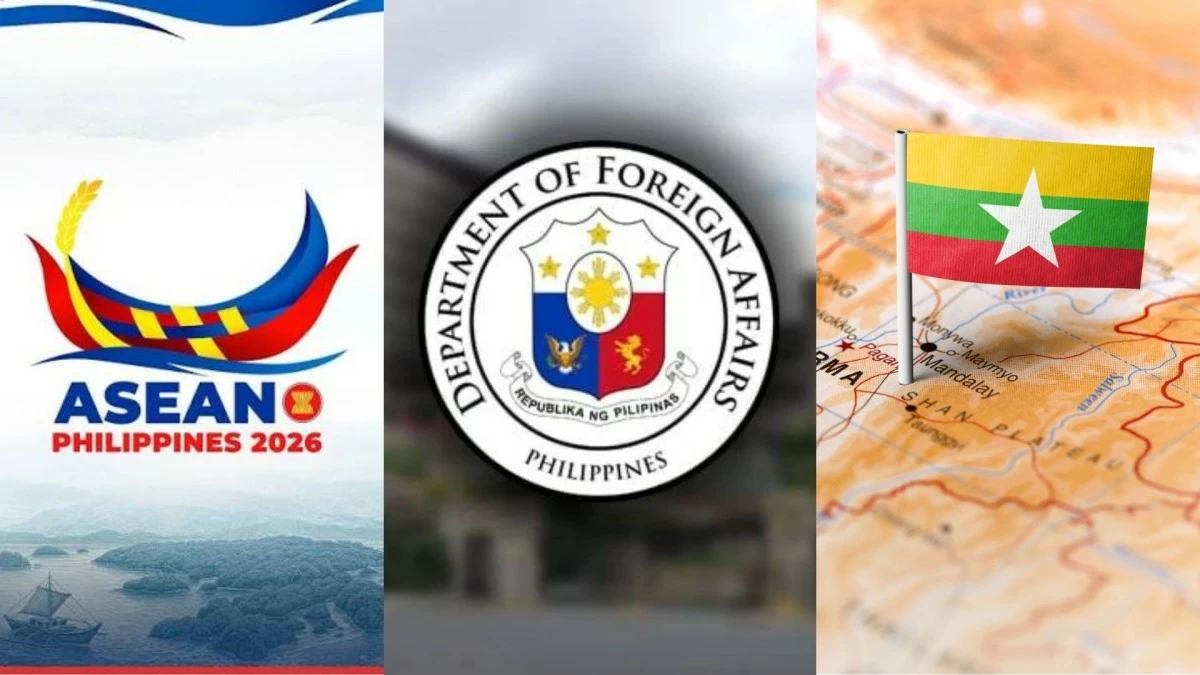
The Philippines has rejected criticism that the Association of Southeast Asian Nations (ASEAN)’s engagement with Myanmar's military-backed government marked a departure from the regional bloc's peace efforts, insisting its approach remains firmly anchored in ASEAN's Five-Point Consensus (5PC).
The statement came after members of the Special Advisory Council for Myanmar (SAC-M), an independent group of international experts, criticized ASEAN's decision to hold an informal meeting with Myanmar Foreign Minister U Tin Maung Swe in Bangkok on July 12, saying the engagement risked legitimizing the junta despite its failure to implement the Five-Point Consensus.
In a statement on Sunday, July 19, Department of Foreign Affairs (DFA) Secretary Ma. Theresa Lazaro, who serves as the ASEAN Chair’s Special Envoy on Myanmar, described SAC-M's assertions as "malicious and misleading," saying the Bangkok meeting was conducted pursuant to a mandate from ASEAN leaders and should not be construed as an abandonment of the Five-Point Consensus.
She added that the meeting stemmed from consultations among ASEAN foreign ministers and a mandate given by ASEAN leaders during the 48th ASEAN Summit in Cebu to pursue constructive and principled engagement with Myanmar in line with the Five-Point Consensus.
“During these consultations, ASEAN Foreign Ministers agreed to meet with H.E. U Tin Maung Swe for a discussion on developments in Myanmar, including the way forward on the implementation of the 5PC, as well as prospects for the deployment of humanitarian assistance, in an effort to find concrete means of advancing the full and effective implementation of the 5PC,” she said.
Dialogue, part of ASEAN mandate
The Special Envoy said engaging Myanmar stakeholders forms part of ASEAN's mandate to pursue constructive dialogue among all parties involved in the conflict.
"It was not, and should not be mischaracterized as an abandonment of the 5PC," Lazaro said.
"The path to peace can only be obtained through resolute diplomacy with all parties to the conflict," she added.
The statement also reaffirmed that the Five-Point Consensus remains ASEAN's principal framework for addressing Myanmar's political crisis, with the Special Envoy continuing to engage all stakeholders to facilitate dialogue, support mediation efforts, pursue the cessation of hostilities, and expand humanitarian assistance.
The SAC-M had argued that engaging Myanmar's foreign minister without securing concessions from the junta risks legitimizing the military government and undermining ASEAN's credibility, while also accusing the Philippine chairmanship of departing from its earlier calls for the release of detained civilian leaders.
Myanmar on ASEAN agenda
The DFA statement was issued days before the 59th ASEAN Foreign Ministers' Meeting in Manila this week, where Myanmar is expected to be a key agenda item.
During a pre-ministerial briefing, DFA Spokesperson on ASEAN Matters Dominic Xavier Imperial said foreign ministers will hold an extended informal consultation on the implementation of the Five-Point Consensus.
Imperial said Lazaro will brief her ASEAN counterparts on the outcome of her recent engagements in Thailand with Myanmar's foreign minister, ethnic armed organizations, and other stakeholders.
He said the consultations in Thailand were intended to gather the views of all stakeholders and would help inform ASEAN's discussions on the way forward in implementing the Five-Point Consensus.
Imperial also said Thailand's planned visit by Myanmar junta chief Min Aung Hlaing next month is a bilateral matter that does not represent a shift in ASEAN policy, stressing that the regional bloc continues to be guided by the Five-Point Consensus.
He added that Myanmar will continue to be represented by a non-political representative during this week's ministerial meetings, with the permanent secretary of its foreign ministry expected to attend on behalf of the country.