

ADVERTISEMENT

BSP urges banks, e-wallets to deepen offerings as fee reliance comes under scrutiny

Published Jul 20, 2026 02:15 pm

At A Glance

  • Domestic banks and e-wallets should expand their product offerings and reduce their reliance on digital transaction fees as a key revenue source, according to a senior official of the Bangko Sentral ng Pilipinas (BSP).
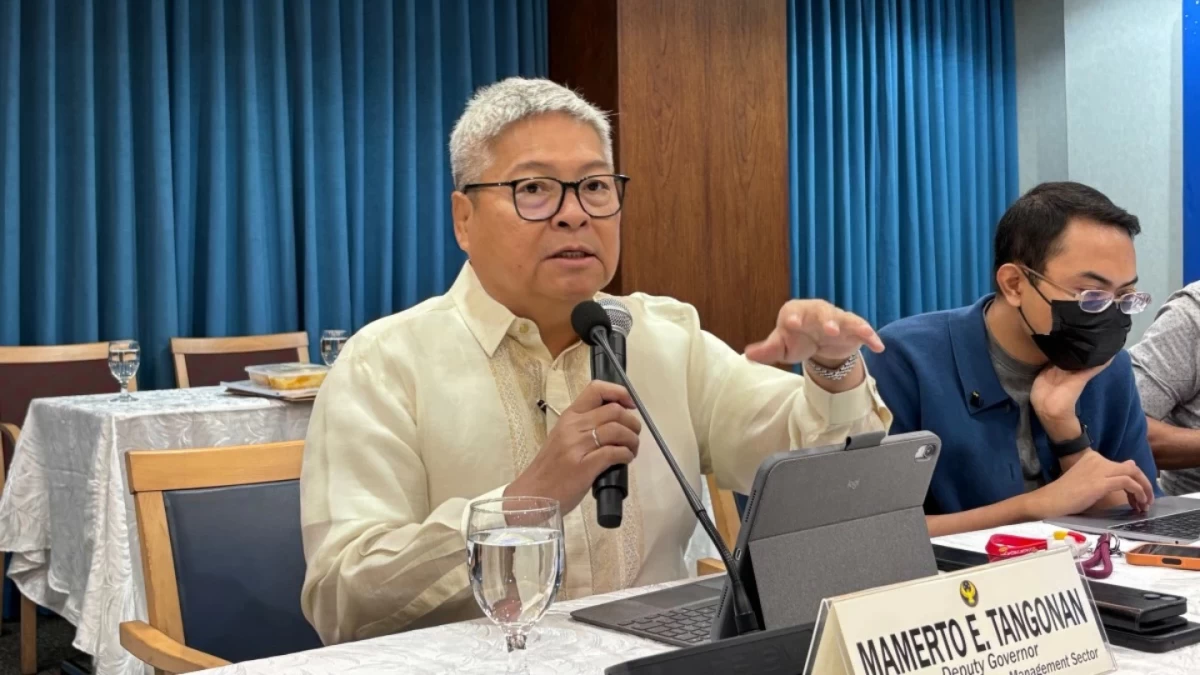
BSP Deputy Governor Mamerto E. Tangonan

Domestic banks and e-wallets should expand their product offerings and reduce their reliance on digital transaction fees as a key revenue source, according to a senior official of the Bangko Sentral ng Pilipinas (BSP).

This comes on the heels of the BSP’s move to summon non-compliant financial institutions (FIs) to justify their limited fee reductions. BSP Deputy Governor Mamerto E. Tangonan stressed during a media roundtable on Monday, July 20, that FIs need to constantly evolve.

“If you look at the market, there’s a need for improvements in other financial services,” Tangonan, who heads the BSP’s payments and currency management sector (PCMS), said.

“People can benefit from better savings products, credit, insurance protection to help them cope with shocks, and investments they can afford. These services remain underserved. We’d like to encourage the industry to move up to that level instead of just doing transfers,” he said.

“We all have to evolve. Otherwise, we’ll remain stuck where we are if we don’t,” Tangonan expounded, citing the downfall of Kodak and Nokia as examples of what can happen when companies fail to adapt.

Market competition, Tangonan said, should eventually empower users. “The key point here is that consumers have a choice [over which banks offer better terms],” he said, adding that customers may opt to shift to other banks if a certain bank no longer offers services that are deemed fair, such as fund transfer fees.

Non-compliant FIs, particularly e-wallet providers, faced the BSP last week to justify their limited reduction in fund transfer fees, after which the central bank will issue its assessment directly to the concerned institutions.

“We asked them to explain why they are charging those fees for interbank fund transfers,” Tangonan said.

Tangonan said the FIs were given until Wednesday last week to submit their written reports. “We are now validating whether the fees they charge and the manner by which they arrived at those amounts comply with [BSP] Circular No. 1238,” Tangonan said.

It has been the regulator’s constant reminder that the difference between intrabank and interbank transaction fees should only reflect “the costs directly associated with the switching.”

Tangonan noted that if institutions intend to maintain a specific level of fees for interbank transactions, they would technically need to increase their intrabank, or within-institution, fees to keep the difference consistent with direct switching costs.

On a positive note, Tangonan reported that most of the largest lenders and e-wallet providers have already complied, noting that the 10 largest banks alone account for approximately 90 percent of total transaction volume.

Despite this compliance, the BSP believes there is “still room for improvement” in the current fee levels. While some banking players have moved toward lower costs, others have remained stagnant.

According to Tangonan, the validation of the institutions that have opted to maintain their charges is ongoing. “We still have to look into that. So, nothing yet,” Tangonan said, adding that this will then be followed by a formal review cycle.

“We will write to them and communicate our assessment. They can either accept our findings or write back, after which we will make a final determination,” Tangonan said. “It’s possible we missed something. But if their justification is ultimately found to be invalid, we will issue a directive.”

This regulatory shift comes alongside slowing growth in digital payments, which posted a single-digit increase for the first time. He explained that remaining passive amid this sluggish growth will not produce a different outcome, particularly regarding the BSP’s target of having 70 percent of overall transactions conducted digitally.

Related Tags

Bangko Sentral ng Pilipinas (BSP) Mamerto Tangonan fund transfer Instapay PESONET
ADVERTISEMENT
.most-popular .layout-ratio{ padding-bottom: 79.13%; } @media (min-width: 768px) and (max-width: 1024px) { .widget-title { font-size: 15px !important; } }

{{ articles_filter_1561_widget.title }}

.most-popular .layout-ratio{ padding-bottom: 79.13%; } @media (min-width: 768px) and (max-width: 1024px) { .widget-title { font-size: 15px !important; } }

{{ static_articles_1562_widget.title }}

.most-popular .layout-ratio{ padding-bottom: 79.13%; } @media (min-width: 768px) and (max-width: 1024px) { .widget-title { font-size: 15px !important; } }

{{ articles_filter_1563_widget.title }}

{{ articles_filter_1564_widget.title }}

.mb-article-details { position: relative; } .mb-article-details .article-body-preview, .mb-article-details .article-body-summary{ font-size: 17px; line-height: 30px; font-family: "Libre Caslon Text", serif; color: #000; } .mb-article-details .article-body-preview iframe , .mb-article-details .article-body-summary iframe{ width: 100%; margin: auto; } .read-more-background { background: linear-gradient(180deg, color(display-p3 1.000 1.000 1.000 / 0) 13.75%, color(display-p3 1.000 1.000 1.000 / 0.8) 30.79%, color(display-p3 1.000 1.000 1.000) 72.5%); position: absolute; height: 200px; width: 100%; bottom: 0; display: flex; justify-content: center; align-items: center; padding: 0; } .read-more-background a{ color: #000; } .read-more-btn { padding: 17px 45px; font-family: Inter; font-weight: 700; font-size: 18px; line-height: 16px; text-align: center; vertical-align: middle; border: 1px solid black; background-color: white; } .hidden { display: none; }
function initializeAllSwipers() { // Get all hidden inputs with cms_article_id document.querySelectorAll('[id^="cms_article_id_"]').forEach(function (input) { const cmsArticleId = input.value; const articleSelector = '#article-' + cmsArticleId + ' .body_images'; const swiperElement = document.querySelector(articleSelector); if (swiperElement && !swiperElement.classList.contains('swiper-initialized')) { new Swiper(articleSelector, { loop: true, pagination: false, navigation: { nextEl: '#article-' + cmsArticleId + ' .swiper-button-next', prevEl: '#article-' + cmsArticleId + ' .swiper-button-prev', }, }); } }); } setTimeout(initializeAllSwipers, 3000); const intersectionObserver = new IntersectionObserver( (entries) => { entries.forEach((entry) => { if (entry.isIntersecting) { const newUrl = entry.target.getAttribute("data-url"); if (newUrl) { history.pushState(null, null, newUrl); let article = entry.target; // Extract metadata const author = article.querySelector('.author-section').textContent.replace('By', '').trim(); const section = article.querySelector('.section-info ').textContent.replace(' ', ' '); const title = article.querySelector('.article-title h1').textContent; // Parse URL for Chartbeat path format const parsedUrl = new URL(newUrl, window.location.origin); const cleanUrl = parsedUrl.host + parsedUrl.pathname; // Update Chartbeat configuration if (typeof window._sf_async_config !== 'undefined') { window._sf_async_config.path = cleanUrl; window._sf_async_config.sections = section; window._sf_async_config.authors = author; } // Track virtual page view with Chartbeat if (typeof pSUPERFLY !== 'undefined' && typeof pSUPERFLY.virtualPage === 'function') { try { pSUPERFLY.virtualPage({ path: cleanUrl, title: title, sections: section, authors: author }); } catch (error) { console.error('ping error', error); } } // Optional: Update document title if (title && title !== document.title) { document.title = title; } } } }); }, { threshold: 0.1 } ); function showArticleBody(button) { const article = button.closest("article"); const summary = article.querySelector(".article-body-summary"); const body = article.querySelector(".article-body-preview"); const readMoreSection = article.querySelector(".read-more-background"); // Hide summary and read-more section summary.style.display = "none"; readMoreSection.style.display = "none"; // Show the full article body body.classList.remove("hidden"); } document.addEventListener("DOMContentLoaded", () => { let loadCount = 0; // Track how many times articles are loaded const offset = [1, 2, 3, 4, 5, 6, 7, 8, 9, 10]; // Offset values const currentUrl = window.location.pathname.substring(1); let isLoading = false; // Prevent multiple calls if (!currentUrl) { console.log("Current URL is invalid."); return; } const sentinel = document.getElementById("load-more-sentinel"); if (!sentinel) { console.log("Sentinel element not found."); return; } function isSentinelVisible() { const rect = sentinel.getBoundingClientRect(); return ( rect.top < window.innerHeight && rect.bottom >= 0 ); } function onScroll() { if (isLoading) return; if (isSentinelVisible()) { if (loadCount >= offset.length) { console.log("Maximum load attempts reached."); window.removeEventListener("scroll", onScroll); return; } isLoading = true; const currentOffset = offset[loadCount]; window.loadMoreItems().then(() => { let article = document.querySelector('#widget_1690 > div:nth-last-of-type(2) article'); intersectionObserver.observe(article) loadCount++; }).catch(error => { console.error("Error loading more items:", error); }).finally(() => { isLoading = false; }); } } window.addEventListener("scroll", onScroll); });

Sign up by email to receive news.