ADVERTISEMENT

ASEAN diplomacy in Manila: PH hosts vital meetings

Published Jul 20, 2026 12:05 am  |  Updated Jul 19, 2026 03:47 pm
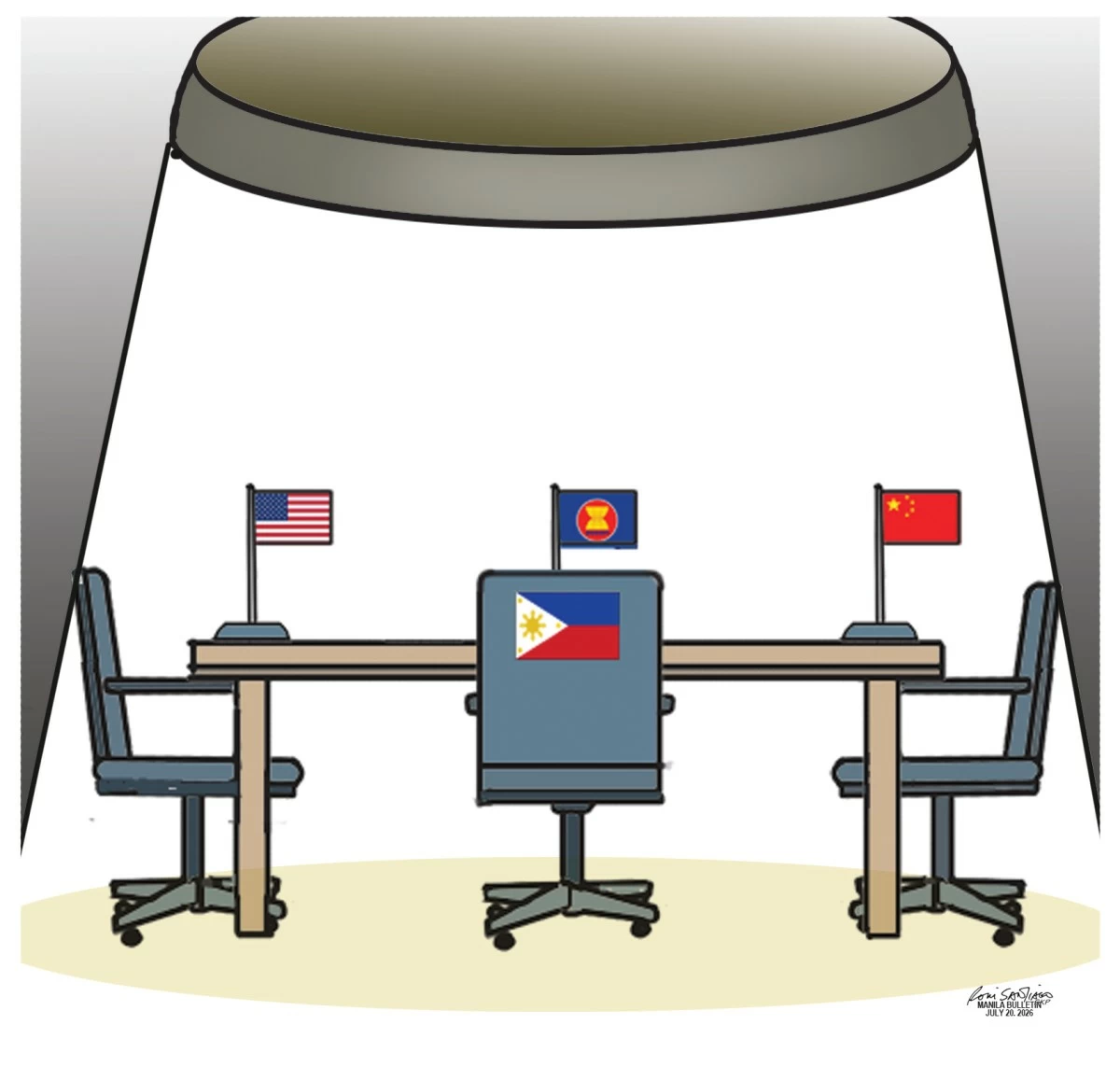
Beginning July 20, Manila once again takes center stage in regional diplomacy as it hosts a week-long series of ASEAN Foreign Ministers’ Meetings and related conferences. More than a ceremonial responsibility, the gathering offers the Philippines an important opportunity to help shape discussions on the region’s most pressing political, economic, and security concerns at a time of heightened geopolitical uncertainty.
Among the most closely watched participants are United States Secretary of State Marco Rubio and Chinese Foreign Minister Wang Yi, whose presence underscores Southeast Asia’s enduring strategic significance. Their attendance reflects the reality that ASEAN remains an indispensable platform where major powers engage one another through dialogue rather than confrontation.
This year’s meetings go beyond the traditional ASEAN Ministerial Meeting. They also activate the region’s key dialogue mechanisms—the ASEAN Plus Three, bringing together China, Japan, and the Republic of Korea; the ASEAN Regional Forum, the Asia-Pacific’s premier venue for security dialogue; and the East Asia Summit framework, which convenes ASEAN leaders and major Indo-Pacific partners to address strategic and economic challenges. These institutions have evolved over the years into indispensable channels for confidence-building, preventive diplomacy, and practical cooperation.
The Philippines assumes the role of host at a particularly consequential moment. The international order continues to be tested by conflicts in Europe and the Middle East, intensifying strategic competition in the Indo-Pacific, supply chain vulnerabilities, and the growing urgency of climate change and disaster resilience. At the same time, developments in the South China Sea remain a matter of vital national interest and regional stability.
Against this backdrop, the Philippines has every reason to maximize the diplomatic opportunities presented by these high-level meetings. As host, Manila can facilitate frank but constructive exchanges anchored on ASEAN’s long-standing principles of dialogue, mutual respect, peaceful settlement of disputes, and adherence to international law. These principles have enabled ASEAN to remain relevant despite the diversity of political systems and national interests among its members.
For the Philippines, the meetings provide an opportunity to reinforce support for a rules-based international order, freedom of navigation and overflight, and the peaceful resolution of disputes in accordance with the 1982 United Nations Convention on the Law of the Sea. They also allow Manila to strengthen partnerships that advance maritime security, disaster preparedness, digital transformation, food and energy security, sustainable infrastructure, and resilient supply chains. These are the areas where ASEAN cooperation continues to expand.
Equally important, hosting these ministerial meetings enhances the country’s standing as a credible and constructive partner in regional affairs. Effective diplomacy is not measured solely by formal agreements but also by the ability to build trust, foster consensus, and keep channels of communication open even amid profound disagreements. In an era when global tensions can escalate with alarming speed, dialogue itself becomes a strategic asset.
The Philippines has long championed a foreign policy that is independent, principled, and firmly anchored on national interest. Manila’s hosting of this week’s ASEAN meetings provides a fitting platform to translate those principles into meaningful engagement with friends, partners, and even competitors.
As delegates gather in the Philippine capital, the country has an opportunity not only to showcase its renowned hospitality but also to demonstrate thoughtful leadership. By helping sustain ASEAN’s centrality and promoting constructive dialogue among the world’s leading powers, the Philippines contributes to a more peaceful, stable, and prosperous Indo-Pacific. This is an outcome that serves not only the region but the Filipino people as well.
ADVERTISEMENT
.most-popular .layout-ratio{ padding-bottom: 79.13%; } @media (min-width: 768px) and (max-width: 1024px) { .widget-title { font-size: 15px !important; } }

{{ articles_filter_1561_widget.title }}

.most-popular .layout-ratio{ padding-bottom: 79.13%; } @media (min-width: 768px) and (max-width: 1024px) { .widget-title { font-size: 15px !important; } }

{{ static_articles_1562_widget.title }}

.most-popular .layout-ratio{ padding-bottom: 79.13%; } @media (min-width: 768px) and (max-width: 1024px) { .widget-title { font-size: 15px !important; } }

{{ articles_filter_1563_widget.title }}

{{ articles_filter_1564_widget.title }}

.mb-article-details { position: relative; } .mb-article-details .article-body-preview, .mb-article-details .article-body-summary{ font-size: 17px; line-height: 30px; font-family: "Libre Caslon Text", serif; color: #000; } .mb-article-details .article-body-preview iframe , .mb-article-details .article-body-summary iframe{ width: 100%; margin: auto; } .read-more-background { background: linear-gradient(180deg, color(display-p3 1.000 1.000 1.000 / 0) 13.75%, color(display-p3 1.000 1.000 1.000 / 0.8) 30.79%, color(display-p3 1.000 1.000 1.000) 72.5%); position: absolute; height: 200px; width: 100%; bottom: 0; display: flex; justify-content: center; align-items: center; padding: 0; } .read-more-background a{ color: #000; } .read-more-btn { padding: 17px 45px; font-family: Inter; font-weight: 700; font-size: 18px; line-height: 16px; text-align: center; vertical-align: middle; border: 1px solid black; background-color: white; } .hidden { display: none; }
function initializeAllSwipers() { // Get all hidden inputs with cms_article_id document.querySelectorAll('[id^="cms_article_id_"]').forEach(function (input) { const cmsArticleId = input.value; const articleSelector = '#article-' + cmsArticleId + ' .body_images'; const swiperElement = document.querySelector(articleSelector); if (swiperElement && !swiperElement.classList.contains('swiper-initialized')) { new Swiper(articleSelector, { loop: true, pagination: false, navigation: { nextEl: '#article-' + cmsArticleId + ' .swiper-button-next', prevEl: '#article-' + cmsArticleId + ' .swiper-button-prev', }, }); } }); } setTimeout(initializeAllSwipers, 3000); const intersectionObserver = new IntersectionObserver( (entries) => { entries.forEach((entry) => { if (entry.isIntersecting) { const newUrl = entry.target.getAttribute("data-url"); if (newUrl) { history.pushState(null, null, newUrl); let article = entry.target; // Extract metadata const author = article.querySelector('.author-section').textContent.replace('By', '').trim(); const section = article.querySelector('.section-info ').textContent.replace(' ', ' '); const title = article.querySelector('.article-title h1').textContent; // Parse URL for Chartbeat path format const parsedUrl = new URL(newUrl, window.location.origin); const cleanUrl = parsedUrl.host + parsedUrl.pathname; // Update Chartbeat configuration if (typeof window._sf_async_config !== 'undefined') { window._sf_async_config.path = cleanUrl; window._sf_async_config.sections = section; window._sf_async_config.authors = author; } // Track virtual page view with Chartbeat if (typeof pSUPERFLY !== 'undefined' && typeof pSUPERFLY.virtualPage === 'function') { try { pSUPERFLY.virtualPage({ path: cleanUrl, title: title, sections: section, authors: author }); } catch (error) { console.error('ping error', error); } } // Optional: Update document title if (title && title !== document.title) { document.title = title; } } } }); }, { threshold: 0.1 } ); function showArticleBody(button) { const article = button.closest("article"); const summary = article.querySelector(".article-body-summary"); const body = article.querySelector(".article-body-preview"); const readMoreSection = article.querySelector(".read-more-background"); // Hide summary and read-more section summary.style.display = "none"; readMoreSection.style.display = "none"; // Show the full article body body.classList.remove("hidden"); } document.addEventListener("DOMContentLoaded", () => { let loadCount = 0; // Track how many times articles are loaded const offset = [1, 2, 3, 4, 5, 6, 7, 8, 9, 10]; // Offset values const currentUrl = window.location.pathname.substring(1); let isLoading = false; // Prevent multiple calls if (!currentUrl) { console.log("Current URL is invalid."); return; } const sentinel = document.getElementById("load-more-sentinel"); if (!sentinel) { console.log("Sentinel element not found."); return; } function isSentinelVisible() { const rect = sentinel.getBoundingClientRect(); return ( rect.top < window.innerHeight && rect.bottom >= 0 ); } function onScroll() { if (isLoading) return; if (isSentinelVisible()) { if (loadCount >= offset.length) { console.log("Maximum load attempts reached."); window.removeEventListener("scroll", onScroll); return; } isLoading = true; const currentOffset = offset[loadCount]; window.loadMoreItems().then(() => { let article = document.querySelector('#widget_1690 > div:nth-last-of-type(2) article'); intersectionObserver.observe(article) loadCount++; }).catch(error => { console.error("Error loading more items:", error); }).finally(() => { isLoading = false; }); } } window.addEventListener("scroll", onScroll); });

Sign up by email to receive news.