ADVERTISEMENT

Iran hits US allies as Israel warns missiles headed for Jordan could land on its territory

Published Jul 19, 2026 04:36 pm
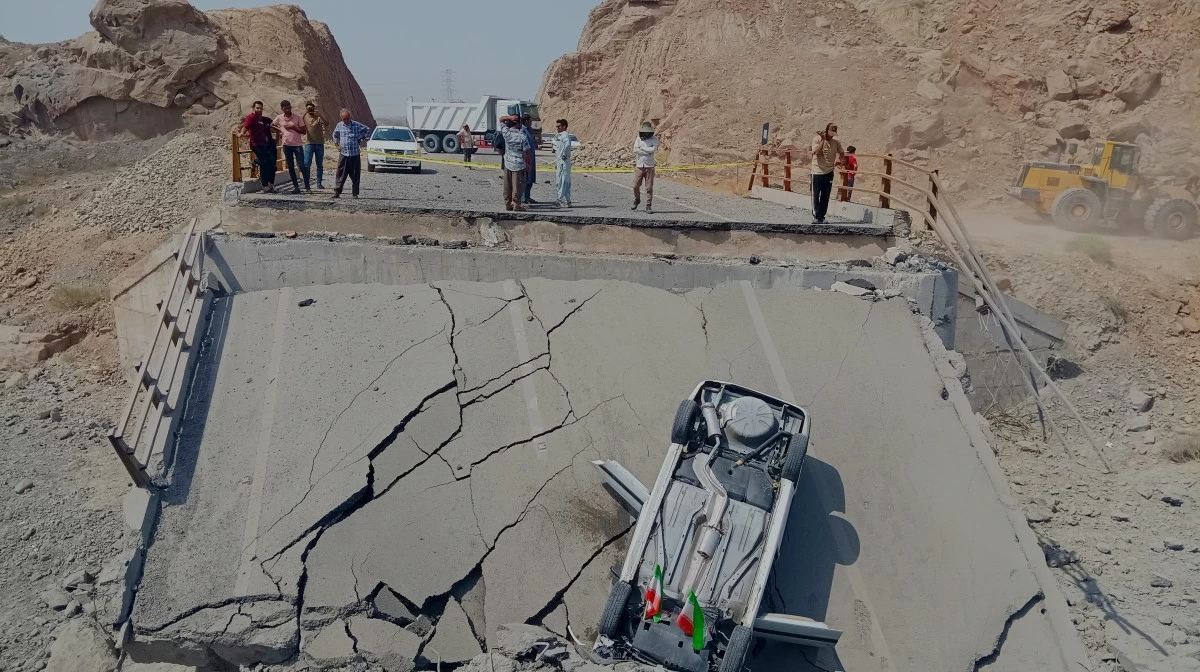
An overturned car sits on a section of a destroyed bridge after a strike in Hormozgan province, southern Iran, Saturday, July 18, 2026. (Mahdi Negahban/Mehr News Agency via AP)
DUBAI, United Arab Emirates (AP) — The United States launched airstrikes in Iran on Sunday as Iranian missiles fired toward Jordan risked widening the conflict into neighboring Israel.
The U.S. military said the latest round of strikes targeted Iran's paramilitary Revolutionary Guard to retaliate for the killing of American troops in Jordan. The exchange of fire has further reignited the conflict between the United States and Iran, after the collapse of last month's interim deal that sought to end the war.
The ongoing campaign, now in its second week, began with a struggle over control of the Strait of Hormuz. The U.S. has targeted bridges, electrical facilities and other targets in Iran, and Tehran has retaliated by hitting U.S.-allied countries throughout the Middle East.
Kuwait, Jordan and Bahrain again activated air defenses Sunday morning as they warned of incoming Iranian drones and missiles. Israel warned Iran missiles launched toward neighboring Jordan could cause fire to spill over into its territory for the first time since fighting restarted.
The latest US strikes come after troops were killed
The U.S. military's Central Command in its statement also said it hit "Iranian military coastal surveillance and air defense facilities, maritime capabilities and missile and drone storage sites." It said the attack was designed to degrade Iran's ability to control the Strait of Hormuz and "swiftly punish Islamic Revolutionary Guard Corps forces," a key power base in Iran's theocracy that controls its ballistic missile arsenal.
Footage released by the U.S. military appeared to show strikes carried out by fighter jets and by Tomahawk cruise missiles launched from the sea. One target site appeared to be in a valley of a mountainous region. The Guard often has missile bases and other military equipment tucked into mountain ranges.
An Iranian attack on a base in Jordan killed two American service members, left one missing and four requiring hospitalization, the U.S. military said on Saturday. Since the war began, 16 U.S. service members have been killed and over 430 wounded.
Iranian authorities said on Sunday that at least 50 people have been killed and 517 wounded in the latest U.S. strikes.
Iran has provided no overall information on its materiel losses in the American campaign, which is now in its eighth day as the nations vie over control of the Strait of Hormuz, the narrow mouth of the Persian Gulf through which a fifth of all oil and natural gas traded passes in peacetime.
Iran's atomic energy agency said that U.S. strikes early on Sunday morning targeted a construction site of a planned nuclear power plant in southwest Iran, according to Iranian state television.
Satellite images from Planet Labs PBC of the planned site of the Darkhovin Nuclear Power Plant show earth clearing but very little construction having taken place there as of July 9. There is no radiological material known to be at the site, which Iran had not previously announced as targeted throughout the war.
Jordan and nearly every Gulf Arab state have been targeted by Iran
U.S. regional allies on Sunday activated their air defenses or reported incoming Iranian attacks.
Jordan's military later saying it had shot down several Iranian missiles. The country hosts major U.S. bases and relies on U.S. air defense systems. Though the missiles did not cause casualties or damage, according to Jordan's military, they risked widening the war to Israel, which has refrained from reentering the fighting.
Israel's military said on Sunday that Iranian missiles launched toward the Jordanian port city of Aqaba just across the border could spill over, warning people to expect the first air raid sirens in weeks.
During the latest round of fighting, Iran has focused its attacks on U.S.-allied Arab states rather than Israel, which launched the war with the U.S. on Feb. 28.
Kuwait said on Sunday that one of the country's power and water desalination plants was attacked for the second time in two days, causing fires. Its Ministry of Electricity, Water and Renewable Energy said that the power grid remains stable, yet the attack marked the latest instance in which strikes — by both the U.S. and Iran — have targeted civilian infrastructure relied on by millions of people.
In Kuwait, about 90% of drinking water comes from desalination.
The secretary-general of the six-nation Gulf Cooperation Council, Jasem Mohamed al-Budaiwi, accused Iran of war crimes for strikes on infrastructure and civilian facilities. International humanitarian law generally protects civilian infrastructure, such as bridges and power plants, from attack, but such sites can lose these protections if used for military purposes. In such cases, attacks must be proportionate and minimize harm to civilians.
Campaign comes as the Strait of Hormuz remains key to the conflict
Trump has threatened to target Iran's power stations and bridges to try to compel Tehran to loosen its hold on the Strait of Hormuz. Recent attacks suggest the U.S. military is carrying out that plan, beginning first with coastal areas of Iran on the strait.
The U.S. in the past week also reimposed a naval blockade on Iranian ports to halt its shipments of crude oil, and the military on Saturday said it had redirected five ships and disabled one since then.
Iran's Supreme Leader Mojtaba Khamenei, in a statement Saturday, warned of "unforgettable lessons" if the U.S. keeps attacking the Islamic Republic. An Iranian negotiator said Tehran was suspending its commitments to the interim deal signed about a month ago and aimed at permanently ending the fighting.
Iran's joint military command said that U.S. "covetousness, bullying, totalitarianism or brutality" would meet with a "devastating response."

Related Tags

world news US-Iran
ADVERTISEMENT
.most-popular .layout-ratio{ padding-bottom: 79.13%; } @media (min-width: 768px) and (max-width: 1024px) { .widget-title { font-size: 15px !important; } }

{{ articles_filter_1561_widget.title }}

.most-popular .layout-ratio{ padding-bottom: 79.13%; } @media (min-width: 768px) and (max-width: 1024px) { .widget-title { font-size: 15px !important; } }

{{ static_articles_1562_widget.title }}

.most-popular .layout-ratio{ padding-bottom: 79.13%; } @media (min-width: 768px) and (max-width: 1024px) { .widget-title { font-size: 15px !important; } }

{{ articles_filter_1563_widget.title }}

{{ articles_filter_1564_widget.title }}

.mb-article-details { position: relative; } .mb-article-details .article-body-preview, .mb-article-details .article-body-summary{ font-size: 17px; line-height: 30px; font-family: "Libre Caslon Text", serif; color: #000; } .mb-article-details .article-body-preview iframe , .mb-article-details .article-body-summary iframe{ width: 100%; margin: auto; } .read-more-background { background: linear-gradient(180deg, color(display-p3 1.000 1.000 1.000 / 0) 13.75%, color(display-p3 1.000 1.000 1.000 / 0.8) 30.79%, color(display-p3 1.000 1.000 1.000) 72.5%); position: absolute; height: 200px; width: 100%; bottom: 0; display: flex; justify-content: center; align-items: center; padding: 0; } .read-more-background a{ color: #000; } .read-more-btn { padding: 17px 45px; font-family: Inter; font-weight: 700; font-size: 18px; line-height: 16px; text-align: center; vertical-align: middle; border: 1px solid black; background-color: white; } .hidden { display: none; }
function initializeAllSwipers() { // Get all hidden inputs with cms_article_id document.querySelectorAll('[id^="cms_article_id_"]').forEach(function (input) { const cmsArticleId = input.value; const articleSelector = '#article-' + cmsArticleId + ' .body_images'; const swiperElement = document.querySelector(articleSelector); if (swiperElement && !swiperElement.classList.contains('swiper-initialized')) { new Swiper(articleSelector, { loop: true, pagination: false, navigation: { nextEl: '#article-' + cmsArticleId + ' .swiper-button-next', prevEl: '#article-' + cmsArticleId + ' .swiper-button-prev', }, }); } }); } setTimeout(initializeAllSwipers, 3000); const intersectionObserver = new IntersectionObserver( (entries) => { entries.forEach((entry) => { if (entry.isIntersecting) { const newUrl = entry.target.getAttribute("data-url"); if (newUrl) { history.pushState(null, null, newUrl); let article = entry.target; // Extract metadata const author = article.querySelector('.author-section').textContent.replace('By', '').trim(); const section = article.querySelector('.section-info ').textContent.replace(' ', ' '); const title = article.querySelector('.article-title h1').textContent; // Parse URL for Chartbeat path format const parsedUrl = new URL(newUrl, window.location.origin); const cleanUrl = parsedUrl.host + parsedUrl.pathname; // Update Chartbeat configuration if (typeof window._sf_async_config !== 'undefined') { window._sf_async_config.path = cleanUrl; window._sf_async_config.sections = section; window._sf_async_config.authors = author; } // Track virtual page view with Chartbeat if (typeof pSUPERFLY !== 'undefined' && typeof pSUPERFLY.virtualPage === 'function') { try { pSUPERFLY.virtualPage({ path: cleanUrl, title: title, sections: section, authors: author }); } catch (error) { console.error('ping error', error); } } // Optional: Update document title if (title && title !== document.title) { document.title = title; } } } }); }, { threshold: 0.1 } ); function showArticleBody(button) { const article = button.closest("article"); const summary = article.querySelector(".article-body-summary"); const body = article.querySelector(".article-body-preview"); const readMoreSection = article.querySelector(".read-more-background"); // Hide summary and read-more section summary.style.display = "none"; readMoreSection.style.display = "none"; // Show the full article body body.classList.remove("hidden"); } document.addEventListener("DOMContentLoaded", () => { let loadCount = 0; // Track how many times articles are loaded const offset = [1, 2, 3, 4, 5, 6, 7, 8, 9, 10]; // Offset values const currentUrl = window.location.pathname.substring(1); let isLoading = false; // Prevent multiple calls if (!currentUrl) { console.log("Current URL is invalid."); return; } const sentinel = document.getElementById("load-more-sentinel"); if (!sentinel) { console.log("Sentinel element not found."); return; } function isSentinelVisible() { const rect = sentinel.getBoundingClientRect(); return ( rect.top < window.innerHeight && rect.bottom >= 0 ); } function onScroll() { if (isLoading) return; if (isSentinelVisible()) { if (loadCount >= offset.length) { console.log("Maximum load attempts reached."); window.removeEventListener("scroll", onScroll); return; } isLoading = true; const currentOffset = offset[loadCount]; window.loadMoreItems().then(() => { let article = document.querySelector('#widget_1690 > div:nth-last-of-type(2) article'); intersectionObserver.observe(article) loadCount++; }).catch(error => { console.error("Error loading more items:", error); }).finally(() => { isLoading = false; }); } } window.addEventListener("scroll", onScroll); });

Sign up by email to receive news.