ADVERTISEMENT

Tell the gov't your name just once

Published Jul 18, 2026 12:05 am  |  Updated Jul 17, 2026 04:22 pm
For decades, dealing with the government meant bracing for a grueling test of endurance. We spent hours waiting in humid corridors, clutching folders of redundant and photocopied documents that agencies never shared with one another.
Red tape was everywhere, creating frustrating administrative hassle that taxed people’s time and dignity. Recently, however, the United Nations (UN) recognized the Philippines for dismantling this frustrating legacy.
The UN honored the country with its E-Government Award, placing Manila among a select group of nations celebrated for rapid leaps in digital service. Conferred in Samarkand, Uzbekistan, the award elevated the Philippines to a “Very High” rating in global digital performance indexes. For a country historically defined by physical and administrative fragmentation, this progress represents a genuine, overdue effort to modernize the state, rather than a mere public relations win.
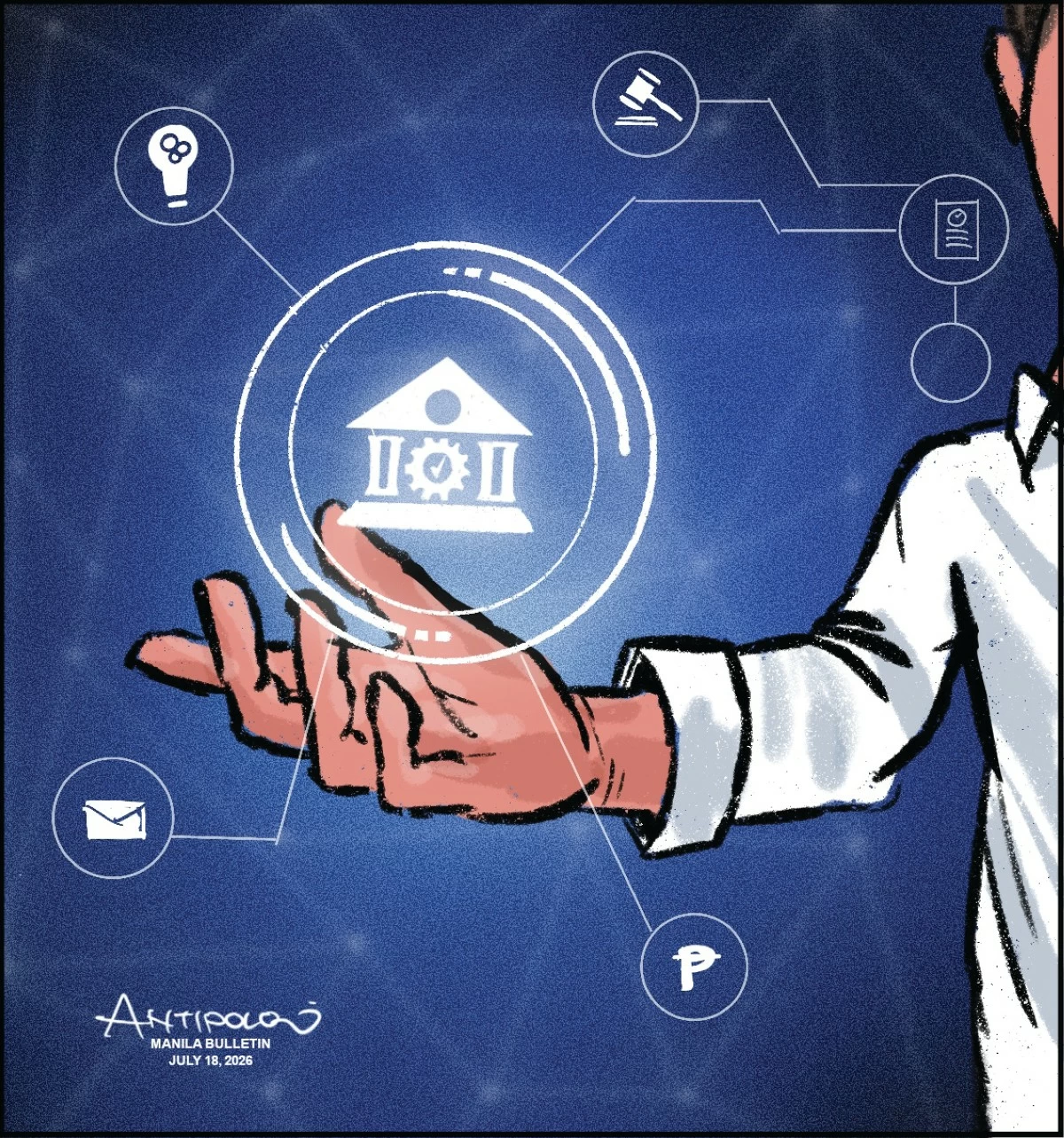
At the heart of this change is a simple premise: a citizen should only have to tell the government their name once. To make this a reality, the Department of Information and Communications Technology (DICT) has worked to replace isolated databases with integrated digital networks. The eGovPH app now acts as a single gateway for public services, while the underlying eGovDX platform connects disparate local and national systems to exchange data securely.
Underpinning it all is the digital national identity system, which uses biometric verification to let citizens prove who they are without carrying a stack of plastic ID cards. By consolidating these services onto a shared cloud infrastructure, the government has finally begun to function as a modern utility, rather than a maze of competing agencies. For the DICT, this is not just about launching apps, but about building a secure digital foundation that handles transactions invisibly in the background.
The economic case for this digital push is clear. Moving away from paper documents and physical queues cuts the administrative friction that slows down Philippine commerce. When businesses and citizens can pay taxes, file customs documents, and register licenses online, transactions speed up, and the opportunities for petty corruption shrink.
Just as importantly, linking the digital ID system with commercial banks and digital wallets brings unbanked Filipinos into the formal financial system. People previously locked out of basic financial services due to lack of physical documents can now open accounts and access credit with a secure biometric check on their phones. By reducing the cost of doing business, the digital transition is helping level the playing field for small entrepreneurs who can ill afford to waste days waiting in lines.
Yet, building the software is often the easiest part of public sector reform. The real test lies in making these systems work for everyone, especially in a country with deep infrastructure deficits. Government agencies face constant struggle to retain skilled software engineers, who can easily find higher-paying jobs in the private sector. At the same time, many local governments still rely heavily on outdated paper records and lack the funding or training to upgrade their systems.
Perhaps the biggest hurdle of all is connectivity. A digital state is only as inclusive as the internet networks that support it, and the gap in high-speed access between major cities and remote islands remains vast. If the government fails to address this divide, digitalization risks creating a two-tier society where only the connected benefit.
To keep this momentum from stalling, policymakers must insulate these digital reforms from political cycles. Technical platforms often suffer when administrations change, as new leaders prioritize their own vanity projects over existing, functional infrastructure.
One practical solution is to establish a dedicated, state-owned corporate entity—perhaps called GovTech Philippines—to run and fund these digital platforms permanently. This structure would protect the country’s digital foundation from shifting political winds and give the government the corporate flexibility it needs to recruit and retain top technical talent. The Philippines has built a highly promising digital foundation, but the hard work of permanently embedding it into the machinery of the state has only just begun.
ADVERTISEMENT
.most-popular .layout-ratio{ padding-bottom: 79.13%; } @media (min-width: 768px) and (max-width: 1024px) { .widget-title { font-size: 15px !important; } }

{{ articles_filter_1561_widget.title }}

.most-popular .layout-ratio{ padding-bottom: 79.13%; } @media (min-width: 768px) and (max-width: 1024px) { .widget-title { font-size: 15px !important; } }

{{ static_articles_1562_widget.title }}

.most-popular .layout-ratio{ padding-bottom: 79.13%; } @media (min-width: 768px) and (max-width: 1024px) { .widget-title { font-size: 15px !important; } }

{{ articles_filter_1563_widget.title }}

{{ articles_filter_1564_widget.title }}

.mb-article-details { position: relative; } .mb-article-details .article-body-preview, .mb-article-details .article-body-summary{ font-size: 17px; line-height: 30px; font-family: "Libre Caslon Text", serif; color: #000; } .mb-article-details .article-body-preview iframe , .mb-article-details .article-body-summary iframe{ width: 100%; margin: auto; } .read-more-background { background: linear-gradient(180deg, color(display-p3 1.000 1.000 1.000 / 0) 13.75%, color(display-p3 1.000 1.000 1.000 / 0.8) 30.79%, color(display-p3 1.000 1.000 1.000) 72.5%); position: absolute; height: 200px; width: 100%; bottom: 0; display: flex; justify-content: center; align-items: center; padding: 0; } .read-more-background a{ color: #000; } .read-more-btn { padding: 17px 45px; font-family: Inter; font-weight: 700; font-size: 18px; line-height: 16px; text-align: center; vertical-align: middle; border: 1px solid black; background-color: white; } .hidden { display: none; }
function initializeAllSwipers() { // Get all hidden inputs with cms_article_id document.querySelectorAll('[id^="cms_article_id_"]').forEach(function (input) { const cmsArticleId = input.value; const articleSelector = '#article-' + cmsArticleId + ' .body_images'; const swiperElement = document.querySelector(articleSelector); if (swiperElement && !swiperElement.classList.contains('swiper-initialized')) { new Swiper(articleSelector, { loop: true, pagination: false, navigation: { nextEl: '#article-' + cmsArticleId + ' .swiper-button-next', prevEl: '#article-' + cmsArticleId + ' .swiper-button-prev', }, }); } }); } setTimeout(initializeAllSwipers, 3000); const intersectionObserver = new IntersectionObserver( (entries) => { entries.forEach((entry) => { if (entry.isIntersecting) { const newUrl = entry.target.getAttribute("data-url"); if (newUrl) { history.pushState(null, null, newUrl); let article = entry.target; // Extract metadata const author = article.querySelector('.author-section').textContent.replace('By', '').trim(); const section = article.querySelector('.section-info ').textContent.replace(' ', ' '); const title = article.querySelector('.article-title h1').textContent; // Parse URL for Chartbeat path format const parsedUrl = new URL(newUrl, window.location.origin); const cleanUrl = parsedUrl.host + parsedUrl.pathname; // Update Chartbeat configuration if (typeof window._sf_async_config !== 'undefined') { window._sf_async_config.path = cleanUrl; window._sf_async_config.sections = section; window._sf_async_config.authors = author; } // Track virtual page view with Chartbeat if (typeof pSUPERFLY !== 'undefined' && typeof pSUPERFLY.virtualPage === 'function') { try { pSUPERFLY.virtualPage({ path: cleanUrl, title: title, sections: section, authors: author }); } catch (error) { console.error('ping error', error); } } // Optional: Update document title if (title && title !== document.title) { document.title = title; } } } }); }, { threshold: 0.1 } ); function showArticleBody(button) { const article = button.closest("article"); const summary = article.querySelector(".article-body-summary"); const body = article.querySelector(".article-body-preview"); const readMoreSection = article.querySelector(".read-more-background"); // Hide summary and read-more section summary.style.display = "none"; readMoreSection.style.display = "none"; // Show the full article body body.classList.remove("hidden"); } document.addEventListener("DOMContentLoaded", () => { let loadCount = 0; // Track how many times articles are loaded const offset = [1, 2, 3, 4, 5, 6, 7, 8, 9, 10]; // Offset values const currentUrl = window.location.pathname.substring(1); let isLoading = false; // Prevent multiple calls if (!currentUrl) { console.log("Current URL is invalid."); return; } const sentinel = document.getElementById("load-more-sentinel"); if (!sentinel) { console.log("Sentinel element not found."); return; } function isSentinelVisible() { const rect = sentinel.getBoundingClientRect(); return ( rect.top < window.innerHeight && rect.bottom >= 0 ); } function onScroll() { if (isLoading) return; if (isSentinelVisible()) { if (loadCount >= offset.length) { console.log("Maximum load attempts reached."); window.removeEventListener("scroll", onScroll); return; } isLoading = true; const currentOffset = offset[loadCount]; window.loadMoreItems().then(() => { let article = document.querySelector('#widget_1690 > div:nth-last-of-type(2) article'); intersectionObserver.observe(article) loadCount++; }).catch(error => { console.error("Error loading more items:", error); }).finally(() => { isLoading = false; }); } } window.addEventListener("scroll", onScroll); });

Sign up by email to receive news.