






Manila Bulletin
 Philippines
National
No roads, no shortcuts: PH Army soldiers trek 25 km carrying school chairs to remote Davao del Norte villages
Philippines
National
No roads, no shortcuts: PH Army soldiers trek 25 km carrying school chairs to remote Davao del Norte villages
Philippines
National
No roads, no shortcuts: PH Army soldiers trek 25 km carrying school chairs to remote Davao del Norte villages
No roads, no shortcuts: PH Army soldiers trek 25 km carrying school chairs to remote Davao del Norte villages
Published Jul 18, 2026 10:13 am
|
Updated Jul 18, 2026 01:06 pm


At A Glance
- Philippine Army soldiers of the 60th Infantry Battalion trekked more than 25 kilometers through mountains, rivers, and muddy trails while carrying school chairs, supplies, food, and farm inputs to reach remote Indigenous communities in Talaingod, Davao del Norte.
- The five-day outreach mission benefited about 150 households and more than 500 Indigenous Peoples through the distribution of aid, school materials, livelihood support, and community projects, including school repairs and trail improvement.
- The Philippine Army said the mission underscores its commitment to bringing government services to geographically isolated communities, saying no village is too remote to be reached.
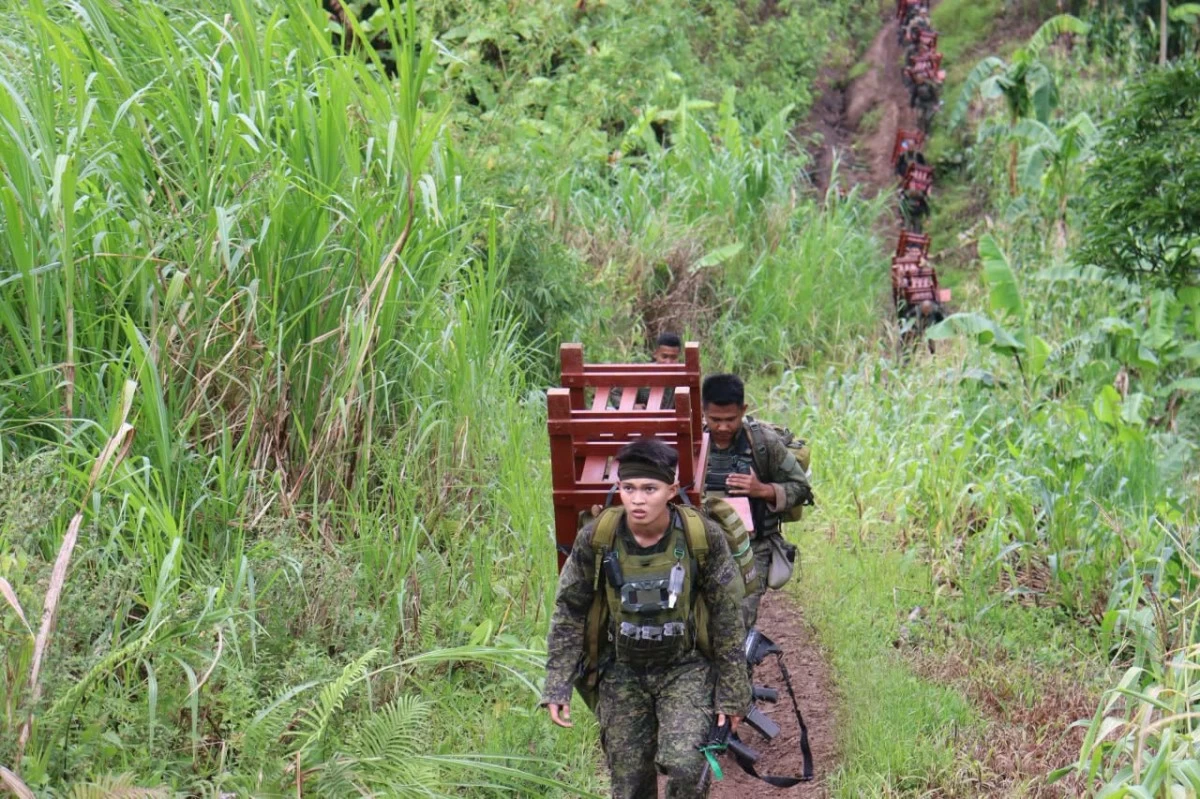
Soldiers from the Philippine Army's 60th Infantry Battalion trek more than 25 kilometers while carrying school armchairs, food packs, school supplies, farm inputs, and construction materials on their backs to deliver assistance to geographically isolated and disadvantaged areas (GIDAs) in Talaingod, Davao del Norte. (Photo: 60IB)
With no concrete roads leading to some Indigenous communities in Talaingod, Davao del Norte, soldiers of the Philippine Army's 60th Infantry Battalion (60IB) carried school armchairs, food packs, school supplies, farm inputs, and construction materials on their backs as they trekked more than 25 kilometers through mountains, forests, rivers, and muddy trails to deliver government services.
The five-day mission from July 11 to 15 brought the troops to the geographically isolated and disadvantaged areas (GIDAs) of Sitio Nasilaban, Sitio Bagang, Sitio Nalubas, Sitio Nabalabag, Sitio Saso, and Sitio Laboo in Barangay Palma Gil under the battalion's "Mediator Serbisyong may Puso at Malasakit" Peace and Development Initiative.
Before the outreach started, the Army spent nearly a month planning the operation with local government units, national government agencies, Indigenous leaders, and development partners.
The battalion said the biggest challenge was not identifying what assistance to provide but bringing it to villages that can only be reached through mountain trails after the roads end.
Days before the mission, more than 15 "habal-habal" motorcycles transported food packs, school supplies, office materials, sacks of hybrid corn seeds, bamboo and abaca seedlings, and other essential items to Sitio Bagang, which served as the temporary logistics hub. From there, the soldiers continued the journey on foot.
While carrying heavy school armchairs, food rations, agricultural supplies, construction materials, and personal equipment, the troops trekked more than 25 kilometers from Sitio Nasilaban to Sitio Nalubas under the heat of the sun and heavy rain.
“Every step demanded endurance, resilience, and sacrifice, yet every kilometer traveled reflected their unwavering commitment that no community is too remote to receive government services and no Filipino should be left behind,” the 60IB, under the command of Lieutenant Colonel Jesus L. Rosete, said.
The outreach mission directly benefited around 150 households and more than 500 Indigenous Peoples (IPs).
Aside from delivering food packs, school bags, school supplies, office materials, school armchairs, hybrid corn seeds, bamboo and abaca seedlings, the soldiers also joined Indigenous residents in Bayanihan planting activities to support sustainable agriculture and improve livelihood opportunities.
The troops also built a kitchen for teachers, repaired the school's comfort room, improved the Pan-pan Trail linking nearby sitios, conducted community dialogues, peace and development awareness sessions, cultural activities, and community fellowship programs. They also provided free meals during their stay in Sitio Nalubas.
The Philippine Army has been carrying out peace and development activities in remote communities to complement its security operations. The projects seek to improve access to basic government services while strengthening ties with Indigenous communities in former insurgency-affected areas.
“This mission was more than a service caravan. It was a testament to selfless service, unwavering dedication, and the enduring spirit of bayanihan,” the unit said.
It added that “every mountain climbed, every trail traversed, every armchair carried, and every seed planted represented a promise fulfilled” to the people they serve.
“No mountain is too steep, no trail is too remote, and no sacrifice is too great when the mission is to serve the people, uplift lives, and build lasting peace,” the 60IB said.