

ADVERTISEMENT

Metro Manila's 12% wage hike catches BSP off guard

Published Jul 18, 2026 03:33 pm
The Bangko Sentral ng Pilipinas (BSP) is scrambling to reassess its inflation trajectory after Metro Manila’s unexpectedly large minimum wage hike threatened to trigger secondary price pressures.
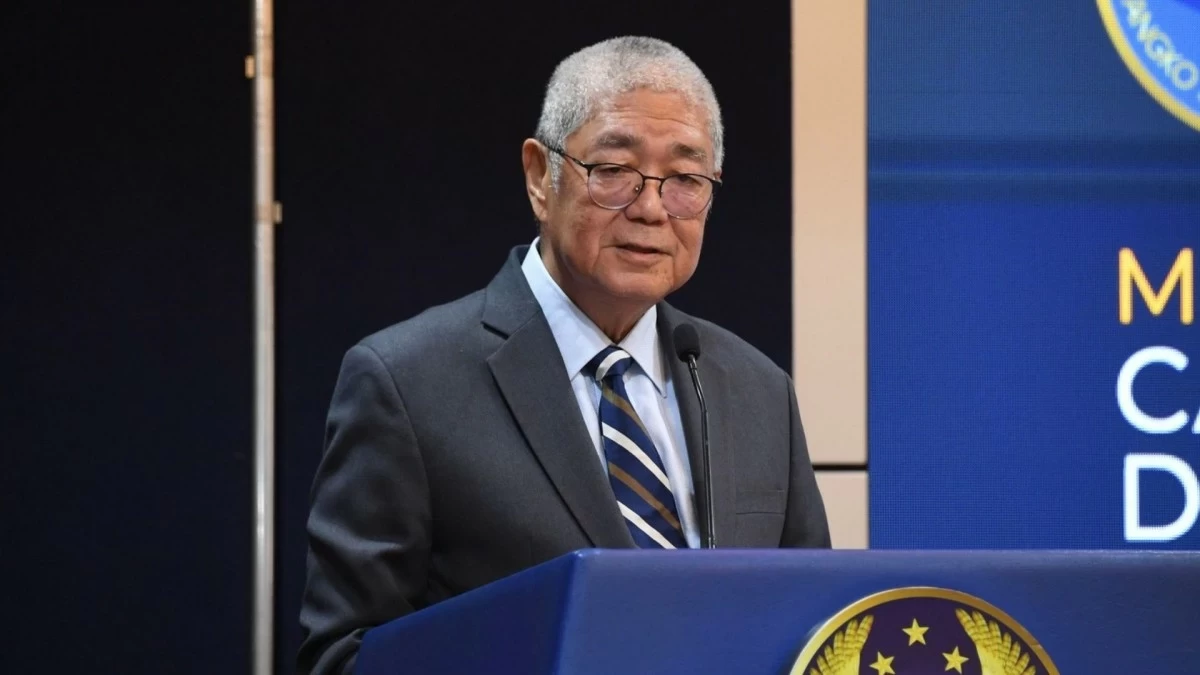
BSP Governor Eli Remolona Jr. admitted that the monetary authority was caught off guard by the scale of the capital region’s wage adjustment, which came in at double the central bank’s baseline assumptions.
“We thought it would be six percent, but it turned out to be 12 percent,” Remolona said in a television interview with Bilyonaryo News Channel. “So we’re still crunching the numbers on the possible inflationary effects of that.”
Earlier this month, Remolona—who described the shock as “unusual”—said the Monetary Board will dissect incoming economic data at its August review before determining if front-loaded tightening is required to anchor price expectations.
He also noted that while the price pressures from Metro Manila’s wage adjustment are significant, the development does not necessarily warrant an outsized monetary response.
He explicitly dismissed the probability of a “jumbo” 50-basis-point (bp) rate increase in response to the wage decision.
Philippine Chamber of Commerce and Industry (PCC!) President Perry A. Ferrer had warned that the mandated ₱85 daily minimum wage hike for the National Capital Region could accelerate inflation and trigger broader economic slowdown.
While Ferrer said that employers would comply with the mandate, he cautioned that rising labor costs without productivity gains could hurt national competitiveness and discourage foreign investment.
The business group added that the wage order threatens the survival of micro, small, and medium-sized enterprises operating on thin profit margins.
The staggered adjustment begins with a first tranche of ₱60 on July 25 this year, followed by the remaining ₱25 in January 2027.
Apart from the swift transmission of the wage adjustment, the BSP is also closely watching the potential for wage hikes in other regions that could further add to price pressures not only in the commercial hub but across the country.
Despite these risks, the BSP’s outlook points to stabilizing prices over the medium term. Headline inflation settled at 6.4 percent in June, a deeper slowdown from May’s 6.8 percent and April’s peak of 7.2 percent.
Echoing the BSP’s refrain after the recent revision, Remolona reiterated that he anticipates price movements to return to the tolerance band of two to four percent over the next two years. “We actually see the inflation rate to be back within our tolerance range within two years,” he said.
During the June policy meeting, the BSP raised its inflation projections for 2026 and 2027 to 6.4 percent and 4.5 percent, respectively, up from its previous forecasts of 6.3 percent and 4.3 percent.
To tame the raging inflation, the policy-setting Monetary Board (MB) has so far raised key borrowing costs by two quarter-point increases to 4.75 percent.
Raising interest rates typically cools demand-driven inflation. However, it also risks further stifling an already fragile economic recovery.
Domestic growth—as measured by the expansion of gross domestic product (GDP)—slowed to 2.8 percent in the first quarter, its weakest performance in five years. It continued the slowdown first seen in the second half of 2025 following the controversial high-profile flood control fiasco.
Remolona addressed the balance between stabilizing consumer prices and anchoring output growth, noting that the two objectives are complementary rather than conflicting. “Sustained growth depends on low inflation,” he said.
Meanwhile, the governor pointed out the unique challenge the Philippines faces compared to its regional peers—the lack of a cushion from the tech sector.
With the Philippines being a net importer of oil, any mood swings between the opposing camps of the United States (US) and Iran would bring the country closer to higher inflationary pressures, as it relies on the Middle East for most of its oil requirements.
“We’re one of the hardest hit when it comes to the oil price shock,” Remolona said, observing that unlike some neighbors, the local economy lacks the cushion of a “buoyant tech sector.”
To build long-term resilience, Remolona is pushing for structural changes to reduce overreliance on traditional banking.
Current indicators suggest the country is on a stronger footing, recently ranking first among 57 countries for investor relations. Remolona attributed this to transparency, “especially when it comes to sovereign debt and our capacity to repay that debt.”

Related Tags

Bangko Sentral ng Pilipinas (BSP) Eli M. Remolona Jr. Inflation Bilyonaryo News Channel economy
ADVERTISEMENT
.most-popular .layout-ratio{ padding-bottom: 79.13%; } @media (min-width: 768px) and (max-width: 1024px) { .widget-title { font-size: 15px !important; } }

{{ articles_filter_1561_widget.title }}

.most-popular .layout-ratio{ padding-bottom: 79.13%; } @media (min-width: 768px) and (max-width: 1024px) { .widget-title { font-size: 15px !important; } }

{{ static_articles_1562_widget.title }}

.most-popular .layout-ratio{ padding-bottom: 79.13%; } @media (min-width: 768px) and (max-width: 1024px) { .widget-title { font-size: 15px !important; } }

{{ articles_filter_1563_widget.title }}

{{ articles_filter_1564_widget.title }}

.mb-article-details { position: relative; } .mb-article-details .article-body-preview, .mb-article-details .article-body-summary{ font-size: 17px; line-height: 30px; font-family: "Libre Caslon Text", serif; color: #000; } .mb-article-details .article-body-preview iframe , .mb-article-details .article-body-summary iframe{ width: 100%; margin: auto; } .read-more-background { background: linear-gradient(180deg, color(display-p3 1.000 1.000 1.000 / 0) 13.75%, color(display-p3 1.000 1.000 1.000 / 0.8) 30.79%, color(display-p3 1.000 1.000 1.000) 72.5%); position: absolute; height: 200px; width: 100%; bottom: 0; display: flex; justify-content: center; align-items: center; padding: 0; } .read-more-background a{ color: #000; } .read-more-btn { padding: 17px 45px; font-family: Inter; font-weight: 700; font-size: 18px; line-height: 16px; text-align: center; vertical-align: middle; border: 1px solid black; background-color: white; } .hidden { display: none; }
function initializeAllSwipers() { // Get all hidden inputs with cms_article_id document.querySelectorAll('[id^="cms_article_id_"]').forEach(function (input) { const cmsArticleId = input.value; const articleSelector = '#article-' + cmsArticleId + ' .body_images'; const swiperElement = document.querySelector(articleSelector); if (swiperElement && !swiperElement.classList.contains('swiper-initialized')) { new Swiper(articleSelector, { loop: true, pagination: false, navigation: { nextEl: '#article-' + cmsArticleId + ' .swiper-button-next', prevEl: '#article-' + cmsArticleId + ' .swiper-button-prev', }, }); } }); } setTimeout(initializeAllSwipers, 3000); const intersectionObserver = new IntersectionObserver( (entries) => { entries.forEach((entry) => { if (entry.isIntersecting) { const newUrl = entry.target.getAttribute("data-url"); if (newUrl) { history.pushState(null, null, newUrl); let article = entry.target; // Extract metadata const author = article.querySelector('.author-section').textContent.replace('By', '').trim(); const section = article.querySelector('.section-info ').textContent.replace(' ', ' '); const title = article.querySelector('.article-title h1').textContent; // Parse URL for Chartbeat path format const parsedUrl = new URL(newUrl, window.location.origin); const cleanUrl = parsedUrl.host + parsedUrl.pathname; // Update Chartbeat configuration if (typeof window._sf_async_config !== 'undefined') { window._sf_async_config.path = cleanUrl; window._sf_async_config.sections = section; window._sf_async_config.authors = author; } // Track virtual page view with Chartbeat if (typeof pSUPERFLY !== 'undefined' && typeof pSUPERFLY.virtualPage === 'function') { try { pSUPERFLY.virtualPage({ path: cleanUrl, title: title, sections: section, authors: author }); } catch (error) { console.error('ping error', error); } } // Optional: Update document title if (title && title !== document.title) { document.title = title; } } } }); }, { threshold: 0.1 } ); function showArticleBody(button) { const article = button.closest("article"); const summary = article.querySelector(".article-body-summary"); const body = article.querySelector(".article-body-preview"); const readMoreSection = article.querySelector(".read-more-background"); // Hide summary and read-more section summary.style.display = "none"; readMoreSection.style.display = "none"; // Show the full article body body.classList.remove("hidden"); } document.addEventListener("DOMContentLoaded", () => { let loadCount = 0; // Track how many times articles are loaded const offset = [1, 2, 3, 4, 5, 6, 7, 8, 9, 10]; // Offset values const currentUrl = window.location.pathname.substring(1); let isLoading = false; // Prevent multiple calls if (!currentUrl) { console.log("Current URL is invalid."); return; } const sentinel = document.getElementById("load-more-sentinel"); if (!sentinel) { console.log("Sentinel element not found."); return; } function isSentinelVisible() { const rect = sentinel.getBoundingClientRect(); return ( rect.top < window.innerHeight && rect.bottom >= 0 ); } function onScroll() { if (isLoading) return; if (isSentinelVisible()) { if (loadCount >= offset.length) { console.log("Maximum load attempts reached."); window.removeEventListener("scroll", onScroll); return; } isLoading = true; const currentOffset = offset[loadCount]; window.loadMoreItems().then(() => { let article = document.querySelector('#widget_1690 > div:nth-last-of-type(2) article'); intersectionObserver.observe(article) loadCount++; }).catch(error => { console.error("Error loading more items:", error); }).finally(() => { isLoading = false; }); } } window.addEventListener("scroll", onScroll); });

Sign up by email to receive news.