ADVERTISEMENT

US expands its airstrike campaign against Iran by hitting more bridges

Published Jul 17, 2026 11:10 am
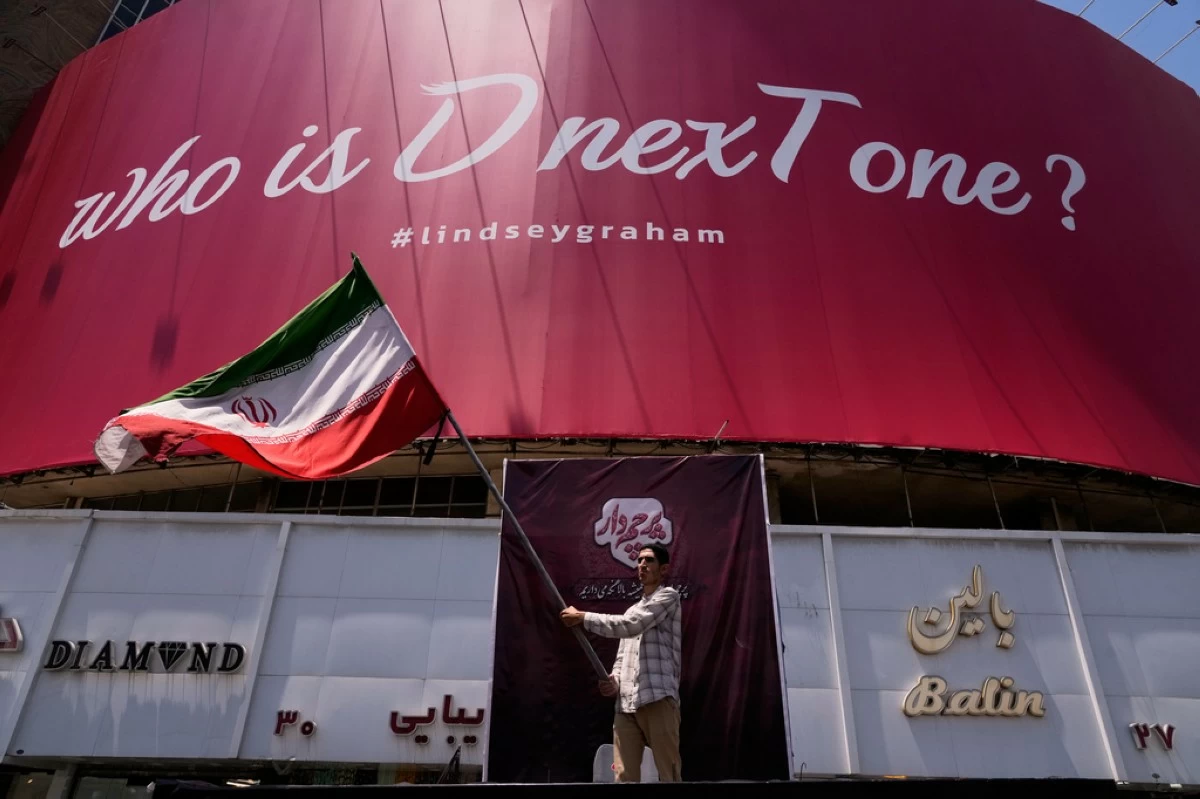
A man waves an Iranian flag beneath a billboard reading in English,
A man waves an Iranian flag beneath a billboard reading in English, "Who is D nexT one?" and "#lindseygraham," referring to late U.S. Sen. Lindsey Graham and using the capital letters "D" and "T" in an apparent play on the initials of U.S. President Donald Trump, in downtown Tehran, Iran, Thursday, July 16, 2026. (AP Photo/Vahid Salemi)

DUBAI, United Arab Emirates (AP) — The United States expanded its airstrike campaign against Iran early Friday by increasingly hitting bridges, part of President Donald Trump's threats to start striking infrastructure to pressure Tehran to ease its chokehold on the Strait of Hormuz. Iran launched new missile attacks against U.S.-allied nations in the Middle East and warned that its attacks would escalate.

In Qatar, authorities warned the public to take shelter as a barrage of Iranian missiles targeted the nation. People heard explosions overhead as air defenses fired to intercept the missiles.

Qatar is a key mediator with Pakistan in trying to reach an end to the Iran war. But talks have broken down over Iran’s chokehold on the Strait of Hormuz.

Iran earlier targeted Bahrain and Kuwait over U.S. airstrikes hitting bridges in the Islamic Republic overnight.

Ceasefire in Iran war has collapsed

The interim ceasefire agreed to last month has collapsed, and the region has endured days of back-and-forth attacks by the U.S. and Iran as they battle for control of the strait. Iranian officials say U.S. strikes have killed more than 35 people and wounded over 300 others, with new casualties reported in Friday's strikes.

When the U.S. and Israel launched the war on Iran on Feb. 28, Tehran effectively closed the strait to shipping traffic, a move that sent the price of oil soaring and gave Iran major leverage in negotiations.

Speaking in a primetime address to the American public, Trump insisted the war was going well.

"We are likewise winning big in Iran, and you will see the fruits of that labor very, very shortly," Trump said.

Col. Ebrahim Zolfaghari, a spokesperson for the Iranian military’s Khatam al-Anbiya Central Headquarters, earlier threatened that Iran could launch widespread attacks on “all the infrastructure in the region” if the U.S. acted on Trump 's repeated warnings that America could hit Iranian bridges and power plants.

“Under no circumstances and in no way will we allow America, as a foreign and extraregional country, to interfere in the Strait of Hormuz,” he added. “This is Iran’s invincible red line.”

U.S. airstrikes hit bridges in Iran

The U.S. airstrikes hit bridges overnight into Friday in Iran's southern Hormozgan province, killing at least seven people, Iranian state television reported. The attacks hit Bandar Khamir, a city on Iran's coast on the Strait of Hormuz.

Iranian state media said the U.S. strikes Thursday hit around Tehran and Semnan province, home to Iran’s ballistic missile production and space program.

Trump has returned in recent days to his threats to target Iranian power stations and bridges to try to compel Iran to loosen its hold on the strait, through which about a fifth of all oil and natural gas once passed in peacetime. The U.S. also reimposed a naval blockade on Iranian ports to halt its shipments of crude oil.

Week-to-week cargo shipments through the strait dropped by almost a quarter at the beginning of the month, according to Maritime data firm Lloyd’s List Intelligence. And that was before the recent surge in tit-for-tat attacks.

Given the risks, some oil shippers are transiting the strait with their location devices turned off, but many are just staying put, Lloyd’s said Thursday. A growing amount of the region’s energy is being shipped through pipelines, but not nearly enough to offset the decline in shipping through the strait.

U.S. forces have redirected three commercial vessels trying to run the blockade, disabled one that did not comply and boarded another “to ensure full compliance,” the U.S. military's Central Command said in a post on X.

Related Tags

world news US-Iran war
ADVERTISEMENT
.most-popular .layout-ratio{ padding-bottom: 79.13%; } @media (min-width: 768px) and (max-width: 1024px) { .widget-title { font-size: 15px !important; } }

{{ articles_filter_1561_widget.title }}

.most-popular .layout-ratio{ padding-bottom: 79.13%; } @media (min-width: 768px) and (max-width: 1024px) { .widget-title { font-size: 15px !important; } }

{{ static_articles_1562_widget.title }}

.most-popular .layout-ratio{ padding-bottom: 79.13%; } @media (min-width: 768px) and (max-width: 1024px) { .widget-title { font-size: 15px !important; } }

{{ articles_filter_1563_widget.title }}

{{ articles_filter_1564_widget.title }}

.mb-article-details { position: relative; } .mb-article-details .article-body-preview, .mb-article-details .article-body-summary{ font-size: 17px; line-height: 30px; font-family: "Libre Caslon Text", serif; color: #000; } .mb-article-details .article-body-preview iframe , .mb-article-details .article-body-summary iframe{ width: 100%; margin: auto; } .read-more-background { background: linear-gradient(180deg, color(display-p3 1.000 1.000 1.000 / 0) 13.75%, color(display-p3 1.000 1.000 1.000 / 0.8) 30.79%, color(display-p3 1.000 1.000 1.000) 72.5%); position: absolute; height: 200px; width: 100%; bottom: 0; display: flex; justify-content: center; align-items: center; padding: 0; } .read-more-background a{ color: #000; } .read-more-btn { padding: 17px 45px; font-family: Inter; font-weight: 700; font-size: 18px; line-height: 16px; text-align: center; vertical-align: middle; border: 1px solid black; background-color: white; } .hidden { display: none; }
function initializeAllSwipers() { // Get all hidden inputs with cms_article_id document.querySelectorAll('[id^="cms_article_id_"]').forEach(function (input) { const cmsArticleId = input.value; const articleSelector = '#article-' + cmsArticleId + ' .body_images'; const swiperElement = document.querySelector(articleSelector); if (swiperElement && !swiperElement.classList.contains('swiper-initialized')) { new Swiper(articleSelector, { loop: true, pagination: false, navigation: { nextEl: '#article-' + cmsArticleId + ' .swiper-button-next', prevEl: '#article-' + cmsArticleId + ' .swiper-button-prev', }, }); } }); } setTimeout(initializeAllSwipers, 3000); const intersectionObserver = new IntersectionObserver( (entries) => { entries.forEach((entry) => { if (entry.isIntersecting) { const newUrl = entry.target.getAttribute("data-url"); if (newUrl) { history.pushState(null, null, newUrl); let article = entry.target; // Extract metadata const author = article.querySelector('.author-section').textContent.replace('By', '').trim(); const section = article.querySelector('.section-info ').textContent.replace(' ', ' '); const title = article.querySelector('.article-title h1').textContent; // Parse URL for Chartbeat path format const parsedUrl = new URL(newUrl, window.location.origin); const cleanUrl = parsedUrl.host + parsedUrl.pathname; // Update Chartbeat configuration if (typeof window._sf_async_config !== 'undefined') { window._sf_async_config.path = cleanUrl; window._sf_async_config.sections = section; window._sf_async_config.authors = author; } // Track virtual page view with Chartbeat if (typeof pSUPERFLY !== 'undefined' && typeof pSUPERFLY.virtualPage === 'function') { try { pSUPERFLY.virtualPage({ path: cleanUrl, title: title, sections: section, authors: author }); } catch (error) { console.error('ping error', error); } } // Optional: Update document title if (title && title !== document.title) { document.title = title; } } } }); }, { threshold: 0.1 } ); function showArticleBody(button) { const article = button.closest("article"); const summary = article.querySelector(".article-body-summary"); const body = article.querySelector(".article-body-preview"); const readMoreSection = article.querySelector(".read-more-background"); // Hide summary and read-more section summary.style.display = "none"; readMoreSection.style.display = "none"; // Show the full article body body.classList.remove("hidden"); } document.addEventListener("DOMContentLoaded", () => { let loadCount = 0; // Track how many times articles are loaded const offset = [1, 2, 3, 4, 5, 6, 7, 8, 9, 10]; // Offset values const currentUrl = window.location.pathname.substring(1); let isLoading = false; // Prevent multiple calls if (!currentUrl) { console.log("Current URL is invalid."); return; } const sentinel = document.getElementById("load-more-sentinel"); if (!sentinel) { console.log("Sentinel element not found."); return; } function isSentinelVisible() { const rect = sentinel.getBoundingClientRect(); return ( rect.top < window.innerHeight && rect.bottom >= 0 ); } function onScroll() { if (isLoading) return; if (isSentinelVisible()) { if (loadCount >= offset.length) { console.log("Maximum load attempts reached."); window.removeEventListener("scroll", onScroll); return; } isLoading = true; const currentOffset = offset[loadCount]; window.loadMoreItems().then(() => { let article = document.querySelector('#widget_1690 > div:nth-last-of-type(2) article'); intersectionObserver.observe(article) loadCount++; }).catch(error => { console.error("Error loading more items:", error); }).finally(() => { isLoading = false; }); } } window.addEventListener("scroll", onScroll); });

Sign up by email to receive news.