






Manila Bulletin
 Philippines
National
PNP sees no security threats as BARMM gun ban takes effect; OPAPRU, DOJ push conflict prosecution rules
Philippines
National
PNP sees no security threats as BARMM gun ban takes effect; OPAPRU, DOJ push conflict prosecution rules
Philippines
National
PNP sees no security threats as BARMM gun ban takes effect; OPAPRU, DOJ push conflict prosecution rules
PNP sees no security threats as BARMM gun ban takes effect; OPAPRU, DOJ push conflict prosecution rules
Published Jul 17, 2026 02:46 pm


At A Glance
- The Philippine National Police (PNP) said it has not monitored any security threat since the BARMM election gun ban took effect on July 16 as it intensified security measures and coordination with the AFP, Comelec, and local governments for the Sept. 14 parliamentary elections.
- The Department of Justice and Office of the Presidential Adviser on Peace, Reconciliation and Unity created a joint Technical Working Group that aims to complete by Sept. 30 new prosecution guidelines for community-based conflict cases, particularly clan feuds, while recommending policy and legislative reforms.
- Officials said the security and peacebuilding efforts are intended to help ensure peaceful and credible BARMM elections while strengthening long-term conflict resolution and reconciliation in the Bangsamoro region.
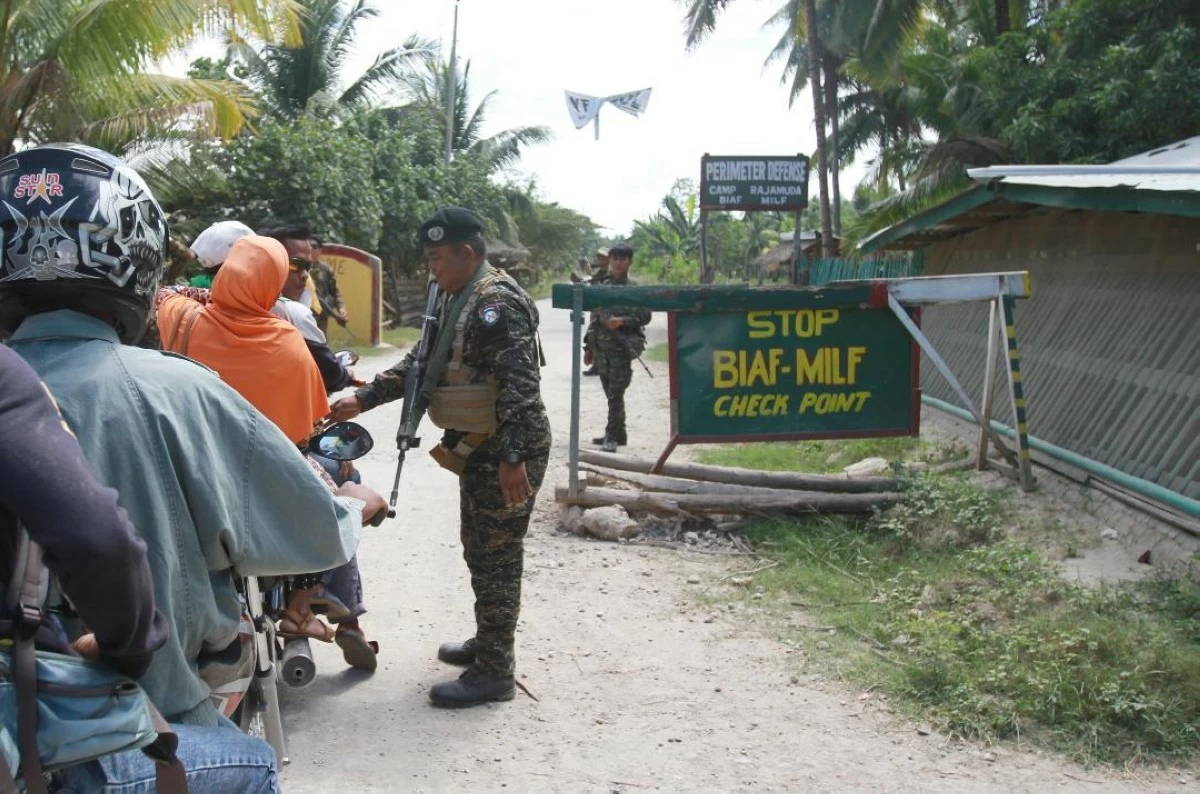
MORO Islamic Liberation Front fighters guard a road leading to one of its camps in a remote barangay in SGA-BARMM. (Keith Bacongco)
The Philippine National Police (PNP) said Friday, July 17, that it has not monitored any security threat since the implementation of the election gun ban for the Bangsamoro Autonomous Region in Muslim Mindanao (BARMM) as it intensified security preparations for the region's first parliamentary elections in September.
Police Gen. Jose Melencio C. Nartatez Jr., PNP chief, said the police force remains on full alert as the election period officially started on July 16.
“The PNP has not monitored any security threat since the start of the gun ban in BARMM in preparation for the parliamentary elections in September,” Nartatez said.
The gun ban will remain in force until Sept. 29 and to enforce the prohibition on carrying firearms, the PNP has established checkpoints in cities and municipalities across the region.
President Ferdinand "Bongbong" Marcos Jr. earlier authorized the deputation of the PNP, the Armed Forces of the Philippines (AFP), and other government agencies to assist the Commission on Elections (Comelec) in securing the BARMM parliamentary polls scheduled on Sept. 14.
Nartatez said the police will sustain close coordination with partner agencies throughout the election period to ensure peaceful, orderly, honest, and credible elections.
“Our police officers will strengthen their partnership with local government units, the Armed Forces of the Philippines, and the Commission on Elections to ensure orderly preparations and the peaceful conduct of the parliamentary elections,” he said.
“Strong coordination between the PNP and its security partners and stakeholders, including the community, is a tried and tested formula in ensuring the efficient implementation of the election security plan,” he added.
The BARMM parliamentary elections will choose members of the Bangsamoro Parliament, which will govern the autonomous region under the Bangsamoro Organic Law. The polls are considered a major milestone in the region's transition to a fully functioning parliamentary government.
Peacebuilding efforts
Meanwhile, the Department of Justice (DOJ) and the Office of the Presidential Adviser on Peace, Reconciliation and Unity (OPAPRU) have set a Sept. 30 deadline to complete new prosecution guidelines for community-based conflict cases under a joint technical working group formed to align peacebuilding efforts with the country's criminal justice system.
OPAPRU Secretary Mel Senen S. Sarmiento and DOJ Secretary Fredderick A. Vida signed the memorandum of agreement (MOA) last Wednesday, July 15, creating the joint Technical Working Group (TWG) that will formulate prosecutorial guidelines for handling community-based conflict cases, particularly those involving clan feuds, while recommending long-term policy and possible legislative reforms.
Vida said the body aims to finish its work on or before Sept. 30, although the agreement provides a 45-day period from its signing to complete its tasks.
“A community cannot have true peace without justice,” Vida said. “Resolving community-based conflict is not simply a peace and order problem. It is fundamental to governance, development, and justice.”
Under the agreement, the working group will develop prosecutorial guidelines that will help prosecutors consider verified peace settlements while remaining within the bounds of existing laws.
The TWG will be co-chaired by the DOJ and OPAPRU, and will include representatives from the Bangsamoro Ministry of Public Order and Safety, the Department of the Interior and Local Government, PNP, the AFP, local government units, traditional justice representatives, religious leaders, and other peace stakeholders.
Among its tasks are preparing an inventory of pending community-based conflicts, proposing a verification and certification mechanism for peace settlements, drafting a DOJ-OPAPRU coordination protocol, preparing an operations manual, creating standard documentation forms, developing a monitoring and evaluation framework, and recommending policy and legislative measures.
For his part, Sarmiento said the initiative seeks to build lasting peace by strengthening reconciliation at the community level.
“When communities are reconciled, we lay the foundation for stable governance, sustainable socio-economic development, inclusive economic opportunities, and an improved quality of life for every Filipino. This is the enduring peace we are committed to building together,” Sarmiento said.