






 Philippines
National
One year after Marcos' SONA vaccination push, where does the Philippines stand?
Philippines
National
One year after Marcos' SONA vaccination push, where does the Philippines stand?
One year after Marcos' SONA vaccination push, where does the Philippines stand?


At A Glance
- President Marcos directed the DOH in his 2025 SONA to ensure Filipino children complete their immunization schedules.
- Since then, the government has expanded catch-up vaccination campaigns, introduced digital vaccine tracking and strengthened vaccine distribution systems.
- The latest national survey shows childhood immunization has improved, but coverage remains below the government's 95-percent target.
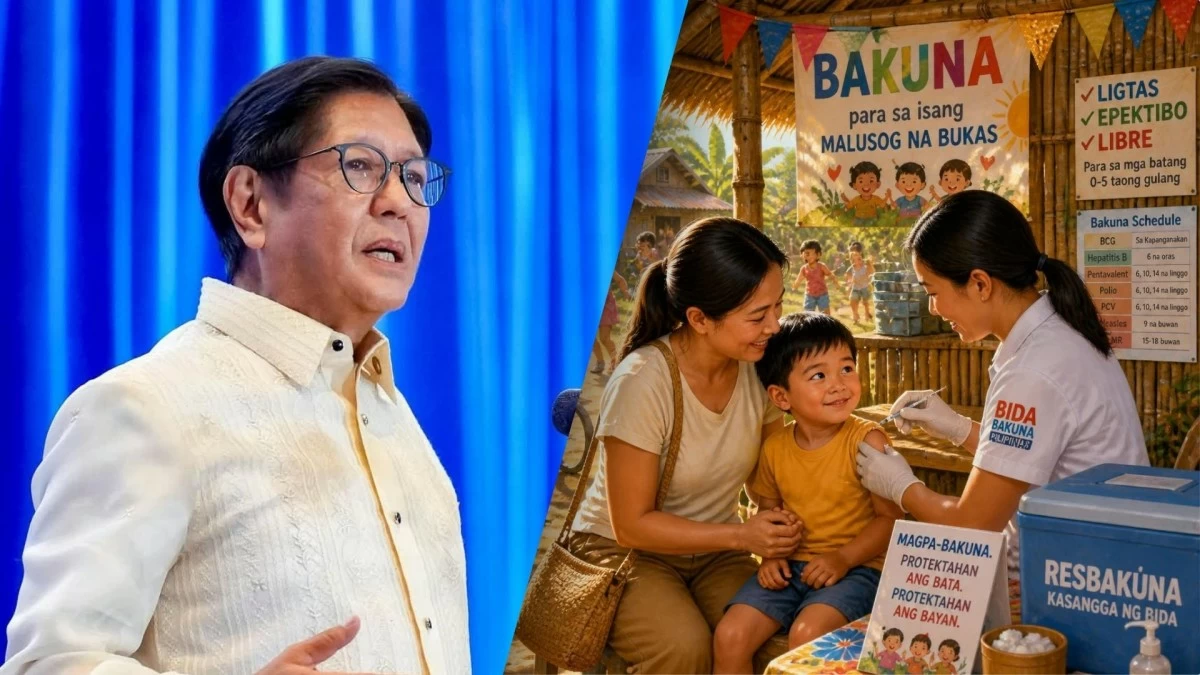
One year after President Marcos directed the Department of Health (DOH) to accelerate childhood immunization, the government's efforts have expanded from catch-up vaccination campaigns to improvements in vaccine tracking and distribution as it works toward restoring routine immunization coverage nationwide ahead of this year's State of the Nation Address (SONA).
In his 2025 SONA, Marcos instructed the DOH to ensure Filipino children complete their immunization schedules, making vaccination one of the administration's key public health priorities.
The directive came as the government sought to reverse years of declining routine immunization caused by disruptions during the COVID-19 pandemic and lingering vaccine hesitancy, both of which contributed to widening immunity gaps among Filipino children.
Just months after the SONA, the DOH, together with the World Health Organization (WHO) and the United Nations Children's Fund (UNICEF), launched a roadmap to restore routine childhood immunization coverage to 95 percent, the level considered necessary to provide strong community protection against vaccine-preventable diseases.
When the roadmap was launched in January 2025, partial DOH administrative data showed that about 61 percent of eligible children had completed their routine immunizations, with 933,039 children still needing to complete their recommended vaccine doses. Health officials said the figures did not yet include vaccinations administered by private health facilities.
More recent data, however, indicate that immunization coverage has improved. The 2025 National Demographic and Health Survey (NDHS), released this year, found that 71 percent of children aged 12 to 23 months had received all basic antigens. While higher than earlier administrative figures, the latest survey still places the country well below the government's target of 95 percent coverage.
The government has also intensified nationwide catch-up immunization activities and revived school-based vaccination through the Bakuna Eskwela program to reach children who missed routine vaccines during the pandemic.
The DOH has likewise rolled out DigiVacc, a digital immunization system developed with support from UNICEF and the Government of Japan to replace paper-based vaccination records and improve the tracking of children who miss vaccine doses.
The Philippines has also made significant progress in reducing the number of so-called "zero-dose" children—those who have not received a single routine vaccine. According to WHO and UNICEF, the number dropped from more than one million during 2020 to 2021 to about 163,000 in 2023, removing the Philippines from the list of the world's top 20 countries with the highest number of zero-dose children.
Vaccine logistics strengthened
Another development over the past year has been the continued modernization of vaccine storage and transport under the National Immunization Program.
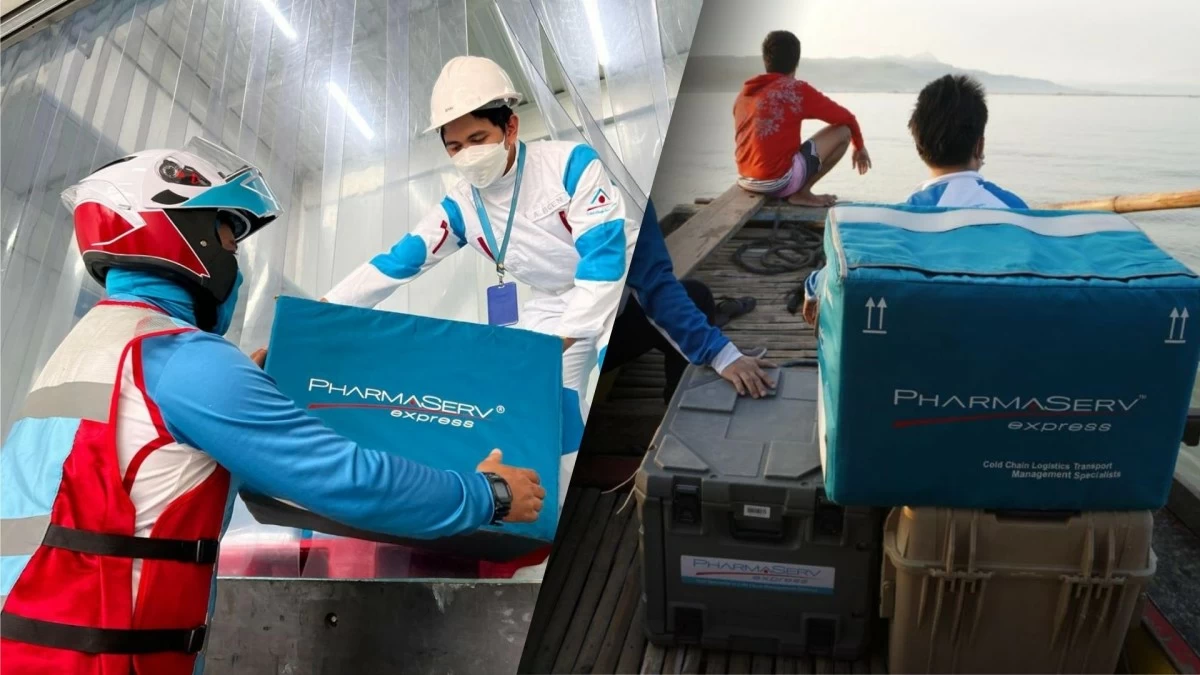
According to PharmaServ Express, which handles the transport of vaccines for the DOH's National Immunization Program, the company uses internationally compliant cold chain systems designed to maintain required storage temperatures from warehouses to vaccination sites nationwide.
The company said its vaccine shipments use International Safe Transit Association (ISTA)-validated bio-thermal packaging capable of maintaining required temperatures for up to 168 hours, helping preserve vaccine potency during deliveries, including to geographically isolated and disadvantaged areas.
PharmaServ Express added that vaccine shipments are monitored through real-time temperature and location tracking systems, allowing health authorities to verify storage conditions throughout the delivery process.
The company has been providing vaccine logistics services to the DOH since 2017 and also handled the storage, transport, and distribution of Covid-19 vaccines during the nationwide vaccination campaign.
Virology institute established
Another milestone following Marcos' 2025 SONA was the enactment of Republic Act No. 12290, or the Virology and Vaccine Institute of the Philippines (VIP) Act, which seeks to strengthen the country's capacity for virology and vaccine research.
Marcos signed the law on Sept. 12, 2025, creating the Virology and Vaccine Institute of the Philippines as an attached agency of the Department of Science and Technology. The institute is tasked with leading research on viruses and other pathogens, vaccine discovery and pre-clinical development, diagnostics, therapeutics, biosafety and biosecurity, and workforce development using a One Health approach.
The law is expected to bolster the country's long-term preparedness against emerging infectious diseases while supporting local vaccine research and development, complementing the government's efforts to improve routine immunization coverage.
Challenges remain
Despite improvements in vaccination coverage, health authorities and international health organizations continue to urge the Philippines to sustain routine immunization efforts, saying the country must still close the gap toward its 95-percent coverage target to reduce the risk of outbreaks of vaccine-preventable diseases such as measles, polio, diphtheria and pertussis.
As Marcos prepares to deliver his 2026 SONA, the administration can point to expanded catch-up vaccination campaigns, digital immunization tracking, improved vaccine logistics and gains in immunization coverage since last year's directive.
Even so, the latest national survey shows there is still considerable ground to cover before the country reaches the level of protection health authorities consider necessary for Filipino children.