








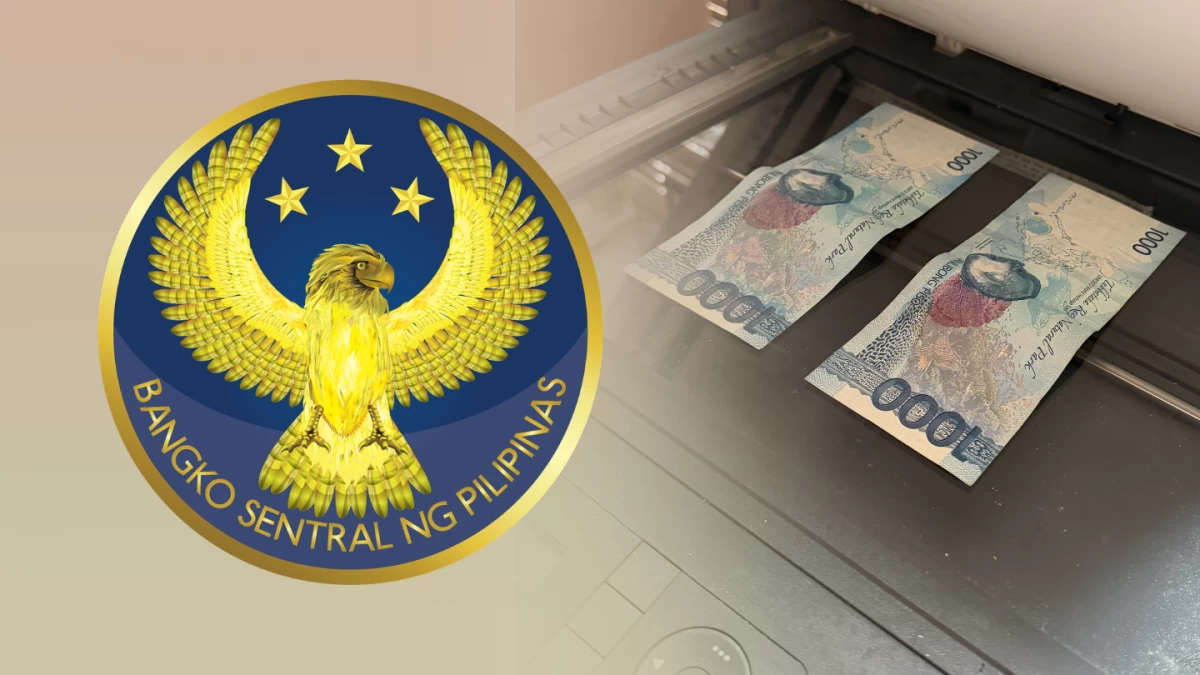
The Bangko Sentral ng Pilipinas (BSP) reported a sharp decline in counterfeit currency overall last year, though the regulator is contending with a sudden spike in fake polymer banknotes.
According to the Bangko Sentral ng Pilipinas’ (BSP) annual report, documented counterfeit banknotes fell 17.1 percent to 57,945 pieces last year from 69,925 in the previous year.
The central bank attributed the drop to enhanced security features on newer bills, combined with better public awareness and improved detection training among cash handlers.
“This reduction reflects the effectiveness of enhanced banknote security features that made counterfeiting more difficult, alongside increased public awareness and expanded training that strengthened counterfeit detection capabilities,” the BSP said.
Despite the overall positive trend, counterfeit polymer banknotes surged to 1,358 pieces in 2025. While this is a massive jump from just three pieces in 2024, polymer fakes still accounted for only 2.3 percent of the combined total of counterfeit paper and polymer notes recorded during the year.
Traditional paper currency continues to represent the vast majority of forged bills.
The central bank maintained that the plastic-like polymer material, which was first introduced to the public in 2022, is significantly more secure than paper. Since their release, polymer notes have accounted for a mere 0.6 percent of all recorded counterfeit banknotes in the country.
Counterfeiters are increasingly relying on basic, widely available retail technology rather than sophisticated printing presses. Inkjet printing was used in 63.3 percent of the documented forgery cases, followed by laser printing at 33.5 percent.
The geographic concentration of fake currency remains heavily skewed toward major economic hubs. The National Capital Region accounted for 45.3 percent of all recoveries, while the neighboring industrial corridor of CALABARZON—comprising Cavite, Laguna, Batangas, Rizal, and Quezon—accounted for 11.3 percent.
In terms of venues, shopping malls were the primary friction point, yielding 33.3 percent of recovered fakes, followed by supermarkets at 24 percent and wet markets at 17.6 percent.
Beyond paper and polymer notes, authorities have had to pivot toward more unusual currency-related crimes. The central bank launched five major enforcement actions last year, including a targeted campaign against coin destruction.
Simultaneous buy-bust operations in the tourist destinations of Siquijor and Boracay Island dismantled a syndicate that was defacing legal tender 10-piso coins. The suspects were converting the copper-nickel and aluminum-bronze inner cores of the coins into jewelry and rings sold to tourists for high profits.
The central bank has also issued fresh warnings regarding digital and physical reproductions of the domestic currency. Following a wave of online memes that featured mock Philippine bills amid legal debates surrounding Vice President Sara Duterte's impeachment trial, the BSP reiterated that replicating or distributing unauthorized facsimiles of the Philippine peso carries a prison sentence of up to 10 years.