

ADVERTISEMENT

VP Sara's trial on confidential funds to test lawyers, spox says

Published Jul 16, 2026 03:06 pm

At A Glance

  • Senate Impeachment Court spokesperson Regie Tongol said the prosecution and defense must explain the confidential funds allegations under Article 1 in simpler language so the public can better understand the proceedings, while senator-judges are also helping through their questions.
The presentation of evidence under Article 1 of the impeachment case against Vice President Sara Duterte is expected to challenge both the prosecution and the defense to explain complex issues involving confidential funds in a way the public can understand, Senate Impeachment Court spokesperson Regie Tongol said Thursday.
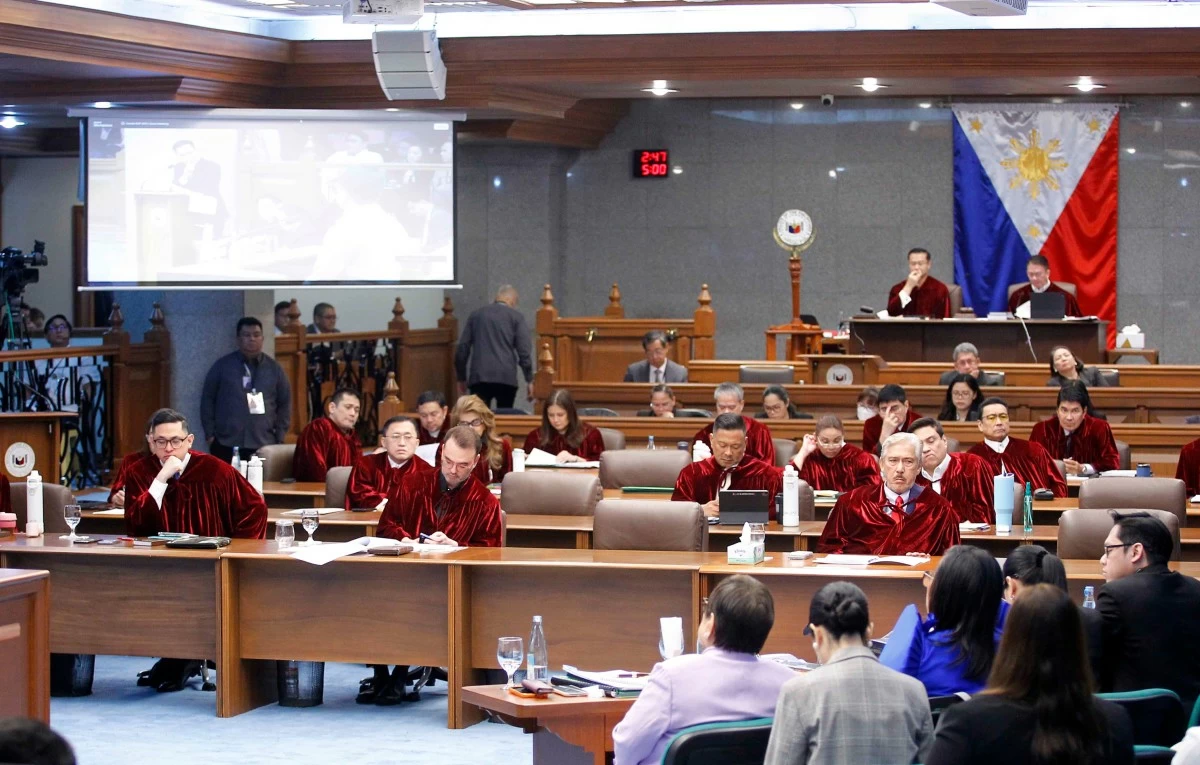
Scenes during the second day of the impeachment trial of Vice President Sara Duterte at the Senate Session Hall in Pasay City on Tuesday, July 7, 2026. (Mark Balmores)
Speaking during a press briefing, Tongol acknowledged that Article 1 would be more difficult for the public to follow than Article 4, which largely relied on publicly available videos and statements.
"As you have seen, I think the senator-judges are already exerting extra effort to present each party's theory of the case narratively without making it overly technical," Tongol said.
He said senator-judges have been guiding the public through their questions to witnesses and lawyers, but added that the prosecution and defense also have the responsibility to translate legal concepts and evidentiary issues into language ordinary Filipinos can understand.
Tongol noted that while members of the House prosecution panel, being elected officials, are more accustomed to communicating political issues to the public, the defense panel consists largely of trial lawyers trained in highly technical courtroom litigation.
"I think both parties have to navigate that and balance it so that the public can follow what is happening during the impeachment trial," he said.
The Senate spokesperson also clarified that subpoenas issued by the impeachment court for Land Bank officials and documents related to Article 1 were granted ex parte, meaning without first hearing objections from the defense.
He explained that requests for subpoenas are generally considered non-litigious motions under the Rules of Court, allowing the presiding officer to issue them immediately.
Any objection from the defense, Tongol said, may only be raised once the prosecution formally offers the evidence or while witnesses are being questioned.
Tongol distinguished these subpoenas from the House prosecution's pending request for Vice President Duterte's bank records, tax records, and Anti-Money Laundering Council (AMLC) reports under Article 2.
He said those requests involve privacy laws and confidentiality provisions, making them "highly legal" and more contentious.
Tongol also cited the 2012 impeachment trial of the late Chief Justice Renato Corona, where former Bureau of Internal Revenue Commissioner Kim Henares first sought authorization from then President Benigno Aquino III before complying with a Senate subpoena for Corona's tax records.
According to Tongol, Henares requested presidential authority to avoid possible criminal liability under the National Internal Revenue Code while also complying with the impeachment court's subpoena.
He said a similar process could be considered if the impeachment court later subpoenas BIR records in Duterte's case.
Tongol likewise clarified that any future BIR submission need not resemble the sealed green box that became prominent during the Corona impeachment trial.
"It can come through a folder, an envelope, or even another box. The green box was simply the BIR commissioner's choice at that time," he said.
Asked whether the defense could elevate any subpoena order to the Supreme Court, Tongol said legal experts remain divided.
One view, he said, holds that the Senate has the Constitution's sole authority to try and decide impeachment cases, limiting judicial intervention. Another argues that the high court may review impeachment proceedings if there is an allegation of grave abuse of discretion or a violation of constitutional rights.
"Anyone is free to file a case," Tongol said, adding that only a future Supreme Court ruling would definitively settle the issue.

Related Tags

impeachment court Vice President Sara Duterte regie tongol Renato Corona
ADVERTISEMENT
.most-popular .layout-ratio{ padding-bottom: 79.13%; } @media (min-width: 768px) and (max-width: 1024px) { .widget-title { font-size: 15px !important; } }

{{ articles_filter_1561_widget.title }}

.most-popular .layout-ratio{ padding-bottom: 79.13%; } @media (min-width: 768px) and (max-width: 1024px) { .widget-title { font-size: 15px !important; } }

{{ static_articles_1562_widget.title }}

.most-popular .layout-ratio{ padding-bottom: 79.13%; } @media (min-width: 768px) and (max-width: 1024px) { .widget-title { font-size: 15px !important; } }

{{ articles_filter_1563_widget.title }}

{{ articles_filter_1564_widget.title }}

.mb-article-details { position: relative; } .mb-article-details .article-body-preview, .mb-article-details .article-body-summary{ font-size: 17px; line-height: 30px; font-family: "Libre Caslon Text", serif; color: #000; } .mb-article-details .article-body-preview iframe , .mb-article-details .article-body-summary iframe{ width: 100%; margin: auto; } .read-more-background { background: linear-gradient(180deg, color(display-p3 1.000 1.000 1.000 / 0) 13.75%, color(display-p3 1.000 1.000 1.000 / 0.8) 30.79%, color(display-p3 1.000 1.000 1.000) 72.5%); position: absolute; height: 200px; width: 100%; bottom: 0; display: flex; justify-content: center; align-items: center; padding: 0; } .read-more-background a{ color: #000; } .read-more-btn { padding: 17px 45px; font-family: Inter; font-weight: 700; font-size: 18px; line-height: 16px; text-align: center; vertical-align: middle; border: 1px solid black; background-color: white; } .hidden { display: none; }
function initializeAllSwipers() { // Get all hidden inputs with cms_article_id document.querySelectorAll('[id^="cms_article_id_"]').forEach(function (input) { const cmsArticleId = input.value; const articleSelector = '#article-' + cmsArticleId + ' .body_images'; const swiperElement = document.querySelector(articleSelector); if (swiperElement && !swiperElement.classList.contains('swiper-initialized')) { new Swiper(articleSelector, { loop: true, pagination: false, navigation: { nextEl: '#article-' + cmsArticleId + ' .swiper-button-next', prevEl: '#article-' + cmsArticleId + ' .swiper-button-prev', }, }); } }); } setTimeout(initializeAllSwipers, 3000); const intersectionObserver = new IntersectionObserver( (entries) => { entries.forEach((entry) => { if (entry.isIntersecting) { const newUrl = entry.target.getAttribute("data-url"); if (newUrl) { history.pushState(null, null, newUrl); let article = entry.target; // Extract metadata const author = article.querySelector('.author-section').textContent.replace('By', '').trim(); const section = article.querySelector('.section-info ').textContent.replace(' ', ' '); const title = article.querySelector('.article-title h1').textContent; // Parse URL for Chartbeat path format const parsedUrl = new URL(newUrl, window.location.origin); const cleanUrl = parsedUrl.host + parsedUrl.pathname; // Update Chartbeat configuration if (typeof window._sf_async_config !== 'undefined') { window._sf_async_config.path = cleanUrl; window._sf_async_config.sections = section; window._sf_async_config.authors = author; } // Track virtual page view with Chartbeat if (typeof pSUPERFLY !== 'undefined' && typeof pSUPERFLY.virtualPage === 'function') { try { pSUPERFLY.virtualPage({ path: cleanUrl, title: title, sections: section, authors: author }); } catch (error) { console.error('ping error', error); } } // Optional: Update document title if (title && title !== document.title) { document.title = title; } } } }); }, { threshold: 0.1 } ); function showArticleBody(button) { const article = button.closest("article"); const summary = article.querySelector(".article-body-summary"); const body = article.querySelector(".article-body-preview"); const readMoreSection = article.querySelector(".read-more-background"); // Hide summary and read-more section summary.style.display = "none"; readMoreSection.style.display = "none"; // Show the full article body body.classList.remove("hidden"); } document.addEventListener("DOMContentLoaded", () => { let loadCount = 0; // Track how many times articles are loaded const offset = [1, 2, 3, 4, 5, 6, 7, 8, 9, 10]; // Offset values const currentUrl = window.location.pathname.substring(1); let isLoading = false; // Prevent multiple calls if (!currentUrl) { console.log("Current URL is invalid."); return; } const sentinel = document.getElementById("load-more-sentinel"); if (!sentinel) { console.log("Sentinel element not found."); return; } function isSentinelVisible() { const rect = sentinel.getBoundingClientRect(); return ( rect.top < window.innerHeight && rect.bottom >= 0 ); } function onScroll() { if (isLoading) return; if (isSentinelVisible()) { if (loadCount >= offset.length) { console.log("Maximum load attempts reached."); window.removeEventListener("scroll", onScroll); return; } isLoading = true; const currentOffset = offset[loadCount]; window.loadMoreItems().then(() => { let article = document.querySelector('#widget_1690 > div:nth-last-of-type(2) article'); intersectionObserver.observe(article) loadCount++; }).catch(error => { console.error("Error loading more items:", error); }).finally(() => { isLoading = false; }); } } window.addEventListener("scroll", onScroll); });

Sign up by email to receive news.