






Manila Bulletin
 Business
Trade & Industry
US-funded nickel project in Zambales advances as Washington builds AI supply shield
Business
Trade & Industry
US-funded nickel project in Zambales advances as Washington builds AI supply shield
Business
Trade & Industry
US-funded nickel project in Zambales advances as Washington builds AI supply shield
US-funded nickel project in Zambales advances as Washington builds AI supply shield
Published Jul 16, 2026 06:00 pm
|
Updated Jul 16, 2026 03:01 pm


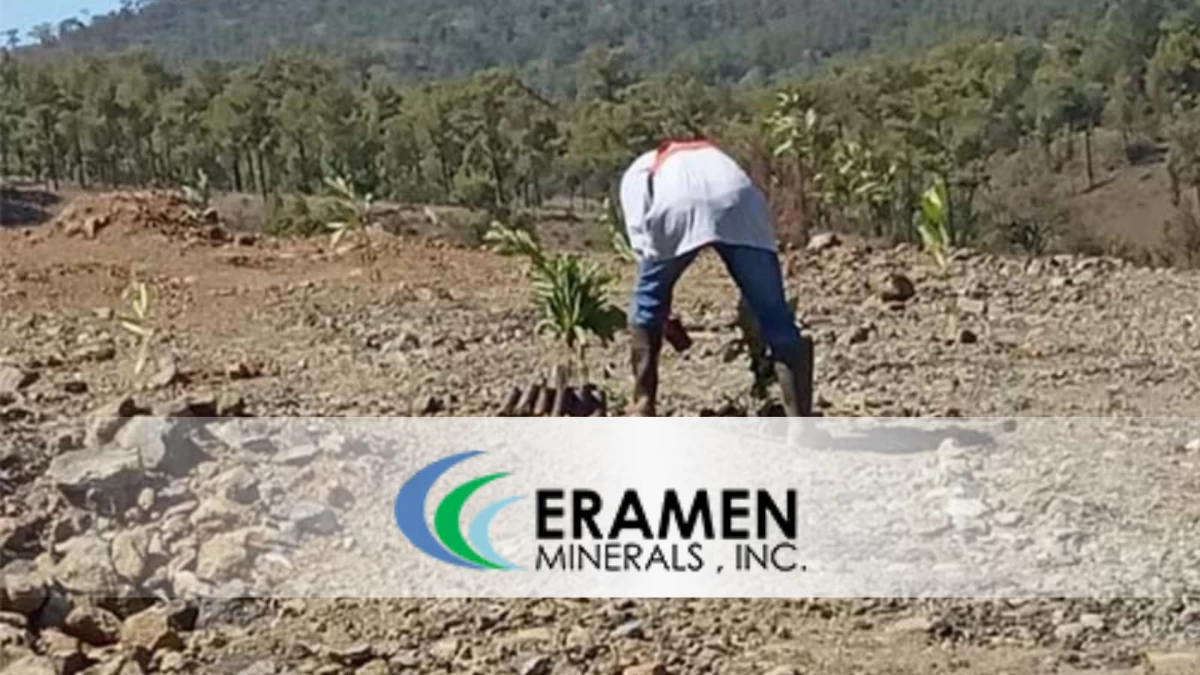
The development of a United States-backed mining project in Zambales, which could yield up to 20,000 metric tons (MT) of critical minerals annually, remains on track as cooperation deepens under the Washington-led Pax Silica initiative.
US Trade Development Agency (USTDA) Deputy Director Thomas Hardy told a hearing of the US House of Representatives Committee on Foreign Affairs that the agency continues to fund the feasibility study for the project.
“In the Philippines, USTDA is helping create an alternative to critical mineral processing in China in a trusted partner,” Hardy said.
In 2022, the USTDA awarded a $1 million grant to local mining firm Eramen Minerals Inc. to assess the economic viability of building a nickel processing facility at its site in Zambales.
The study will determine the facility’s technical specifications—including its alignment with environmental, social, and governance (ESG) standards—and help identify potential US investors to support the development of the project, according to Hardy.
Once operational, he said the facility is expected to produce approximately 20,000 MT of refined nickel and cobalt annually, which will serve as precursor materials for battery production.
Hardy noted that the project is part of a broader USTDA effort to secure critical supply chains by advancing US leadership in minerals, energy, and transportation.
“These efforts also support the [Trump] Administration's broader Pax Silica initiative, which seeks to build secure, resilient, and innovation-driven supply chains across the Al (artificial intelligence) stack, in partnership with trusted countries,” he said.
Pax Silica is a US-led strategic partnership that brings allied countries together to secure the global supply chain for AI, countering China's current dominance in the sector.
The Philippines joined the initiative as its 13th member. As part of its commitment, the country is leading the development of a first-of-its-kind AI industrial hub in New Clark City, Tarlac.
In line with these goals, Hardy noted that the USTDA is also funding a $3.8 million study grant for the proposed Subic-Clark-Manila-Batangas (SCMB) Railway.
The 250-kilometer cargo railway is designed to transport critical minerals directly to the strategic Subic Bay port.
The railway will serve as the backbone of the Luzon Economic Corridor (LEC)—a trilateral economic partnership among the Philippines, the US, and Japan.
“[The LEC] has the potential to reshape and strengthen the resilience of Indo-Pacific supply chains while driving economic transformation in the Philippines,” Hardy said. He added that the corridor complements broader Pax Silica efforts to develop trusted industrial ecosystems and economic security zones, attracting private investment and diversifying supply chains away from strategic competitors.
According to the Bases Conversion and Development Authority (BCDA), the bilateral framework agreement for the AI industrial hub is scheduled to be completed by November.