








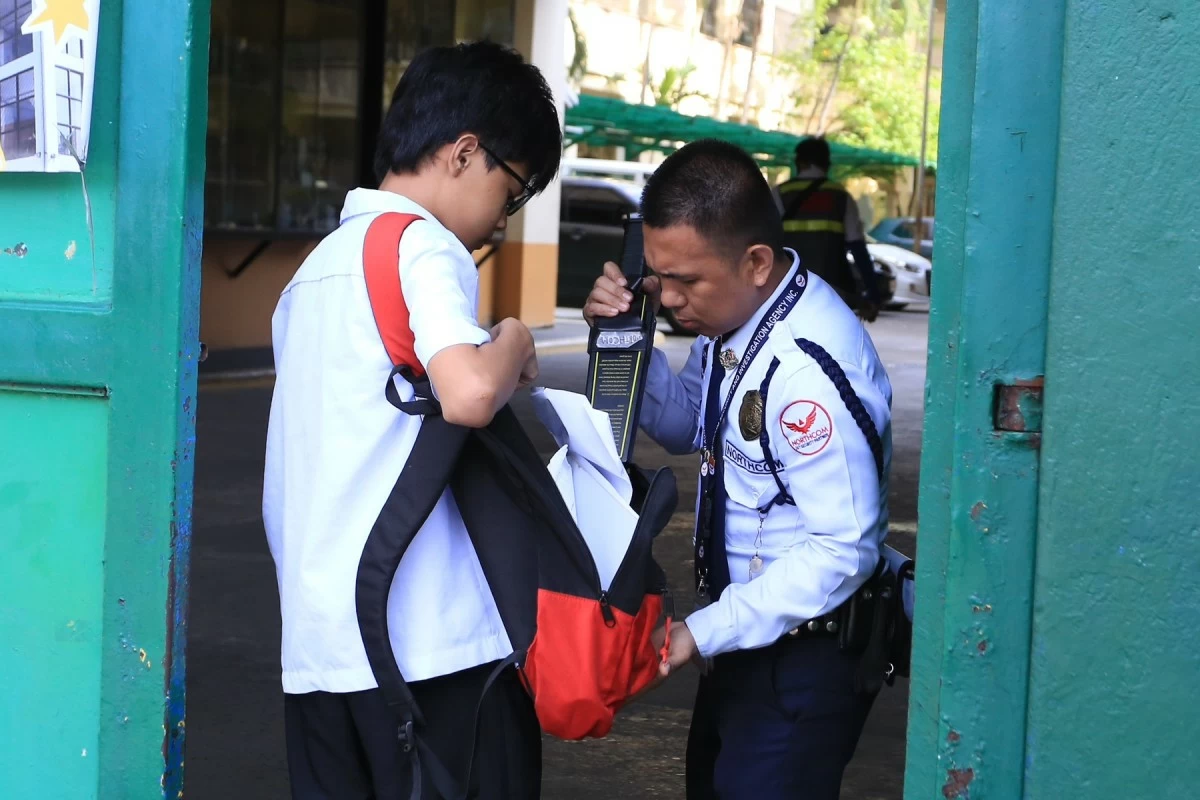
A security guard uses a handheld metal detector to inspect the bags of students entering a school gate in Quezon City on June 23, 2026. (Photo courtesy of Santi San Juan/ManilaBulletin)
The Quezon City Police District (QCPD), in partnership with the city government, will conduct emergency response training for students and school personnel to prepare them for violent incidents and other threats inside campuses.
QCPD director Police Brig. Gen. Randy Glenn Silvio said the program seeks to strengthen school security following recent cases of violence and ensure that learners know how to respond properly during emergencies.
The drills will cover four scenarios: active shooter incidents, stabbing attacks, bomb threats, and classroom riots.
Silvio said the QCPD has developed a student security protocol that will guide learners on the proper actions to take before, during, and after an emergency situation.
The protocol will include audio-visual presentations, training sessions, classroom organization, and simulation exercises to help students understand the appropriate response during each scenario.
Students will also be taught how to use available objects inside classrooms, including their bags, as possible means of protection during life-threatening situations.
“Ang gusto kasi ni Mayor Joy Belmonte na mai-train talaga ‘yung mga estudyante, parang ‘yung reaction natin sa earthquake drill na dapat ganun din ang ano natin sa mga estudyante (Mayor Joy Belmonte wants the students to be properly trained, similar to how we respond during earthquake drills, so they will also know how to react during emergency situations),” Silvio said.
Silvio added that the initiative was developed after previous incidents showed that some students were unable to immediately respond during violent situations inside school premises.
“So kailangan natin ng training, simulation exercise para sa ating mga estudyante (So we need to conduct training and simulation exercises for our students),” he said.
Under the security protocol, schools will also implement post-incident procedures, including head counts and debriefing sessions, to assess responses and identify areas for improvement in coordination with local government and school officials.
Silvio said police visibility in schools has also been strengthened through the “Safer Metro Manila” program, where one police officer and one barangay tanod are assigned to each school.
He added that all QCPD station commanders have established Viber groups with school principals and administrators to ensure faster communication and coordination during emergencies.
Police personnel assigned to schools will remain on standby within campuses but will enter school buildings only upon the request of teachers, principals, or school administrators, Silvio said.