ADVERTISEMENT

More Filipinos turn to repayment flexibility amid economic pressures

Tonik Bank reports a threefold increase in the use of its Payhinga loan payment holiday

Published Jul 16, 2026 10:42 am
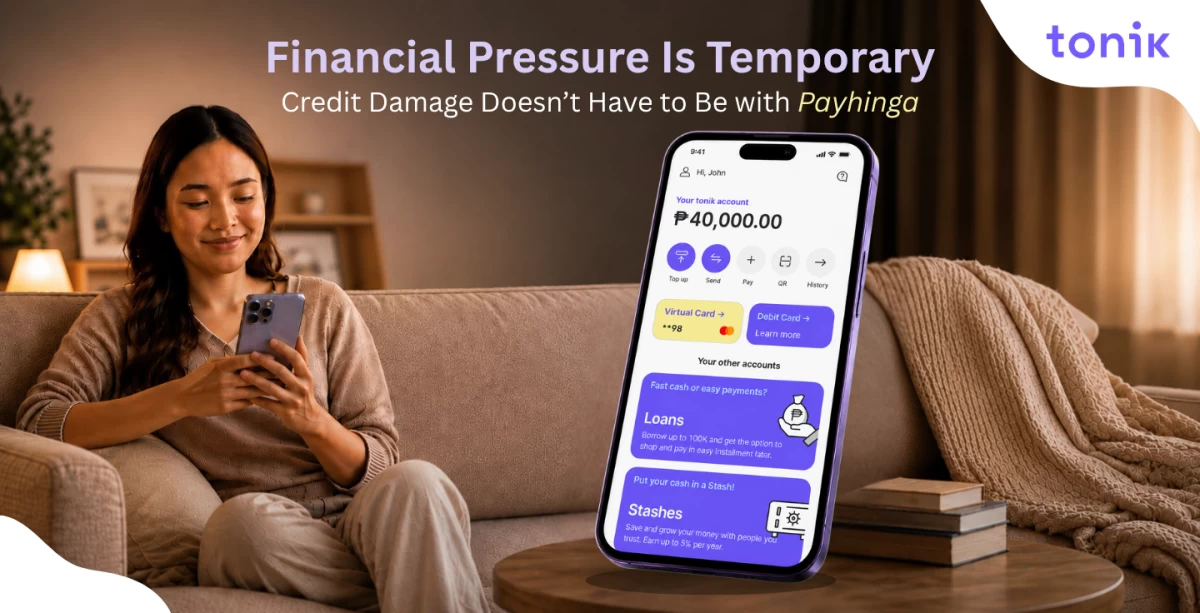
As economic pressures continue to squeeze household budgets, more Filipinos are choosing repayment flexibility over delinquency. Tonik has seen a threefold increase in the use of its loan payment holiday, Payhinga, underscoring the growing need for financial tools that help borrowers manage temporary income shocks without compromising their long-term financial health.
 
"Financial inclusion doesn't end when a loan is approved," said Mila Bedrenets, Chief Growth Hacker at Tonik. "Real financial inclusion means helping customers successfully repay their loans even when life becomes difficult. For many Filipino families, a temporary loss of income or a sudden increase in expenses shouldn't permanently damage their financial future."
Tonik has also seen steady growth in the number of customers choosing to include Payhinga when taking out a loan. Over the past 17 months, there has been a total product growth of 220%. -reflecting increasing awareness of the value of building repayment flexibility into their financial plans. More importantly, actual usage accelerated as economic conditions worsened, demonstrating that customers are using the feature exactly as intended—not as a routine repayment option, but as temporary support during genuine financial hardship.
Payhinga is designed for working Filipinos, many of whom earn between ₱25,000 and ₱40,000 a month and serve as the primary breadwinners for their families. For these households, even a temporary interruption in income can quickly lead to missed loan payments and long-term financial consequences. Instead of forcing borrowers into delinquency, Payhinga enables them to pause repayments when necessary and resume once their financial situation stabilizes. Customers can protect both their financial stability today and their ability to access credit in the future. This benefits both customers and the bank. Borrowers are better able to preserve their credit standing and maintain access to formal financial services, while Tonik strengthens long-term portfolio quality by helping customers recover rather than default.
The approach reflects Tonik's broader financial inclusion philosophy of combining responsible credit access with responsible repayment support—a strategy the bank has consistently highlighted as central to building sustainable consumer lending in the Philippines. The company has increasingly focused on profitable, risk-managed lending while expanding financial inclusion through data-driven underwriting and customer-centric product design.
"Many digital lenders compete on how quickly they can approve loans," Bedrenets added. "We believe the bigger responsibility is helping customers successfully complete their financial journey. A payment holiday may seem like a small feature, but during difficult economic periods it can make the difference between temporary hardship and long-term financial exclusion."
As macroeconomic uncertainty continues to affect household finances, Tonik believes that repayment flexibility will become an increasingly important component of responsible digital lending—helping customers weather temporary setbacks while contributing to a healthier, more resilient credit ecosystem in the Philippines. 

Related Tags

Tonik digital bank digital lending
ADVERTISEMENT
.most-popular .layout-ratio{ padding-bottom: 79.13%; } @media (min-width: 768px) and (max-width: 1024px) { .widget-title { font-size: 15px !important; } }

{{ articles_filter_1561_widget.title }}

.most-popular .layout-ratio{ padding-bottom: 79.13%; } @media (min-width: 768px) and (max-width: 1024px) { .widget-title { font-size: 15px !important; } }

{{ static_articles_1562_widget.title }}

.most-popular .layout-ratio{ padding-bottom: 79.13%; } @media (min-width: 768px) and (max-width: 1024px) { .widget-title { font-size: 15px !important; } }

{{ articles_filter_1563_widget.title }}

{{ articles_filter_1564_widget.title }}

.mb-article-details { position: relative; } .mb-article-details .article-body-preview, .mb-article-details .article-body-summary{ font-size: 17px; line-height: 30px; font-family: "Libre Caslon Text", serif; color: #000; } .mb-article-details .article-body-preview iframe , .mb-article-details .article-body-summary iframe{ width: 100%; margin: auto; } .read-more-background { background: linear-gradient(180deg, color(display-p3 1.000 1.000 1.000 / 0) 13.75%, color(display-p3 1.000 1.000 1.000 / 0.8) 30.79%, color(display-p3 1.000 1.000 1.000) 72.5%); position: absolute; height: 200px; width: 100%; bottom: 0; display: flex; justify-content: center; align-items: center; padding: 0; } .read-more-background a{ color: #000; } .read-more-btn { padding: 17px 45px; font-family: Inter; font-weight: 700; font-size: 18px; line-height: 16px; text-align: center; vertical-align: middle; border: 1px solid black; background-color: white; } .hidden { display: none; }
function initializeAllSwipers() { // Get all hidden inputs with cms_article_id document.querySelectorAll('[id^="cms_article_id_"]').forEach(function (input) { const cmsArticleId = input.value; const articleSelector = '#article-' + cmsArticleId + ' .body_images'; const swiperElement = document.querySelector(articleSelector); if (swiperElement && !swiperElement.classList.contains('swiper-initialized')) { new Swiper(articleSelector, { loop: true, pagination: false, navigation: { nextEl: '#article-' + cmsArticleId + ' .swiper-button-next', prevEl: '#article-' + cmsArticleId + ' .swiper-button-prev', }, }); } }); } setTimeout(initializeAllSwipers, 3000); const intersectionObserver = new IntersectionObserver( (entries) => { entries.forEach((entry) => { if (entry.isIntersecting) { const newUrl = entry.target.getAttribute("data-url"); if (newUrl) { history.pushState(null, null, newUrl); let article = entry.target; // Extract metadata const author = article.querySelector('.author-section').textContent.replace('By', '').trim(); const section = article.querySelector('.section-info ').textContent.replace(' ', ' '); const title = article.querySelector('.article-title h1').textContent; // Parse URL for Chartbeat path format const parsedUrl = new URL(newUrl, window.location.origin); const cleanUrl = parsedUrl.host + parsedUrl.pathname; // Update Chartbeat configuration if (typeof window._sf_async_config !== 'undefined') { window._sf_async_config.path = cleanUrl; window._sf_async_config.sections = section; window._sf_async_config.authors = author; } // Track virtual page view with Chartbeat if (typeof pSUPERFLY !== 'undefined' && typeof pSUPERFLY.virtualPage === 'function') { try { pSUPERFLY.virtualPage({ path: cleanUrl, title: title, sections: section, authors: author }); } catch (error) { console.error('ping error', error); } } // Optional: Update document title if (title && title !== document.title) { document.title = title; } } } }); }, { threshold: 0.1 } ); function showArticleBody(button) { const article = button.closest("article"); const summary = article.querySelector(".article-body-summary"); const body = article.querySelector(".article-body-preview"); const readMoreSection = article.querySelector(".read-more-background"); // Hide summary and read-more section summary.style.display = "none"; readMoreSection.style.display = "none"; // Show the full article body body.classList.remove("hidden"); } document.addEventListener("DOMContentLoaded", () => { let loadCount = 0; // Track how many times articles are loaded const offset = [1, 2, 3, 4, 5, 6, 7, 8, 9, 10]; // Offset values const currentUrl = window.location.pathname.substring(1); let isLoading = false; // Prevent multiple calls if (!currentUrl) { console.log("Current URL is invalid."); return; } const sentinel = document.getElementById("load-more-sentinel"); if (!sentinel) { console.log("Sentinel element not found."); return; } function isSentinelVisible() { const rect = sentinel.getBoundingClientRect(); return ( rect.top < window.innerHeight && rect.bottom >= 0 ); } function onScroll() { if (isLoading) return; if (isSentinelVisible()) { if (loadCount >= offset.length) { console.log("Maximum load attempts reached."); window.removeEventListener("scroll", onScroll); return; } isLoading = true; const currentOffset = offset[loadCount]; window.loadMoreItems().then(() => { let article = document.querySelector('#widget_1690 > div:nth-last-of-type(2) article'); intersectionObserver.observe(article) loadCount++; }).catch(error => { console.error("Error loading more items:", error); }).finally(() => { isLoading = false; }); } } window.addEventListener("scroll", onScroll); });

Sign up by email to receive news.