






 Philippines
National
Marcos pitches Philippine reforms, infrastructure to Singapore investors
Philippines
National
Marcos pitches Philippine reforms, infrastructure to Singapore investors
Marcos pitches Philippine reforms, infrastructure to Singapore investors


At A Glance
- President Marcos urged Singapore-based investors to expand investments in the Philippines, citing economic reforms and infrastructure projects.
- He said policy changes have opened more sectors to foreign investors and strengthened the country's investment climate.
- The President highlighted the government's infrastructure pipeline, renewable energy targets, and planned free trade agreements during a business roundtable.
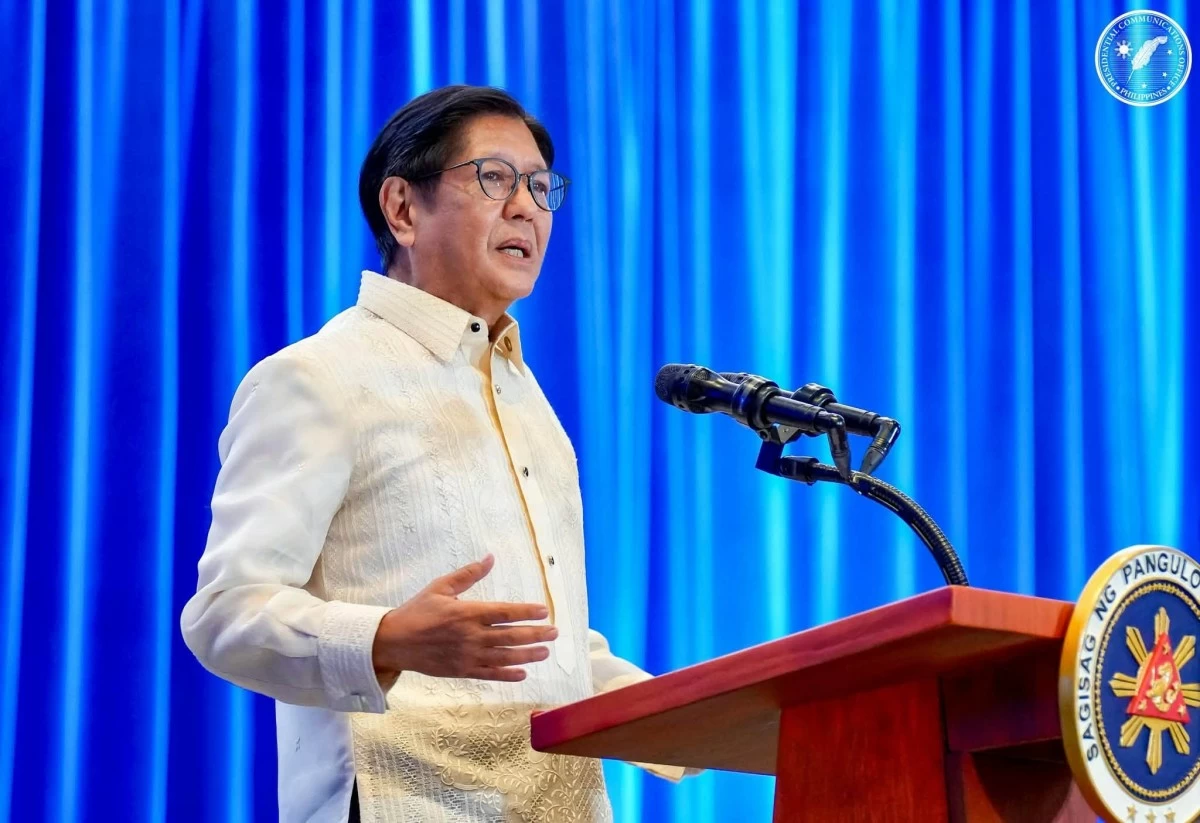
President Marcos has urged regional business leaders to invest in the Philippines, saying the government's economic reforms and infrastructure program have positioned the country as a resilient and competitive investment destination despite global geopolitical and trade uncertainties.
Speaking during a business roundtable co-hosted by the Milken Institute at the Philippine Embassy in Singapore, Marcos said the administration remains committed to maintaining a stable and investment-friendly environment to attract long-term foreign capital.
"The Philippines remains committed to creating a stable, competitive and investment-friendly environment," he said on Thursday, July 16.
The President said the country's 52-million-strong workforce and one of Southeast Asia's largest consumer markets provide a strong foundation for sustained economic growth despite an increasingly uncertain global environment.
He also highlighted the administration's "Build Better More" infrastructure program, which consists of more than 200 flagship projects worth about US$170 billion, including the Luzon Economic Corridor that aims to position the Philippines as a regional hub for advanced manufacturing, electronics, and critical mineral processing.
Marcos said the government has introduced several reforms to improve the country's investment climate, including easing foreign ownership restrictions in public services and retail trade, extending land lease agreements for foreign investors to as long as 99 years, and allowing full foreign ownership of renewable energy projects.
He added that the administration aims to increase the share of renewable energy in the country's power generation mix to 35 percent by 2030 and 50 percent by 2040.
The Chief Executive also said the government's revamped investment incentive system allows qualified projects to receive up to 40 years of combined tax and non-tax incentives.
On trade, President Marcos said the government is working to conclude at least five additional free trade agreements to expand market access and support long-term economic growth.
The Philippines is already a member of the Regional Comprehensive Economic Partnership (RCEP) and has existing free trade agreements with the European Free Trade Association, Japan, and South Korea, while negotiations with the European Union and Canada are ongoing.
The business roundtable formed part of the President's working visit to Singapore and was organized by the Department of Foreign Affairs through the Philippine Embassy in Singapore, with support from the Department of Trade and Industry.