ADVERTISEMENT

Beijing park takes 'Mosquito-Free' title with high-tech traps

Published Jul 16, 2026 02:36 pm
Photo from China Daily.
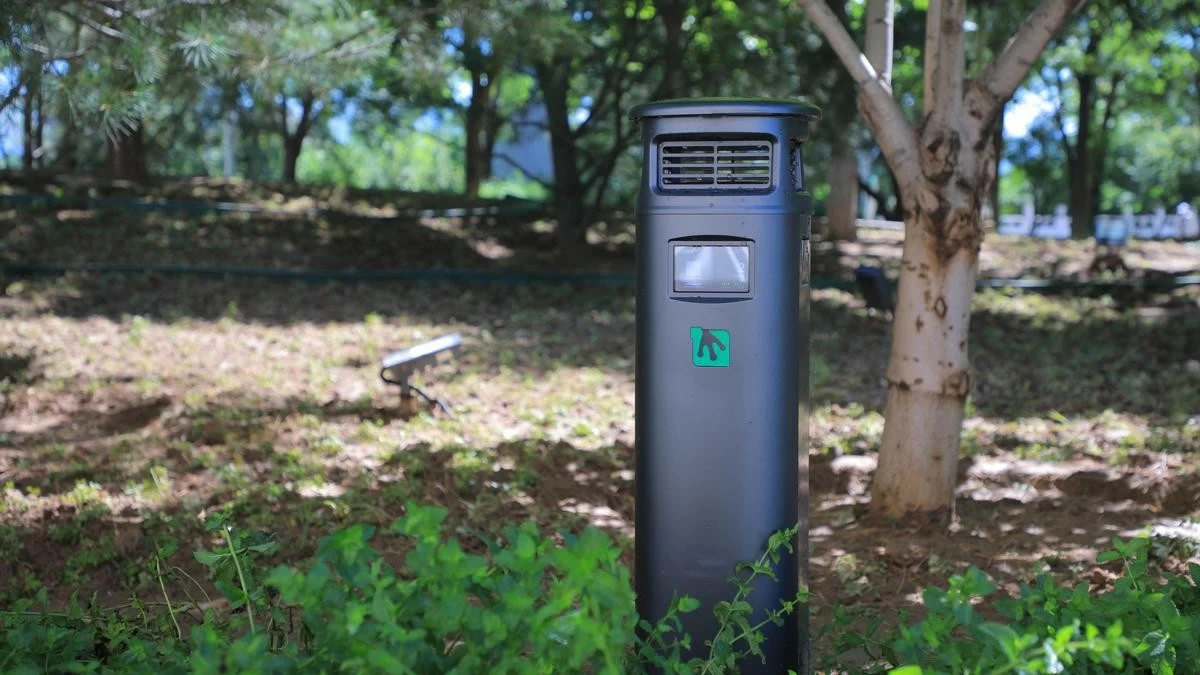
In what can be viewed as a bold and ambitious effort to keep the public safe from diseases, a park in Beijing has launched what they call a “mosquito-free” park, using smart traps to capture about 20,000 mosquitoes a day.
Yongdinghe Park, found in western Beijing's Mentougou district has installed eight high-tech mosquito-capturing devices. These devices feature a specialized gas that attracts mosquitoes, along with heat sources and black light to maximize its luring capabilities. Once a mosquito reaches proximity, they are instantly captured in a vacuum. It’s safe to assume that these mosquitoes would not survive the capturing process.
It is highlighted that the devices do not use chemical pesticides, making it safe for visitors, and remains harmless to plants and wildlife.
The project was referred to as a “pilot” and it is within reason, should this become a success by yielding positive results such as significant decrease of mosquito-borne diseases such as dengue, a much wider roll out can be expected.
The traps are not working alone. Nine solar-powered outdoor mosquito-killer lamps have been installed throughout the park. Plants with natural mosquito-repellant properties have been planted across more than 800 square meters, such as schizonepeta, lemon mint, and balloon flower root.
This is only the start of Beijing’s “Three-Year Action Plan for Mosquito Prevention and Control.” It is a coordination of the government, local administration, and public participation.
The goal is by the end of 2028, Beijing wants 80 percent of its villages, communities, parks, companies, and other organizations with open spaces actively participating in mosquito control.
How this can applied in the Philippines
Beijing's tech-driven approach offers a useful contrast for the Philippines, where dengue remains a persistent and serious public health burden. According to a report by the Department of Health, there was a 56% decrease in dengue cases between January to May this year. But of course, those were times of intense heat, and now we have hit our typhoon season where the risk of stagnant water from the rain and floods could cause an increase in the number of mosquitoes.
However, health officials have credited the decline of dengue due to grassroots efforts such as community cleanups and campaigns encouraging residents to empty out, dry, and cover containers.
If this is accurate, it means the country’s anti-dengue efforts still depend on manual, household-level vigilance rather than infrastructure. It may protect individual families within their areas, but it doesn’t protect people when they go elsewhere, such as schools or your local karinderya. If Beijing’s experiment proves fruitful, cities can build mosquito control directly into public spaces. Tech-assisted infrastructure like this could meaningfully cut breeding grounds that can keep more people safe.

Related Tags

Smart tech dengue
ADVERTISEMENT
.most-popular .layout-ratio{ padding-bottom: 79.13%; } @media (min-width: 768px) and (max-width: 1024px) { .widget-title { font-size: 15px !important; } }

{{ articles_filter_1561_widget.title }}

.most-popular .layout-ratio{ padding-bottom: 79.13%; } @media (min-width: 768px) and (max-width: 1024px) { .widget-title { font-size: 15px !important; } }

{{ static_articles_1562_widget.title }}

.most-popular .layout-ratio{ padding-bottom: 79.13%; } @media (min-width: 768px) and (max-width: 1024px) { .widget-title { font-size: 15px !important; } }

{{ articles_filter_1563_widget.title }}

{{ articles_filter_1564_widget.title }}

.mb-article-details { position: relative; } .mb-article-details .article-body-preview, .mb-article-details .article-body-summary{ font-size: 17px; line-height: 30px; font-family: "Libre Caslon Text", serif; color: #000; } .mb-article-details .article-body-preview iframe , .mb-article-details .article-body-summary iframe{ width: 100%; margin: auto; } .read-more-background { background: linear-gradient(180deg, color(display-p3 1.000 1.000 1.000 / 0) 13.75%, color(display-p3 1.000 1.000 1.000 / 0.8) 30.79%, color(display-p3 1.000 1.000 1.000) 72.5%); position: absolute; height: 200px; width: 100%; bottom: 0; display: flex; justify-content: center; align-items: center; padding: 0; } .read-more-background a{ color: #000; } .read-more-btn { padding: 17px 45px; font-family: Inter; font-weight: 700; font-size: 18px; line-height: 16px; text-align: center; vertical-align: middle; border: 1px solid black; background-color: white; } .hidden { display: none; }
function initializeAllSwipers() { // Get all hidden inputs with cms_article_id document.querySelectorAll('[id^="cms_article_id_"]').forEach(function (input) { const cmsArticleId = input.value; const articleSelector = '#article-' + cmsArticleId + ' .body_images'; const swiperElement = document.querySelector(articleSelector); if (swiperElement && !swiperElement.classList.contains('swiper-initialized')) { new Swiper(articleSelector, { loop: true, pagination: false, navigation: { nextEl: '#article-' + cmsArticleId + ' .swiper-button-next', prevEl: '#article-' + cmsArticleId + ' .swiper-button-prev', }, }); } }); } setTimeout(initializeAllSwipers, 3000); const intersectionObserver = new IntersectionObserver( (entries) => { entries.forEach((entry) => { if (entry.isIntersecting) { const newUrl = entry.target.getAttribute("data-url"); if (newUrl) { history.pushState(null, null, newUrl); let article = entry.target; // Extract metadata const author = article.querySelector('.author-section').textContent.replace('By', '').trim(); const section = article.querySelector('.section-info ').textContent.replace(' ', ' '); const title = article.querySelector('.article-title h1').textContent; // Parse URL for Chartbeat path format const parsedUrl = new URL(newUrl, window.location.origin); const cleanUrl = parsedUrl.host + parsedUrl.pathname; // Update Chartbeat configuration if (typeof window._sf_async_config !== 'undefined') { window._sf_async_config.path = cleanUrl; window._sf_async_config.sections = section; window._sf_async_config.authors = author; } // Track virtual page view with Chartbeat if (typeof pSUPERFLY !== 'undefined' && typeof pSUPERFLY.virtualPage === 'function') { try { pSUPERFLY.virtualPage({ path: cleanUrl, title: title, sections: section, authors: author }); } catch (error) { console.error('ping error', error); } } // Optional: Update document title if (title && title !== document.title) { document.title = title; } } } }); }, { threshold: 0.1 } ); function showArticleBody(button) { const article = button.closest("article"); const summary = article.querySelector(".article-body-summary"); const body = article.querySelector(".article-body-preview"); const readMoreSection = article.querySelector(".read-more-background"); // Hide summary and read-more section summary.style.display = "none"; readMoreSection.style.display = "none"; // Show the full article body body.classList.remove("hidden"); } document.addEventListener("DOMContentLoaded", () => { let loadCount = 0; // Track how many times articles are loaded const offset = [1, 2, 3, 4, 5, 6, 7, 8, 9, 10]; // Offset values const currentUrl = window.location.pathname.substring(1); let isLoading = false; // Prevent multiple calls if (!currentUrl) { console.log("Current URL is invalid."); return; } const sentinel = document.getElementById("load-more-sentinel"); if (!sentinel) { console.log("Sentinel element not found."); return; } function isSentinelVisible() { const rect = sentinel.getBoundingClientRect(); return ( rect.top < window.innerHeight && rect.bottom >= 0 ); } function onScroll() { if (isLoading) return; if (isSentinelVisible()) { if (loadCount >= offset.length) { console.log("Maximum load attempts reached."); window.removeEventListener("scroll", onScroll); return; } isLoading = true; const currentOffset = offset[loadCount]; window.loadMoreItems().then(() => { let article = document.querySelector('#widget_1690 > div:nth-last-of-type(2) article'); intersectionObserver.observe(article) loadCount++; }).catch(error => { console.error("Error loading more items:", error); }).finally(() => { isLoading = false; }); } } window.addEventListener("scroll", onScroll); });

Sign up by email to receive news.