







Baguio marks 36th anniversary of July 16, 1990 temblor
Published Jul 16, 2026 10:56 pm


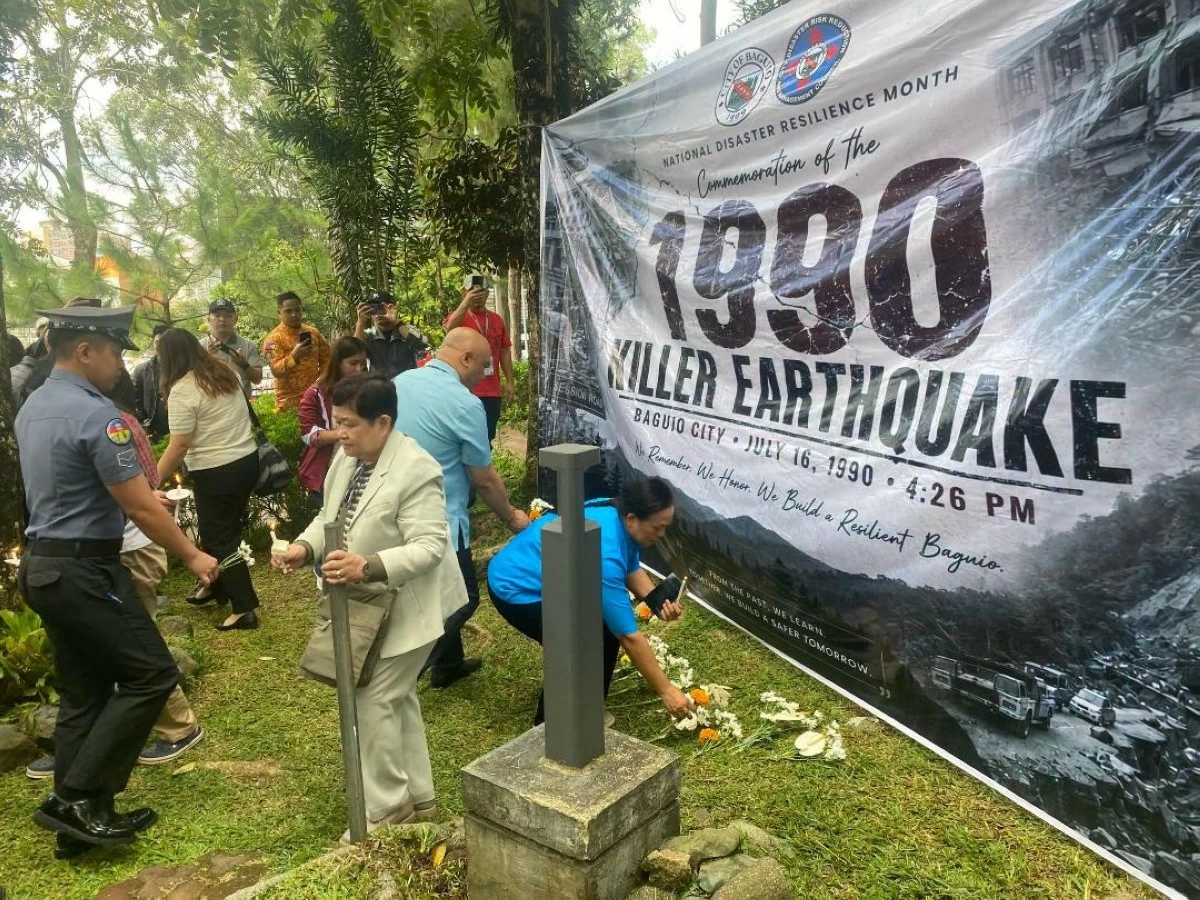
BAGUIO City marked the 36th anniversary of the July 16, 1990 earthquake today. (Photo via Zaldy Comanda)
BAGUIO CITY – Thirty-six years after the magnitude-7.7 earthquake that devastated Baguio and much of northern Luzon, city officials on Thursday said the tragedy transformed disaster preparedness and resilience into a cornerstone of local governance.
"We learned a lot of lessons. Back then, there was no disaster resilience program. Everything was reactive," Mayor Benjamin Magalong said during the commemoration at the Baguio City Hall Park.
"The tragedy cost so much. It was heartbreaking, but it woke us up to develop a comprehensive disaster resilience plan. Today, we have established systems, conduct regular earthquake drills, and created a department responsible for ensuring our readiness not only for earthquakes but for all types of disasters," he added.
Magalong, then a police officer, recalled being deployed to inspect damaged areas after the July 16, 1990 earthquake.
He said poor communication and delayed emergency response hampered rescue operations.
The earthquake, which shook northern Luzon for more than 40 seconds, reduced commercial buildings and homes to rubble. An estimated 1,600 people died in Baguio alone.
Rep. Mauricio Domogan, who was a city councilor when the disaster struck and later served multiple terms as mayor, said many of the buildings that collapsed had been altered from their original structural designs.
He cited the former Hyatt Terraces Hotel, Nevada Hotel, Hilltop Hotel, and Skyworld Hotel as among the structures that failed after additional floors or other structural modifications were made.
Domogan also recalled that a hotel along Harrison Road had been advised to install foundation piles but did not proceed because of the additional cost.
"It collapsed, killing many people," he said.
He said the disaster underscored how human decisions can worsen the impact of natural hazards.
"An earthquake is unpredictable, but whether structures collapse can often be prevented through compliance with engineering standards and the National Building Code," Domogan said.
He said the tragedy prompted stricter building permit requirements, including mandatory soil testing before construction, and heightened awareness among property owners of the need to invest in safer infrastructure.
Among those who joined the commemoration was earthquake survivor Rafael Resuello, who lost an arm after being trapped beneath the collapsed University of Baguio building.
"I am happy I am alive," Resuello said. "I lost my arm, but I was one of the lucky ones. Hundreds of others were not as fortunate and died in the earthquake."
The anniversary observance included the signing of a "Resilience Time Capsule," symbolizing the city's commitment to strengthening disaster preparedness and protecting future generations.