






 Business
Banking & Finance
Visa: Philippines among ASEAN's weakest in credit card penetration
Business
Banking & Finance
Visa: Philippines among ASEAN's weakest in credit card penetration
Visa: Philippines among ASEAN's weakest in credit card penetration
By Derco Rosal


At A Glance
- Only three percent of adult Filipinos own credit cards, making the country among the laggards in the Association of Southeast Asian Nations (ASEAN) region, with the disparity most stark compared to the advanced Asia.
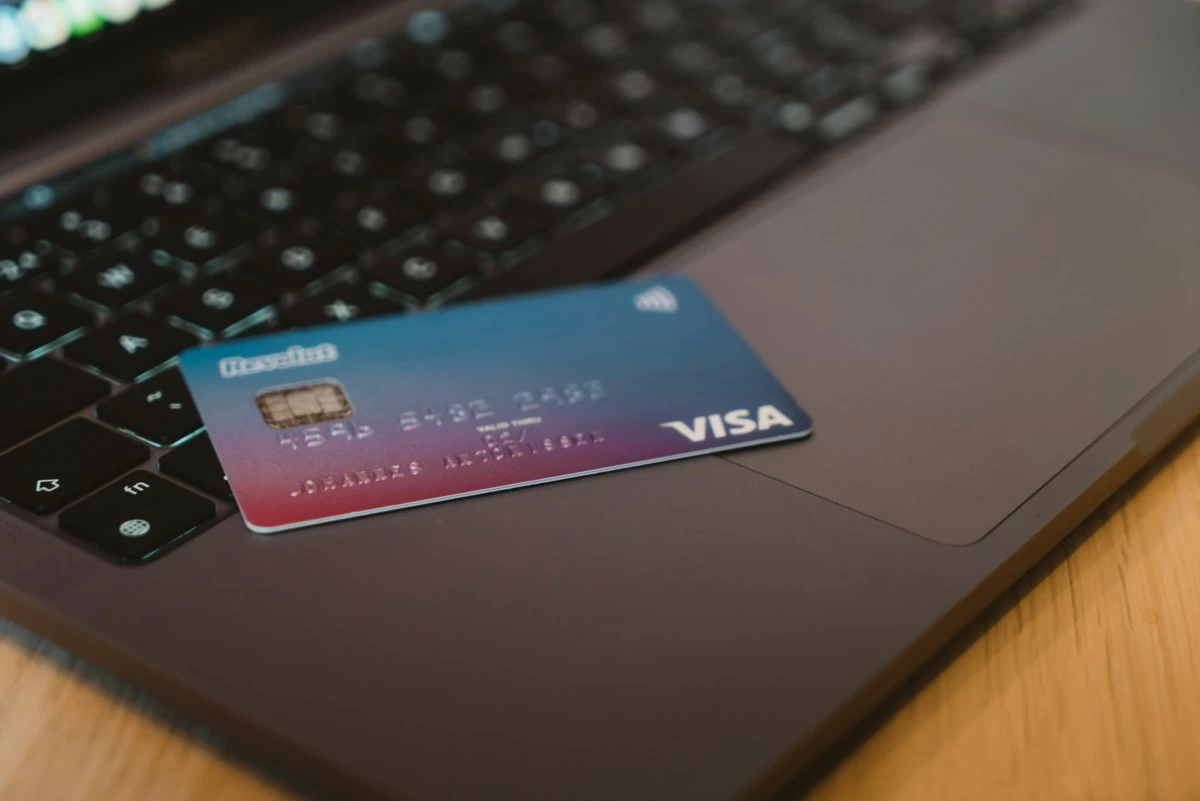
Only three percent of adult Filipinos own credit cards, placing the country among the laggards in the Association of Southeast Asian Nations (ASEAN), with the gap most pronounced compared to advanced Asia-Pacific economies.
In Asian emerging markets (EMs), the Philippines trails only Cambodia’s one percent and Bangladesh’s two percent, Visa Business and Economic Insights noted in a report last Tuesday, July 14, citing the 2024 update of the World Bank’s Global Findex Survey.
Meanwhile, the country was outpaced by seven other Asian EMs, including India (five percent), Indonesia and Vietnam (both six percent), Sri Lanka and Thailand (both eight percent), Malaysia (13 percent), and China (46 percent).
This low penetration drives Filipinos to rely heavily on informal and unregulated lending alternatives, which do not help build formal credit histories.
“Across markets such as India, the Philippines, and Indonesia, borrowing from family, moneylenders, or gold-backed loans is widespread due to ease of access and familiarity,” read the report authored by Visa principal Asia-Pacific economist Simon Baptist and Asia-Pacific economist Minakshi Barman.
Meanwhile, advanced Asia-Pacific economies have mature financial systems, with credit card penetration rates reaching nearly three-fourths of adults aged 15 and above. Hong Kong had the highest penetration rate at 72 percent, followed by Japan at 70 percent, South Korea at 68 percent, Taiwan at 64 percent, New Zealand at 57 percent, Australia at 51 percent, and Singapore at 42 percent.
Despite this low base, the Philippines is currently experiencing a “credit takeoff” alongside India, Sri Lanka, and Vietnam, driven by the post-pandemic recovery and digital transformation. The number of personal credit cards in circulation per thousand people in the country rose to 176 in 2025 from 89 in 2021, reflecting the trend in the four emerging Asian economies, where circulation nearly doubled during the period.
Visa noted that this momentum is not merely driven by population growth, but also by smartphone penetration and digital onboarding.
Since the adult population in these four countries expanded by only around two to four percent over the same period, the increase in credit cards suggests that people are holding more cards per person.
“This momentum reflects a confluence of factors: rising incomes, urbanization, smartphone penetration enabling digital onboarding, and bank/fintech competition for new customer segments,” Visa said.
Closing this credit gap offers significant economic potential. If the Philippines can raise credit card ownership to just one-tenth of the adult population, it would bring roughly 5.81 million new consumers into the formal financial system.
This could unlock as much as $2.4 billion in new credit spending, leading to an estimated gross domestic product (GDP) boost of up to 0.51 percent under an upside scenario of 75-percent incremental credit-financed spending.
However, the transition to formal credit remains complex. Visa noted that in the Philippines, “spending shifts are concentrated in essential categories or substitution effects.”
Without proper safeguards, “expanding access without infrastructure can lead to low usage, over-extension, or substitution toward unregulated channels—undermining both growth objectives and consumer protection.”
To capture this growth, Visa said stakeholders must prioritize “expanding merchant acceptance—particularly in essential categories such as utilities, healthcare, education, and public services” to ensure credit becomes a tool for everyday life rather than just a niche product.