






 Business
Trade & Industry
Philippines, US eye November signing for Clark AI hub framework
Business
Trade & Industry
Philippines, US eye November signing for Clark AI hub framework
Philippines, US eye November signing for Clark AI hub framework


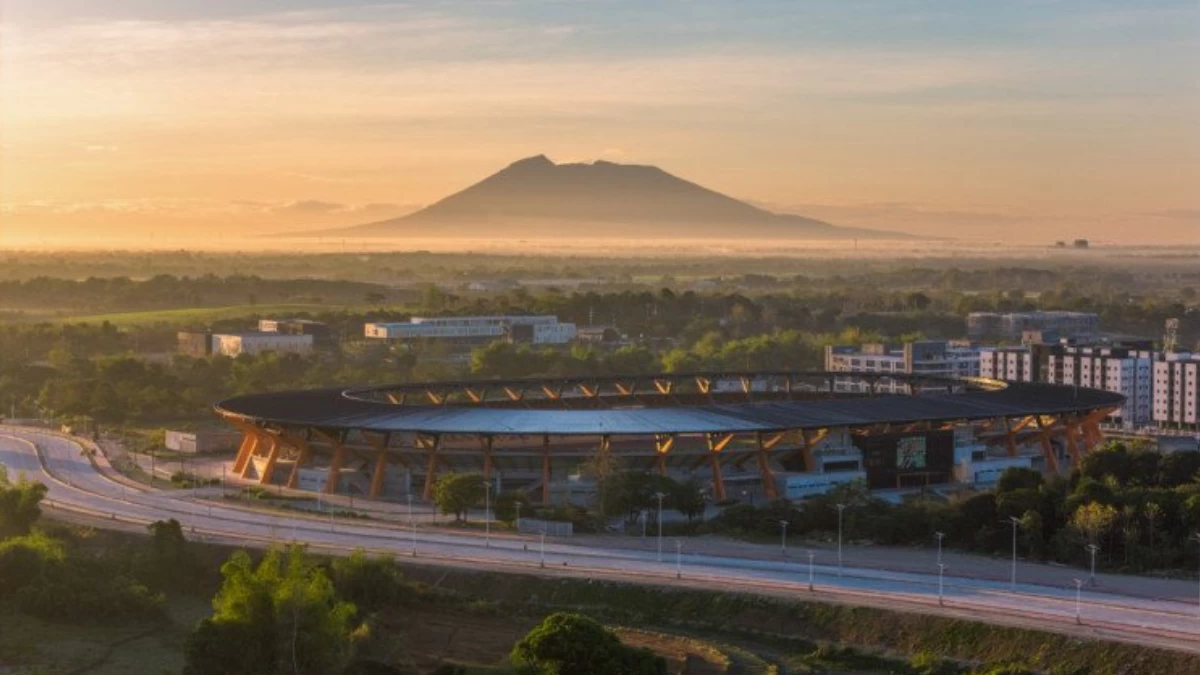
The Philippines aims to complete negotiations with the United States (US) on the long-term framework governing the artificial intelligence (AI) industrial hub at New Clark City in Tarlac province under the Pax Silica partnership within two to three months, according to state-run Bases Conversion and Development Authority (BCDA).
BCDA President and Chief Executive Officer (CEO) Joshua Bingcang said the US and the Philippines are exchanging draft agreements on the policy framework that will govern how the first-of-its-kind AI hub will operate.
“We are now exchanging the draft arrangement, which will be finalized in two or three months,” the BCDA chief said in an interview on ANC on Wednesday, July 15.
If negotiations conclude within the expected timeframe, Bingcang said the agreement could be signed in November during the Association of Southeast Asian Nations (ASEAN) Summit in Manila, which US President Donald Trump is expected to attend.
While talks are still underway, he said the government is ensuring that the final long-term framework will be “in accordance with the requirements” of the Philippines.
Bingcang said any attempt to incorporate policies that are inconsistent with Philippine laws, such as the proposed designation of the industrial hub as diplomatic property, would only delay the project’s development.
“It’s clear to the [US] State Department that they will not push for those concerns because it will be a hindrance moving forward for pushing their policy,” he said.
US Undersecretary of State for economic affairs Jacob Helberg previously disclosed on the No Priors podcast last May 18 that the Clark hub would operate as diplomatic property, allowing the site to operate under US common law.
Bingcang has since told reporters that there will be no special arrangement for the US government within the site. He said the property would operate only under the Investors’ Lease Act and the law granting powers to BCDA.
As part of the country’s commitment under the US-led Pax Silica initiative, BCDA allocated 1,619 hectares (ha) of land within New Clark City for the development of the AI industrial hub.
Dubbed an economic security zone, the AI industrial hub is expected to attract investments in high-value sectors such as advanced manufacturing and digital infrastructure that support the global AI supply chain.
To address investors’ concerns over energy supply, Bingcang said the US government is already rolling out support for the Philippines to provide assurance to companies looking to invest in the project.
Development Finance Corp. (DFC), the US’ international investment arm, has approved funding for the feasibility study of a proposed liquefied natural gas (LNG) terminal and power plant in New Clark City, according to Bingcang.
The project, which would be funded under DFC’s $205-billion investment program, is being designed to generate at least 1,200 megawatts (MW).
Meanwhile, Bingcang said the US State Department also wants to help prepare the workforce for the needs of potential investors in the AI industrial hub.
The American agency has signed a memorandum of understanding (MOU) with Stanford University to assist Pax Silica member economies, including the Philippines, in developing programs that will equip their respective workforces with the needed skills.
This will be complemented by a public-private program being prepared with the Semiconductor and Electronics Industries in the Philippines Foundation Inc. (SEIPI) to ensure that local companies can supply the inputs needed by locators in the Clark project.
Bingcang said these initiatives will provide additional assurance to investors that the local workforce and supply chain can deliver the productivity needed for companies to compete effectively in the rapidly evolving AI industry.