






 Business
Banking & Finance
Philippine bonds worth ₱3 trillion qualify for JPMorgan EM index, Remolona says
Business
Banking & Finance
Philippine bonds worth ₱3 trillion qualify for JPMorgan EM index, Remolona says
Philippine bonds worth ₱3 trillion qualify for JPMorgan EM index, Remolona says
By Derco Rosal


At A Glance
- Bangko Sentral ng Pilipinas (BSP) Governor Eli M. Remolona Jr. said around $50 billion (₱3 trillion) worth of Philippine government bonds are eligible for inclusion in JPMorgan Chase & Co.'s emerging-market index, a move that could attract billions of dollars in additional foreign capital inflows.
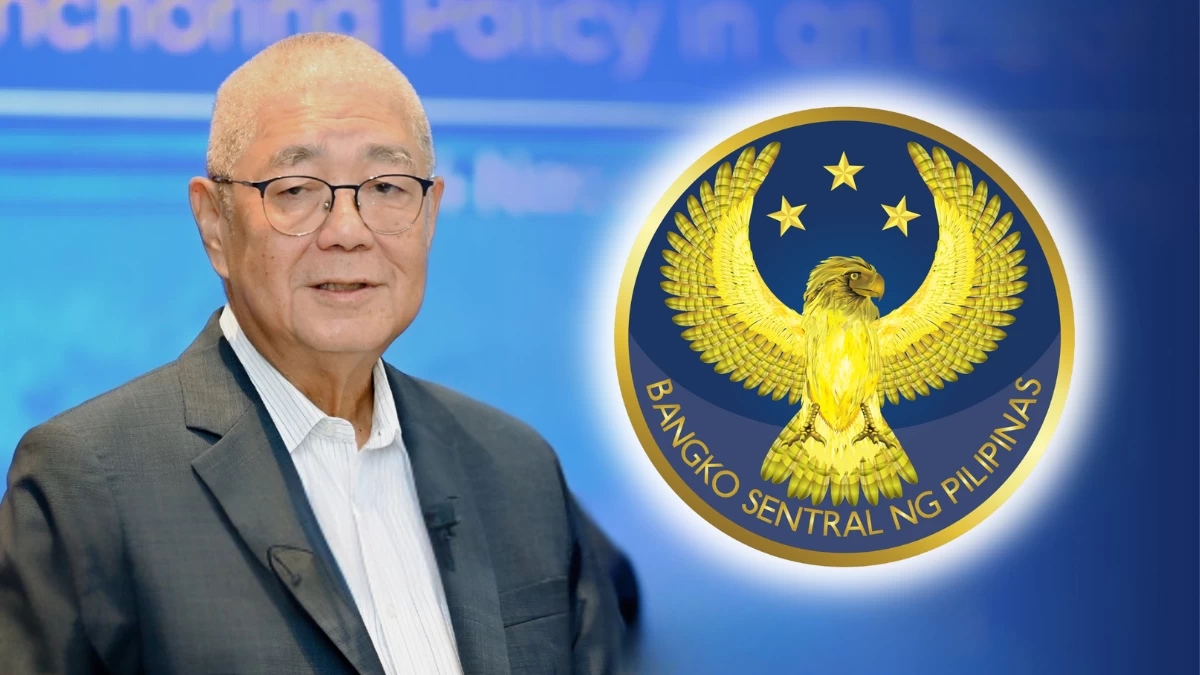
Bangko Sentral ng Pilipinas (BSP) Governor Eli M. Remolona Jr. said around $50-billion, or ₱3-trillion, worth of Philippine government bonds are eligible for inclusion in JPMorgan Chase & Co.’s emerging-market (EM) index, a move that could attract billions of dollars in additional foreign capital inflows.
Remolona said in his speech during the Standard Chartered Bank (SCB) markets forum last July 10 that while the peso bonds’ inclusion in the influential index represents only a “tiny slice” of the total at 1.78 percent, it is “a good start.”
“It will be worth about $50 billion. If you count all the securities that are going to be eligible—and JPMorgan has picked nine different government securities (GS) that would be included in the index—those securities are about ₱3 trillion,” Remolona said.
According to Remolona, this development favors the Philippines because it could trigger capital inflows. The BSP chief said he views the peso bond market as a different horse on which bettors could place their bets.
“As you know, you don’t have a horse race if everyone is betting on the same horse. You need a diversity of investors and a diversity of views in order for trade to take place,” he explained, referring to the diverse perspectives needed to foster a competitive bond market.
He further explained that passive investors drawn by the index will eventually become active participants.
Remolona’s optimism comes with a shift in the BSP’s assessment of the domestic fixed-income landscape. He previously said it was still in a “makeshift” state.
Pointing to the progress of these markets, Remolona noted that the transmission mechanism for monetary policy is finally beginning to smooth out.
“Our markets are beginning to mature,” he told the SCB forum, signaling that the market infrastructure is becoming more developed.
A major contributor to this visible maturation is the recent adoption of the Global Master Repurchase Agreement (GMRA), which settled long-standing debates over market mechanics and settlement.
Remolona reported that GMRA repos have expanded by “about 55 percent since the end of 2024,” with outstanding contracts reaching ₱119 billion as of July 2026.
Further, the BSP plans to phase out the Bloomberg Valuation Service (BVAL) in favor of an interest rate swap (IRS) curve to ensure more accurate market pricing.
“Eventually, the IRS curve will replace the BVAL curve. When you price in the mark-to-market, this is the curve you are going to use,” Remolona explained.
Meanwhile, the governor did not shy away from the “bad news”—the absence of a robust corporate bond market. Remolona, citing former United States Federal Reserve (US Fed) chair Alan Greenspan, cautioned that the country still lacks a “spare tire” to support the economy during crises.
Currently, the local corporate bond market is equivalent to a mere six percent of gross domestic product (GDP), a stark contrast to Thailand’s 22 percent.
To address this, the BSP is working hand in hand with the World Bank and International Finance Corp. (IFC) to reform credit rating processes.
“We want to be like Thailand in this regard,” Remolona said, signaling that establishing a deep corporate bond market remains the next major hurdle for the central bank.