ADVERTISEMENT

New York won't build big data centers for a year as it weighs energy and climate risks

Published Jul 15, 2026 10:47 am
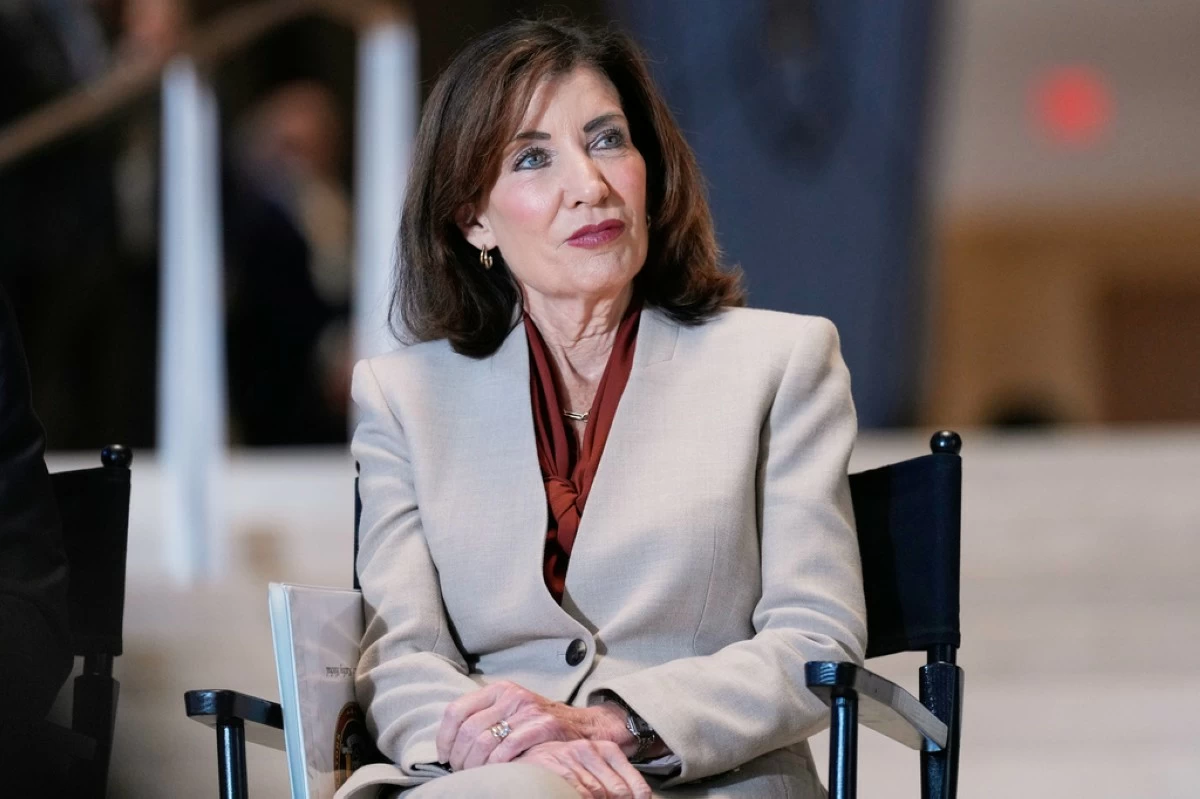
 New York Governor Kathy Hochul participates in a ribbon cutting ceremony at the new JPMorgan Chase offices in New York, Oct. 21, 2025. (AP Photo/Seth Wenig, File)
New York Governor Kathy Hochul participates in a ribbon cutting ceremony at the new JPMorgan Chase offices in New York, Oct. 21, 2025. (AP Photo/Seth Wenig, File)
NEW YORK (AP) — No large data centers can be built in New York for up to a year as the state creates rules to protect the environment and its energy grid from the power-hungry facilities fueling artificial intelligence.
Gov. Kathy Hochul signed an executive order Tuesday imposing the country's first statewide moratorium on hyperscale data centers, which house thousands of computer servers and require massive amounts of energy and a steady supply of water to keep cool.
The move pushes the state into a raging debate over how to regulate the AI industry, as concerns over rising electric bills and environmental risks collide with a desire to stimulate local economies and foster the U.S. tech sector.
“The bottom line is that progress shouldn't arrive with a higher utility bill, deleted water supply or noise pollution, so we have no choice but to address these challenges created by these massive facilities,” Hochul said at a celebratory signing ceremony in Brooklyn.
President Donald Trump has warned states not to slap regulations on the AI industry, echoing tech companies in arguing such moves hamper job growth and cede ground to China in a race to lead in the rapidly growing field.
Earlier this year, Maine seemed poised to establish a similar moratorium. But the measure was vetoed by Democratic Gov. Janet Mills because it would have blocked a proposed data center in a town that has struggled after a mill closed.
Moratoriums have been proposed in at least a dozen states but have not gotten far, though some counties and municipalities have imposed their own temporary bans.
New York's executive order pauses state permitting for new large data centers and directs state regulators to create standards that address environmental impacts, energy demand, water usage and other factors, the governor’s office said.
Dan Diorio of the Data Center Coalition, a trade association, said the moratorium “will ensure that those investments, jobs, and economic activity flow elsewhere rather than to New York — with impacts far beyond the data center industry.”
The decision in New York also carries political significance for Hochul's reelection campaign and the state's tight congressional races this fall, as Democrats move to address affordability concerns over high utility bills. In addition, the governor this year softened New York's ambitious goals to reduce greenhouse gases, citing rising energy costs for consumers.
Hochul’s Republican opponent in the governor’s race, Nassau County Executive Bruce Blakeman, opposes a statewide moratorium and says local governments should be allowed to strike deals with tech companies for data center projects that promise enough economic benefits.
In a statement Tuesday, Blakeman said the governor “doesn’t work with local governments and business leaders to figure out how to get things done,” while pledging to “modernize our economy to bring costs down and create good jobs.”
The state Legislature this year approved its own moratorium bill, but Hochul's office described the legislation as complex and said it needed additional work. Instead, the governor opted for an executive order that would take effect immediately.
State Sen. Kristen Gonzalez, a Democrat who sponsored the legislation, joined the governor during the signing ceremony. “If Big Tech is coming onto our turf, it should be on our terms,” she said.
New York, at this stage, has not been a destination for the largest hyperscale data centers.

Related Tags

data centers New York energy costs greenhouse gas (GHG) emissions AI
ADVERTISEMENT
.most-popular .layout-ratio{ padding-bottom: 79.13%; } @media (min-width: 768px) and (max-width: 1024px) { .widget-title { font-size: 15px !important; } }

{{ articles_filter_1561_widget.title }}

.most-popular .layout-ratio{ padding-bottom: 79.13%; } @media (min-width: 768px) and (max-width: 1024px) { .widget-title { font-size: 15px !important; } }

{{ static_articles_1562_widget.title }}

.most-popular .layout-ratio{ padding-bottom: 79.13%; } @media (min-width: 768px) and (max-width: 1024px) { .widget-title { font-size: 15px !important; } }

{{ articles_filter_1563_widget.title }}

{{ articles_filter_1564_widget.title }}

.mb-article-details { position: relative; } .mb-article-details .article-body-preview, .mb-article-details .article-body-summary{ font-size: 17px; line-height: 30px; font-family: "Libre Caslon Text", serif; color: #000; } .mb-article-details .article-body-preview iframe , .mb-article-details .article-body-summary iframe{ width: 100%; margin: auto; } .read-more-background { background: linear-gradient(180deg, color(display-p3 1.000 1.000 1.000 / 0) 13.75%, color(display-p3 1.000 1.000 1.000 / 0.8) 30.79%, color(display-p3 1.000 1.000 1.000) 72.5%); position: absolute; height: 200px; width: 100%; bottom: 0; display: flex; justify-content: center; align-items: center; padding: 0; } .read-more-background a{ color: #000; } .read-more-btn { padding: 17px 45px; font-family: Inter; font-weight: 700; font-size: 18px; line-height: 16px; text-align: center; vertical-align: middle; border: 1px solid black; background-color: white; } .hidden { display: none; }
function initializeAllSwipers() { // Get all hidden inputs with cms_article_id document.querySelectorAll('[id^="cms_article_id_"]').forEach(function (input) { const cmsArticleId = input.value; const articleSelector = '#article-' + cmsArticleId + ' .body_images'; const swiperElement = document.querySelector(articleSelector); if (swiperElement && !swiperElement.classList.contains('swiper-initialized')) { new Swiper(articleSelector, { loop: true, pagination: false, navigation: { nextEl: '#article-' + cmsArticleId + ' .swiper-button-next', prevEl: '#article-' + cmsArticleId + ' .swiper-button-prev', }, }); } }); } setTimeout(initializeAllSwipers, 3000); const intersectionObserver = new IntersectionObserver( (entries) => { entries.forEach((entry) => { if (entry.isIntersecting) { const newUrl = entry.target.getAttribute("data-url"); if (newUrl) { history.pushState(null, null, newUrl); let article = entry.target; // Extract metadata const author = article.querySelector('.author-section').textContent.replace('By', '').trim(); const section = article.querySelector('.section-info ').textContent.replace(' ', ' '); const title = article.querySelector('.article-title h1').textContent; // Parse URL for Chartbeat path format const parsedUrl = new URL(newUrl, window.location.origin); const cleanUrl = parsedUrl.host + parsedUrl.pathname; // Update Chartbeat configuration if (typeof window._sf_async_config !== 'undefined') { window._sf_async_config.path = cleanUrl; window._sf_async_config.sections = section; window._sf_async_config.authors = author; } // Track virtual page view with Chartbeat if (typeof pSUPERFLY !== 'undefined' && typeof pSUPERFLY.virtualPage === 'function') { try { pSUPERFLY.virtualPage({ path: cleanUrl, title: title, sections: section, authors: author }); } catch (error) { console.error('ping error', error); } } // Optional: Update document title if (title && title !== document.title) { document.title = title; } } } }); }, { threshold: 0.1 } ); function showArticleBody(button) { const article = button.closest("article"); const summary = article.querySelector(".article-body-summary"); const body = article.querySelector(".article-body-preview"); const readMoreSection = article.querySelector(".read-more-background"); // Hide summary and read-more section summary.style.display = "none"; readMoreSection.style.display = "none"; // Show the full article body body.classList.remove("hidden"); } document.addEventListener("DOMContentLoaded", () => { let loadCount = 0; // Track how many times articles are loaded const offset = [1, 2, 3, 4, 5, 6, 7, 8, 9, 10]; // Offset values const currentUrl = window.location.pathname.substring(1); let isLoading = false; // Prevent multiple calls if (!currentUrl) { console.log("Current URL is invalid."); return; } const sentinel = document.getElementById("load-more-sentinel"); if (!sentinel) { console.log("Sentinel element not found."); return; } function isSentinelVisible() { const rect = sentinel.getBoundingClientRect(); return ( rect.top < window.innerHeight && rect.bottom >= 0 ); } function onScroll() { if (isLoading) return; if (isSentinelVisible()) { if (loadCount >= offset.length) { console.log("Maximum load attempts reached."); window.removeEventListener("scroll", onScroll); return; } isLoading = true; const currentOffset = offset[loadCount]; window.loadMoreItems().then(() => { let article = document.querySelector('#widget_1690 > div:nth-last-of-type(2) article'); intersectionObserver.observe(article) loadCount++; }).catch(error => { console.error("Error loading more items:", error); }).finally(() => { isLoading = false; }); } } window.addEventListener("scroll", onScroll); });

Sign up by email to receive news.