






Manila Bulletin
 Philippines
National
NBI witness: VP Sara doubled down on 2024 death threats vs PBBM
Philippines
National
NBI witness: VP Sara doubled down on 2024 death threats vs PBBM
Philippines
National
NBI witness: VP Sara doubled down on 2024 death threats vs PBBM
NBI witness: VP Sara doubled down on 2024 death threats vs PBBM
Published Jul 15, 2026 02:06 pm


At A Glance
- VP Sara Duterte reiterates her Nov. 23, 2024 death threats instead of denying them, with NBI Director Jeremy Lotoc stressing their weight as admissions against interest.
- Lotoc testifies that grave threats are punishable to preserve peace and order, even without physical acts, and that admissions against interest carry heavy legal significance.
- The NBI recommends filing grave threats and inciting to sedition charges, while Duterte dismisses the impeachment complaint as unsupported by evidence.
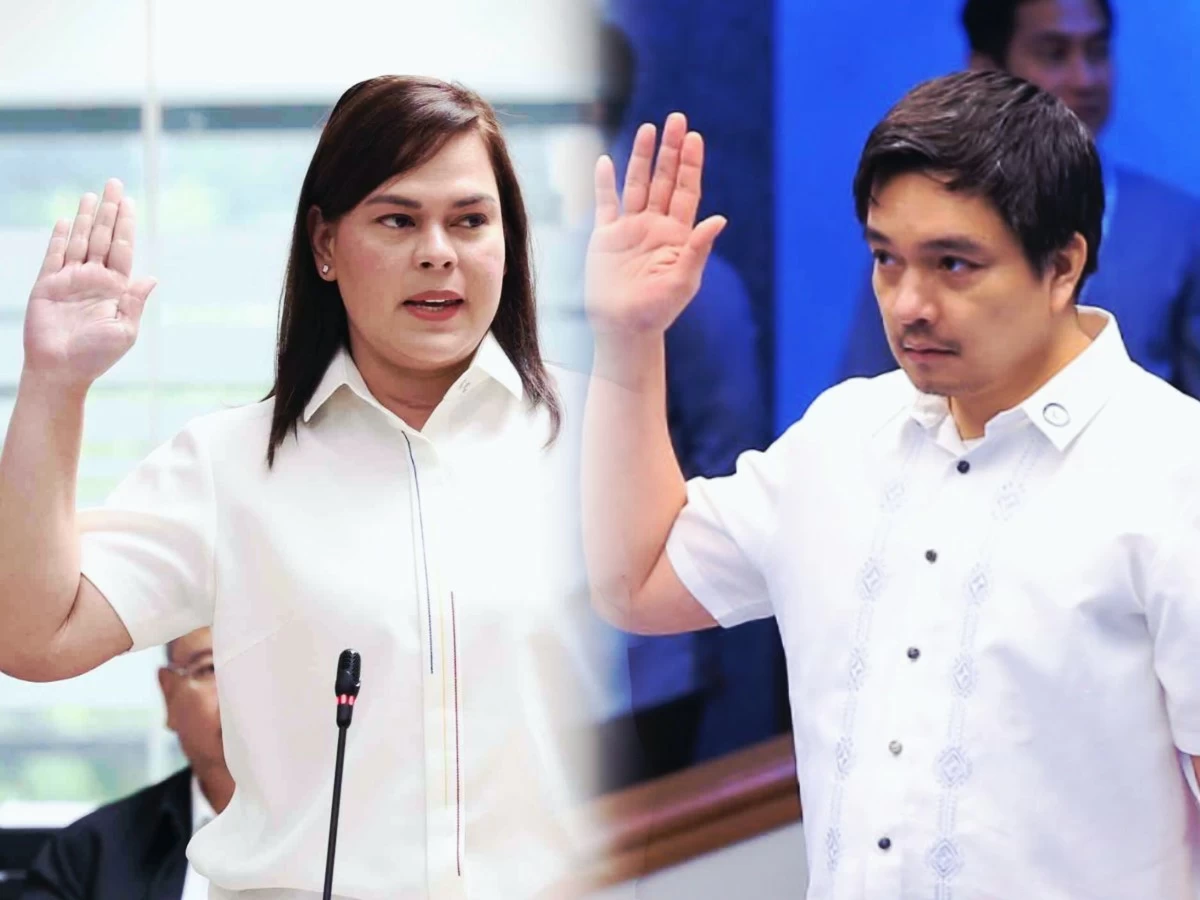
Vice President Sara Duterte (left), NBI Regional Director Jeremy Lotoc (House PPAB, Senate PRIB)
Instead of denying her death threats to President Marcos and members of the First Family, impeachment respondent Vice President Sara Duterte doubled down on them when she was given the chance to set the record straight.
National Bureau of Investigation (NBI) Regional Director Jeremy Lotoc, the prosecution panel's second witness in the high-stakes trial, highlighted this before senator-judges Tuesday, July 14 amid continued denials of the respondent--only, outside of the courtroom.
Lotoc, a former chief of the bureau's cybercrime division, made the assertion during questioning by Senator Risa Hontiveros on the legal significance of Duterte’s subsequent statements as admissions against interest.
Lotoc is among the prosecution’s witnesses under article IV of the articles of impeachment, which accuses Duterte of grave threats and inciting to sedition in connection with her Nov. 23, 2024 death threats to President Marcos, First Lady Liza Araneta-Marcos, and former House Speaker Martin Romualdez.
“May diperensya po ba sa pagtrato sa pahayag ng isang tao kung pabor sa kanya o against sa interes niya ang admission?” Hontiveros asked the witness.
(Is there a difference in how a person’s statement is treated depending on whether the admission favors them or goes against their interest?)
“Kasi base dito sa issue natin, ang Bise Presidente is abogada, alam na po niya 'yun na the moment she uttered those kind of statements, pwede ho siyang mag-fall in any criminal violation,” Lotoc replied.
(Because based on this issue, the Vice President is a lawyer, she already knows that the moment she uttered those kinds of statements, she could fall into any criminal violation.)
Lotoc said that in a media interview on Nov. 26, 2024--three days after the late-night online news conference wherein she claimed to have contacted an assassin to kill three three personalities in case she herself gets slain--Duterte did not distance herself from such remarks.
“So pagdating ho noong Nov.26, instead of avoiding mentioning those utterances, instead of denying mentioning—o, instead of denying that she made those utterances, ang sinabi po niya, ni-reiterate niya, ‘Yes, sinabi ko yan,’ na someone has to take revenge kung sakaling mangyari ito, mamatay ako,” he testified.
(So when Nov. 26 came, instead of avoiding those utterances, instead of denying them—or instead of denying that she made those utterances—what she said was, she reiterated, ‘Yes, I said that,’ that someone has to take revenge if this happens, if I die.)
Hontiveros then asked whether or not the NBI would have treated Duterte’s statements differently had she denied making them or clarified that she did not mean what she had said.
“Baka maging iba (It could have been different), Your Honor,” Lotoc answered.
The NBI later recommended the filing of three counts of grave threats and one count of inciting to sedition against the Vice President. The impeachment complaint cites Duterte’s statements as part of the allegations of culpable violation of the Constitution and betrayal of public trust.
Also on Tuesday, Duterte released a statement wherein she said that the complaint was "not supported by evidence".
Duterte--who has yet to attend any of the six trial dates as of Wednesday, July 15--criticized what she described as repeated attempts to portray threats that did not exist and to create a false narrative surrounding the allegations.
"Repeatedly claiming that there were threats when none existed, inventing an assassin where there was none, and fabricating evidence to support those claims does not transform fiction into fact," she said.
During Tuesday's proceedings, Hontiveros also asked Lotoc on the legal weight of an admission against interest. "So masasabi po bang mabigat o napakabigat ang diperensya, ang halaga na ibinibigay sa isang—o sa ilalim ng batas—ang isang admission against interest?”
(So can it be said that the difference, the weight given under the law to an admission against interest, is heavy or very heavy?)
“Yes. Yes, Your Honor. Opo,” Lotoc told the senator-judge.
“Well, pinapakita ho rito that in the natural order of things, hindi ho ia-admit ng isang tao 'yung isang bagay na ikakasira niya o na ikakaharap niya sa isang paglilitis, something like that,” he explained.
(Well, it shows here that in the natural order of things, a person would not admit something that would harm them or expose them to trial, something like that.)
Lotoc, who is also a lawyer, says that a person who admits something that would harm them, displays that he or she is "determined" or "resolute" in those events.
Hontiveros asked the witness why grave threats were punishable even when they do not culminate in an actual physical attack.
“Well, Your Honor, for purposes of peace and order among the populace, pag hindi ho in-address 'yung speeches o 'yung utterances na magka-qualify as grave threat, magkakagulo ho yung mga tao. Pwede na lang ho sabihin kahit na sino na, ‘Papatayin kita pag ito nangyari,’ o, ‘Gagawin ko ’to sa’yo pag ito nangyari,’” Lotoc said.
(Well, Your Honor, for purposes of peace and order among the populace, if speeches or utterances that qualify as grave threats are not addressed, people will be disturbed. Anyone could just say, ‘I’ll kill you if this happens,’ or, ‘I’ll do this to you if this happens.)
“So I think the wisdom of the law is to avoid, the disorder, the anarchy, and the chaos that it would create, Your Honor,” he added.