

ADVERTISEMENT

Living on the Ring of Fire means earthquake preparedness is essential

Published Jul 15, 2026 11:08 am
The Philippines is the ninth most earthquake-prone country in the world, according to a study by UK-based consultancy Utility Bidder. The ranking underscores the country’s constant exposure to seismic activity and the importance of earthquake preparedness.
The Philippines ranks among the world’s most seismically active countries because it lies along the Pacific Ring of Fire, where it is squeezed between the colliding Philippine Sea Plate and the Eurasian Plate. This complex tectonic setting results in frequent earthquakes of varying magnitudes across the archipelago.
Ancient civilizations had various explanations for earthquakes. From the time of the Greek philosopher Anaxagoras in the 5th century BCE until the 14th century CE, many believed earthquakes were caused by “air (vapors) within the Earth’s cavities.” Thales of Miletus attributed them to tension between earth and water, while Anaximenes linked them to alternating periods of dryness and wetness. Greek philosopher Democritus believed water caused earthquakes, and Pliny the Elder described them as “underground thunderstorms.”
Science has since disproved these theories. According to the Philippine Institute of Volcanology and Seismology (PHIVOLCS), an earthquake “is a slight shaking to intense trembling of the ground caused by the abrupt movement of rocks or rock materials beneath the earth’s surface.”
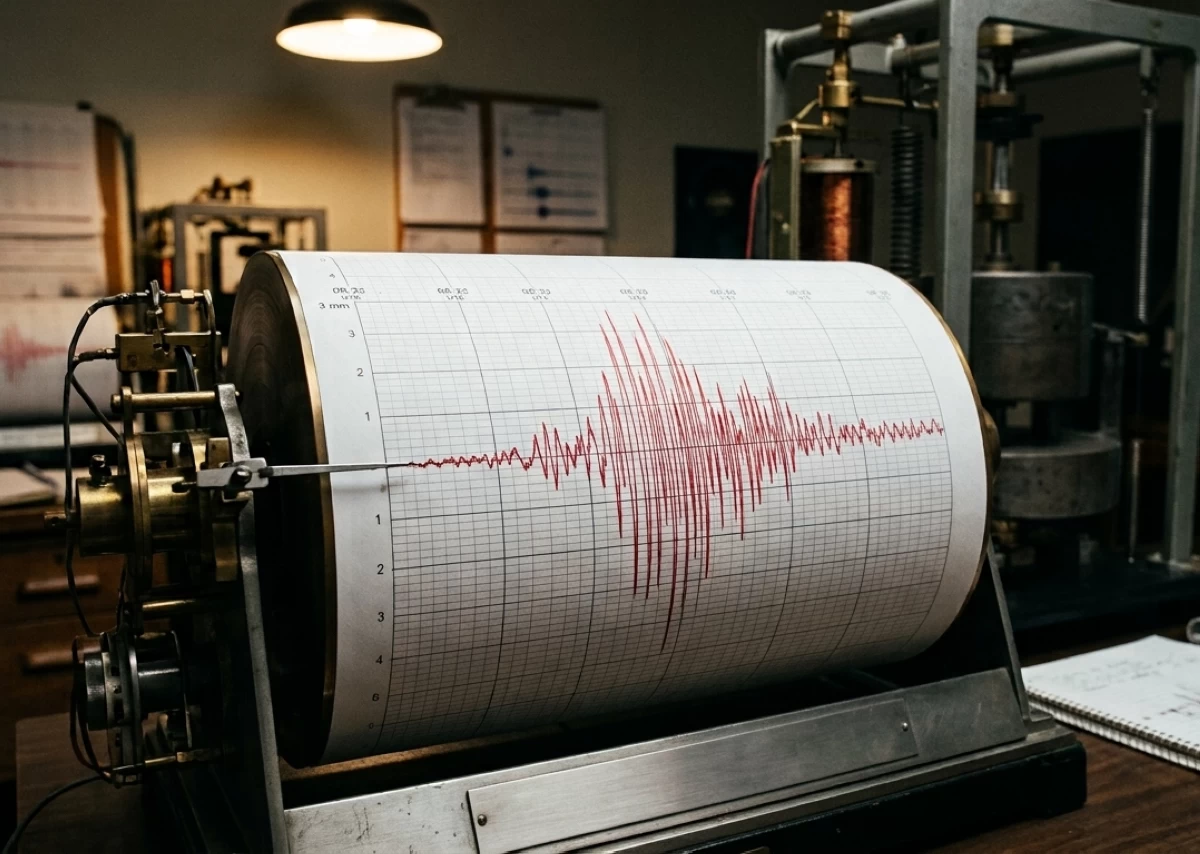
A classic seismograph (Image generated by Gemini)
PHIVOLCS, an attached agency of the Department of Science and Technology, monitors earthquakes nationwide using seismographs, which record ground vibrations.
The Earth’s outer rigid layer, called the lithosphere, is about 80 kilometers thick and is divided into large and small tectonic plates. Faults are fractures or zones of weakness where rock displacement has occurred or may occur. Those that have moved recently or have a history of movement are classified as active faults.
The Philippine archipelago lies between the Philippine Sea Plate and the Eurasian Plate. According to PHIVOLCS, the Philippine Sea Plate moves toward the archipelago at about seven centimeters annually. In comparison, the Eurasian Plate subducts beneath western Luzon and Mindoro at about three centimeters per year, except in Mindoro and northwestern Zamboanga, where collision occurs.
The Philippine Fault Zone accommodates the movement between these major plates, while other active faults also contribute to the country’s high seismic activity.
PHIVOLCS said the Philippines experiences an average of 20 to 30 earthquakes every single day. Over the past four decades, the country has recorded 10 earthquakes with magnitudes greater than 7.0, indicating that similarly destructive earthquakes remain a significant possibility.
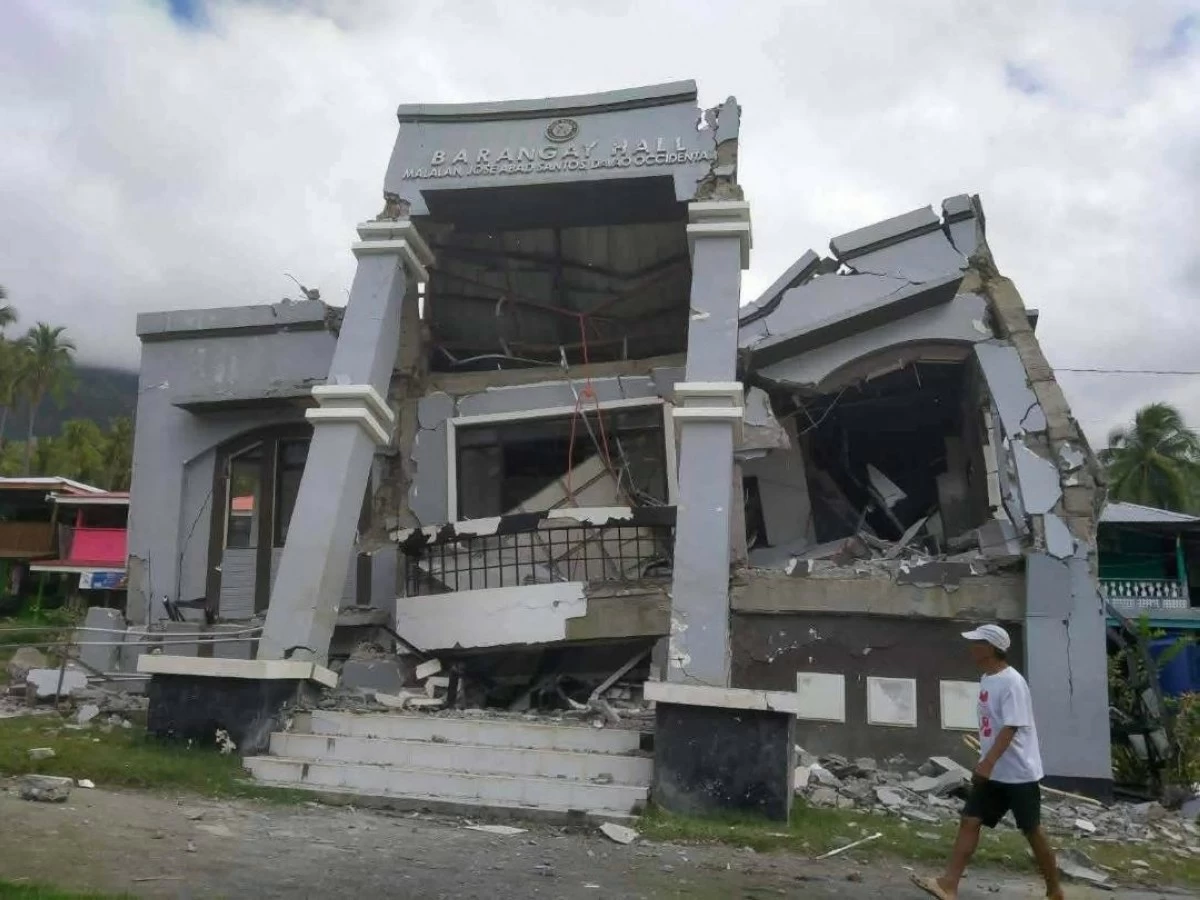
A barangay hall in Malalan, Jose Abad Santos, Davao Occidental destroyed by the earthquake. (PIA Davao)
The destructive effects of earthquakes are primarily caused by intense ground shaking. According to PHIVOLCS, strong shaking can crack, tilt, or collapse buildings and other structures; damage roads, bridges, railways, and utility systems; trigger dam failures and flooding; and cause various forms of ground movement.
Earthquakes may also trigger liquefaction, a process in which water-saturated sandy soil temporarily loses its strength. Areas prone to liquefaction include coastal plains, floodplains, river deltas, marshlands, and reclaimed areas.
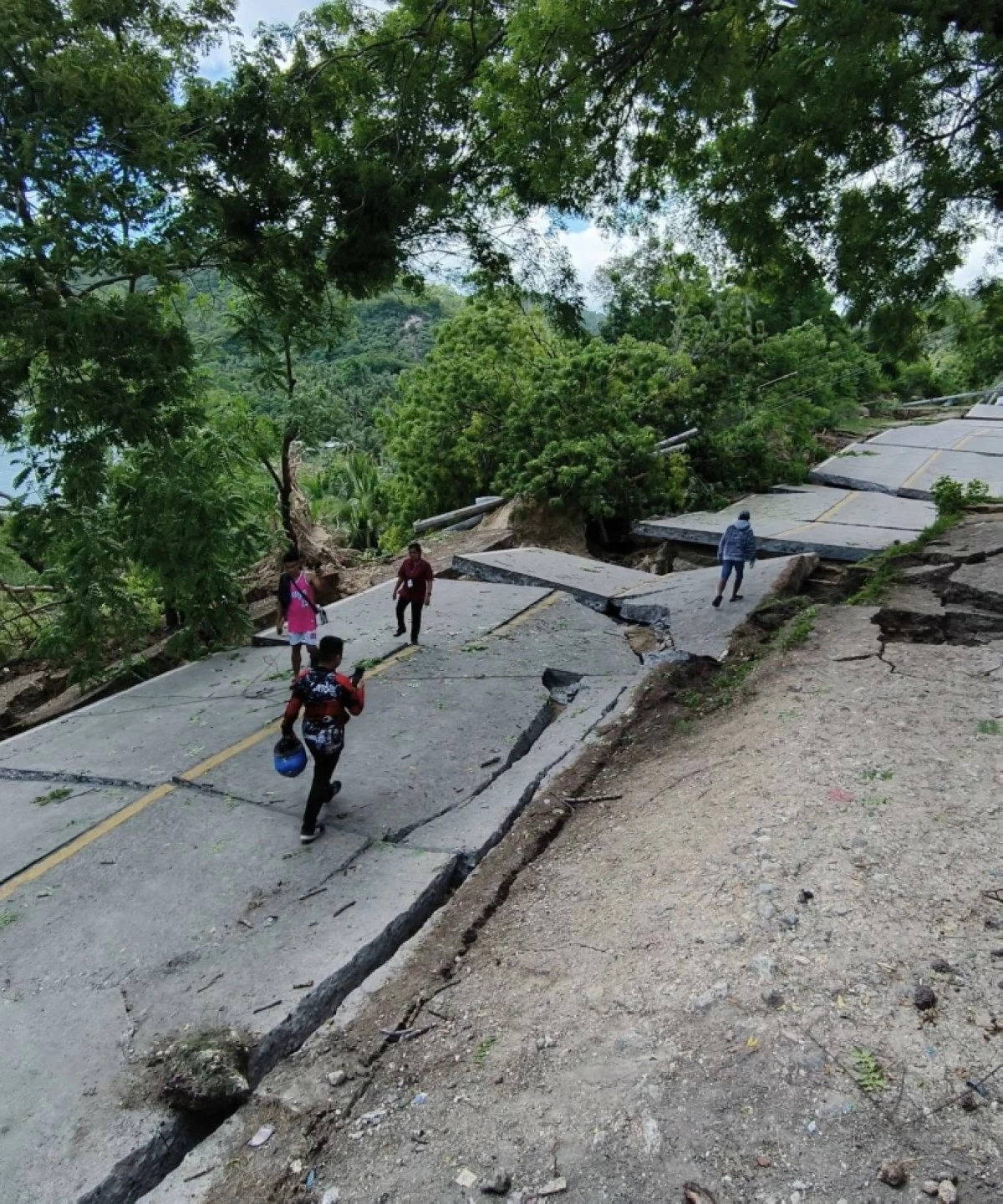
The aftermath of the magnitude 7.8 earthquake that his Sarangani province in the Philippines on June 8 (Photo from Vice Mayor James Yap Jr. of Glan, Sarangani)
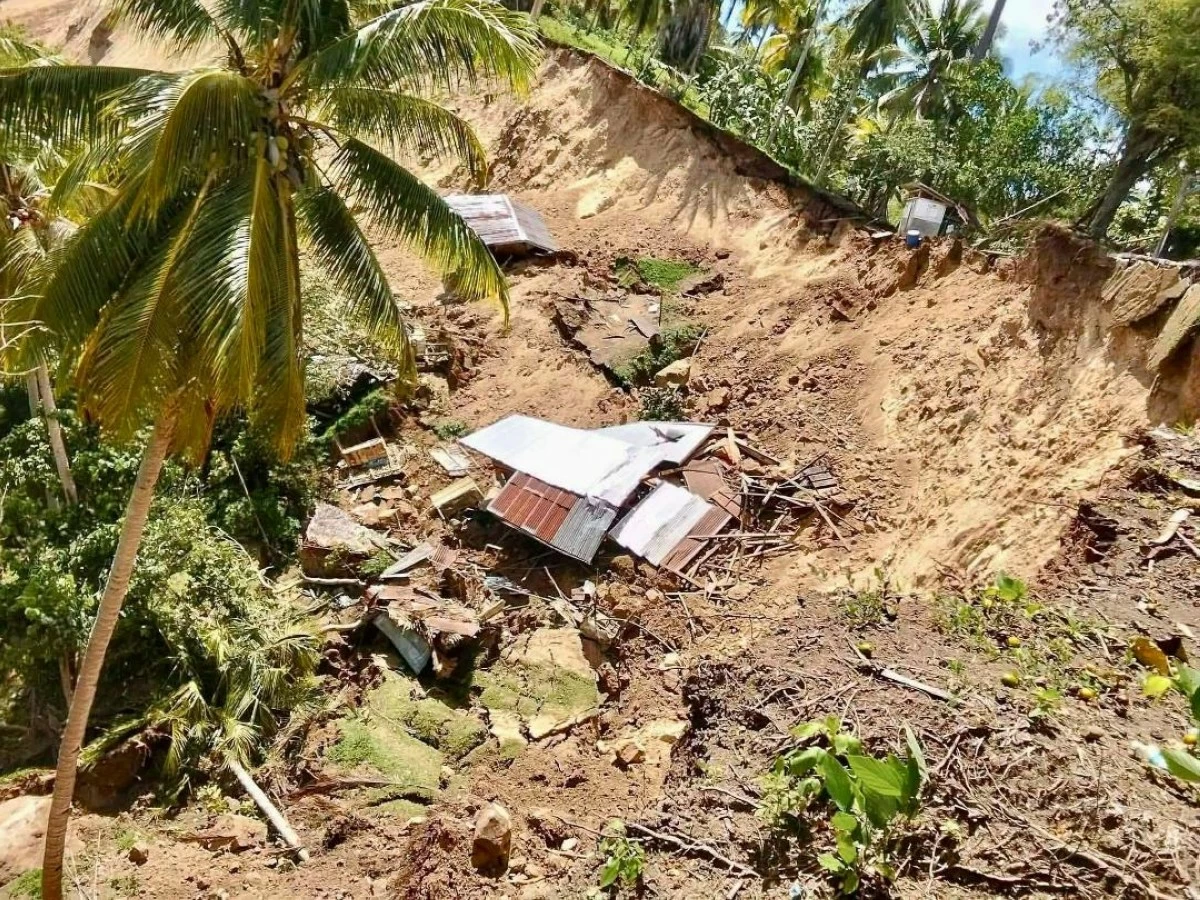

A TEACHER’S house in Barangay Ilaya, Glan, Sarangani, destroyed in the magnitude-7.8 earthquake on June 8. (DepEd-Sarangani)
Another hazard is ground rupture, the visible displacement of the Earth’s surface along an active fault. Landslides are likewise common in mountainous areas, steep riverbanks, escarpments, and coastal cliffs.
Underwater earthquakes may also generate tsunamis, although not every submarine earthquake produces one.
Aftershocks are also expected following a major earthquake. These smaller earthquakes occur as the Earth’s crust adjusts to the displacement caused by the main shock.
“The only way to avoid disasters caused by earthquakes is to prepare for them,” wrote Maria Elena Paterno in her book Earthquake!

Related Tags

PHIVOLCS Earthquake Pacific Ring of Fire
ADVERTISEMENT
.most-popular .layout-ratio{ padding-bottom: 79.13%; } @media (min-width: 768px) and (max-width: 1024px) { .widget-title { font-size: 15px !important; } }

{{ articles_filter_1561_widget.title }}

.most-popular .layout-ratio{ padding-bottom: 79.13%; } @media (min-width: 768px) and (max-width: 1024px) { .widget-title { font-size: 15px !important; } }

{{ static_articles_1562_widget.title }}

.most-popular .layout-ratio{ padding-bottom: 79.13%; } @media (min-width: 768px) and (max-width: 1024px) { .widget-title { font-size: 15px !important; } }

{{ articles_filter_1563_widget.title }}

{{ articles_filter_1564_widget.title }}

.mb-article-details { position: relative; } .mb-article-details .article-body-preview, .mb-article-details .article-body-summary{ font-size: 17px; line-height: 30px; font-family: "Libre Caslon Text", serif; color: #000; } .mb-article-details .article-body-preview iframe , .mb-article-details .article-body-summary iframe{ width: 100%; margin: auto; } .read-more-background { background: linear-gradient(180deg, color(display-p3 1.000 1.000 1.000 / 0) 13.75%, color(display-p3 1.000 1.000 1.000 / 0.8) 30.79%, color(display-p3 1.000 1.000 1.000) 72.5%); position: absolute; height: 200px; width: 100%; bottom: 0; display: flex; justify-content: center; align-items: center; padding: 0; } .read-more-background a{ color: #000; } .read-more-btn { padding: 17px 45px; font-family: Inter; font-weight: 700; font-size: 18px; line-height: 16px; text-align: center; vertical-align: middle; border: 1px solid black; background-color: white; } .hidden { display: none; }
function initializeAllSwipers() { // Get all hidden inputs with cms_article_id document.querySelectorAll('[id^="cms_article_id_"]').forEach(function (input) { const cmsArticleId = input.value; const articleSelector = '#article-' + cmsArticleId + ' .body_images'; const swiperElement = document.querySelector(articleSelector); if (swiperElement && !swiperElement.classList.contains('swiper-initialized')) { new Swiper(articleSelector, { loop: true, pagination: false, navigation: { nextEl: '#article-' + cmsArticleId + ' .swiper-button-next', prevEl: '#article-' + cmsArticleId + ' .swiper-button-prev', }, }); } }); } setTimeout(initializeAllSwipers, 3000); const intersectionObserver = new IntersectionObserver( (entries) => { entries.forEach((entry) => { if (entry.isIntersecting) { const newUrl = entry.target.getAttribute("data-url"); if (newUrl) { history.pushState(null, null, newUrl); let article = entry.target; // Extract metadata const author = article.querySelector('.author-section').textContent.replace('By', '').trim(); const section = article.querySelector('.section-info ').textContent.replace(' ', ' '); const title = article.querySelector('.article-title h1').textContent; // Parse URL for Chartbeat path format const parsedUrl = new URL(newUrl, window.location.origin); const cleanUrl = parsedUrl.host + parsedUrl.pathname; // Update Chartbeat configuration if (typeof window._sf_async_config !== 'undefined') { window._sf_async_config.path = cleanUrl; window._sf_async_config.sections = section; window._sf_async_config.authors = author; } // Track virtual page view with Chartbeat if (typeof pSUPERFLY !== 'undefined' && typeof pSUPERFLY.virtualPage === 'function') { try { pSUPERFLY.virtualPage({ path: cleanUrl, title: title, sections: section, authors: author }); } catch (error) { console.error('ping error', error); } } // Optional: Update document title if (title && title !== document.title) { document.title = title; } } } }); }, { threshold: 0.1 } ); function showArticleBody(button) { const article = button.closest("article"); const summary = article.querySelector(".article-body-summary"); const body = article.querySelector(".article-body-preview"); const readMoreSection = article.querySelector(".read-more-background"); // Hide summary and read-more section summary.style.display = "none"; readMoreSection.style.display = "none"; // Show the full article body body.classList.remove("hidden"); } document.addEventListener("DOMContentLoaded", () => { let loadCount = 0; // Track how many times articles are loaded const offset = [1, 2, 3, 4, 5, 6, 7, 8, 9, 10]; // Offset values const currentUrl = window.location.pathname.substring(1); let isLoading = false; // Prevent multiple calls if (!currentUrl) { console.log("Current URL is invalid."); return; } const sentinel = document.getElementById("load-more-sentinel"); if (!sentinel) { console.log("Sentinel element not found."); return; } function isSentinelVisible() { const rect = sentinel.getBoundingClientRect(); return ( rect.top < window.innerHeight && rect.bottom >= 0 ); } function onScroll() { if (isLoading) return; if (isSentinelVisible()) { if (loadCount >= offset.length) { console.log("Maximum load attempts reached."); window.removeEventListener("scroll", onScroll); return; } isLoading = true; const currentOffset = offset[loadCount]; window.loadMoreItems().then(() => { let article = document.querySelector('#widget_1690 > div:nth-last-of-type(2) article'); intersectionObserver.observe(article) loadCount++; }).catch(error => { console.error("Error loading more items:", error); }).finally(() => { isLoading = false; }); } } window.addEventListener("scroll", onScroll); });

Sign up by email to receive news.