

ADVERTISEMENT

Faint new planet is revealed around a young star after a decade in hiding

Published Jul 15, 2026 08:33 pm
CAPE CANAVERAL, Fla. (AP) — Astronomers have discovered a faint, elusive planet orbiting a young star after more than a decade of cosmic hide-and-seek.
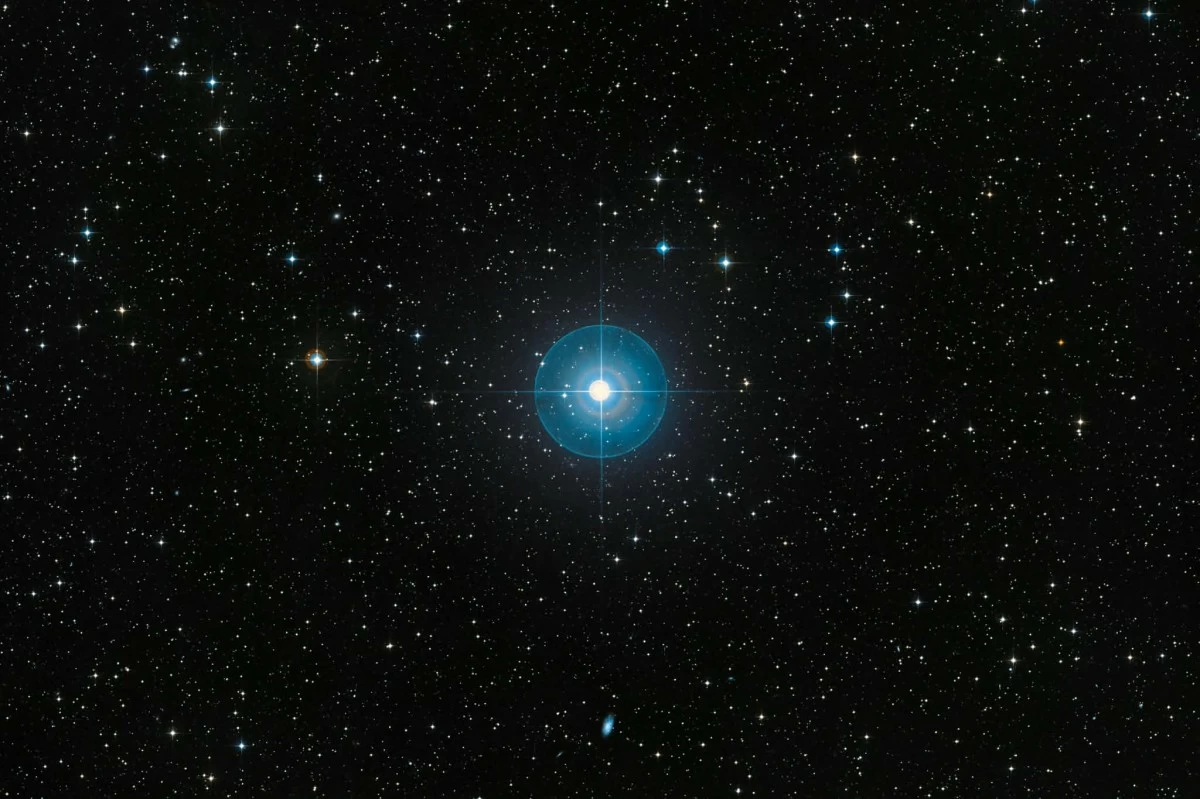
This image provided by the European Southern Observatory shows the Beta Pictoris region on March 6, 2014. (ESO/Digitized Sky Survey 2 via AP)
In an unusual twist, two groups working independently detected the cold gas giant a few days apart late last year using different telescopes. It's the dimmest planet ever directly imaged from Earth, scientists reported Wednesday.
A Scottish and German-led team spied the new planet around the star Beta Pictoris using the European Southern Observatory's Very Large Telescope in Chile, then dug through archives to confirm its orbit. The planet had remained hidden in the data all this time, overshadowed by its considerably brighter star and two companion planets.
"It was very much playing hide-and-seek for 11 years," said the European Southern Observatory's Markus Bonse, co-leader of the first team.
The California-led team made the discovery with NASA's Webb Space Telescope. Two observations were all it took with Webb, the biggest and most powerful telescope ever launched into space. Both teams reported their findings in the Astrophysical Journal Letters.
The find was serendipitous. Each team was studying one of the star's already identified planets when they spotted a less massive one — 100 times fainter — lurking farther out. They deliberately kept their work from one another so as not to bias the results.
The new planet is slightly bigger than Jupiter and takes 91 years to orbit its star, a little longer than it takes Uranus to orbit our sun. Born into a star system that's barely 20 million years old — a kid compared to the sun's 4.5 billion-year-old neighborhood — the planet is probably similar to a much younger Jupiter, said the University of California San Diego's Aidan Gibbs, who led the second team.
"The giant planets have formed, but smaller terrestrial planets could still be forming," Gibbs said in an email. Beta Pictoris "is probably our best look at a planetary system just after it has formed and is still in the process of stabilizing" from hurtling asteroids and comets.
Beta Pictoris is located in the easel-shaped southern constellation Pictor, or painter, and 63 light-years from Earth. A light-year is nearly 6 trillion miles (more than 9 trillion kilometers).
Fewer than 100 of the more than 6,000 confirmed exoplanets — planets around other stars — have been detected through direct imaging, according to NASA. Most were found while passing in front of their star, briefly dimming it.
"We've now built a picture of this planet," the University of Edinburgh's Ben Sutlieff said in an email, "and we are very excited to see what more can be learned about it."

Related Tags

world news ASTRONOMY
ADVERTISEMENT
.most-popular .layout-ratio{ padding-bottom: 79.13%; } @media (min-width: 768px) and (max-width: 1024px) { .widget-title { font-size: 15px !important; } }

{{ articles_filter_1561_widget.title }}

.most-popular .layout-ratio{ padding-bottom: 79.13%; } @media (min-width: 768px) and (max-width: 1024px) { .widget-title { font-size: 15px !important; } }

{{ static_articles_1562_widget.title }}

.most-popular .layout-ratio{ padding-bottom: 79.13%; } @media (min-width: 768px) and (max-width: 1024px) { .widget-title { font-size: 15px !important; } }

{{ articles_filter_1563_widget.title }}

{{ articles_filter_1564_widget.title }}

.mb-article-details { position: relative; } .mb-article-details .article-body-preview, .mb-article-details .article-body-summary{ font-size: 17px; line-height: 30px; font-family: "Libre Caslon Text", serif; color: #000; } .mb-article-details .article-body-preview iframe , .mb-article-details .article-body-summary iframe{ width: 100%; margin: auto; } .read-more-background { background: linear-gradient(180deg, color(display-p3 1.000 1.000 1.000 / 0) 13.75%, color(display-p3 1.000 1.000 1.000 / 0.8) 30.79%, color(display-p3 1.000 1.000 1.000) 72.5%); position: absolute; height: 200px; width: 100%; bottom: 0; display: flex; justify-content: center; align-items: center; padding: 0; } .read-more-background a{ color: #000; } .read-more-btn { padding: 17px 45px; font-family: Inter; font-weight: 700; font-size: 18px; line-height: 16px; text-align: center; vertical-align: middle; border: 1px solid black; background-color: white; } .hidden { display: none; }
function initializeAllSwipers() { // Get all hidden inputs with cms_article_id document.querySelectorAll('[id^="cms_article_id_"]').forEach(function (input) { const cmsArticleId = input.value; const articleSelector = '#article-' + cmsArticleId + ' .body_images'; const swiperElement = document.querySelector(articleSelector); if (swiperElement && !swiperElement.classList.contains('swiper-initialized')) { new Swiper(articleSelector, { loop: true, pagination: false, navigation: { nextEl: '#article-' + cmsArticleId + ' .swiper-button-next', prevEl: '#article-' + cmsArticleId + ' .swiper-button-prev', }, }); } }); } setTimeout(initializeAllSwipers, 3000); const intersectionObserver = new IntersectionObserver( (entries) => { entries.forEach((entry) => { if (entry.isIntersecting) { const newUrl = entry.target.getAttribute("data-url"); if (newUrl) { history.pushState(null, null, newUrl); let article = entry.target; // Extract metadata const author = article.querySelector('.author-section').textContent.replace('By', '').trim(); const section = article.querySelector('.section-info ').textContent.replace(' ', ' '); const title = article.querySelector('.article-title h1').textContent; // Parse URL for Chartbeat path format const parsedUrl = new URL(newUrl, window.location.origin); const cleanUrl = parsedUrl.host + parsedUrl.pathname; // Update Chartbeat configuration if (typeof window._sf_async_config !== 'undefined') { window._sf_async_config.path = cleanUrl; window._sf_async_config.sections = section; window._sf_async_config.authors = author; } // Track virtual page view with Chartbeat if (typeof pSUPERFLY !== 'undefined' && typeof pSUPERFLY.virtualPage === 'function') { try { pSUPERFLY.virtualPage({ path: cleanUrl, title: title, sections: section, authors: author }); } catch (error) { console.error('ping error', error); } } // Optional: Update document title if (title && title !== document.title) { document.title = title; } } } }); }, { threshold: 0.1 } ); function showArticleBody(button) { const article = button.closest("article"); const summary = article.querySelector(".article-body-summary"); const body = article.querySelector(".article-body-preview"); const readMoreSection = article.querySelector(".read-more-background"); // Hide summary and read-more section summary.style.display = "none"; readMoreSection.style.display = "none"; // Show the full article body body.classList.remove("hidden"); } document.addEventListener("DOMContentLoaded", () => { let loadCount = 0; // Track how many times articles are loaded const offset = [1, 2, 3, 4, 5, 6, 7, 8, 9, 10]; // Offset values const currentUrl = window.location.pathname.substring(1); let isLoading = false; // Prevent multiple calls if (!currentUrl) { console.log("Current URL is invalid."); return; } const sentinel = document.getElementById("load-more-sentinel"); if (!sentinel) { console.log("Sentinel element not found."); return; } function isSentinelVisible() { const rect = sentinel.getBoundingClientRect(); return ( rect.top < window.innerHeight && rect.bottom >= 0 ); } function onScroll() { if (isLoading) return; if (isSentinelVisible()) { if (loadCount >= offset.length) { console.log("Maximum load attempts reached."); window.removeEventListener("scroll", onScroll); return; } isLoading = true; const currentOffset = offset[loadCount]; window.loadMoreItems().then(() => { let article = document.querySelector('#widget_1690 > div:nth-last-of-type(2) article'); intersectionObserver.observe(article) loadCount++; }).catch(error => { console.error("Error loading more items:", error); }).finally(() => { isLoading = false; }); } } window.addEventListener("scroll", onScroll); });

Sign up by email to receive news.