







Dr. Pujalte: A fresh prescription for better Philippine healthcare
Published Jul 15, 2026 12:05 am
|
Updated Jul 14, 2026 05:59 pm


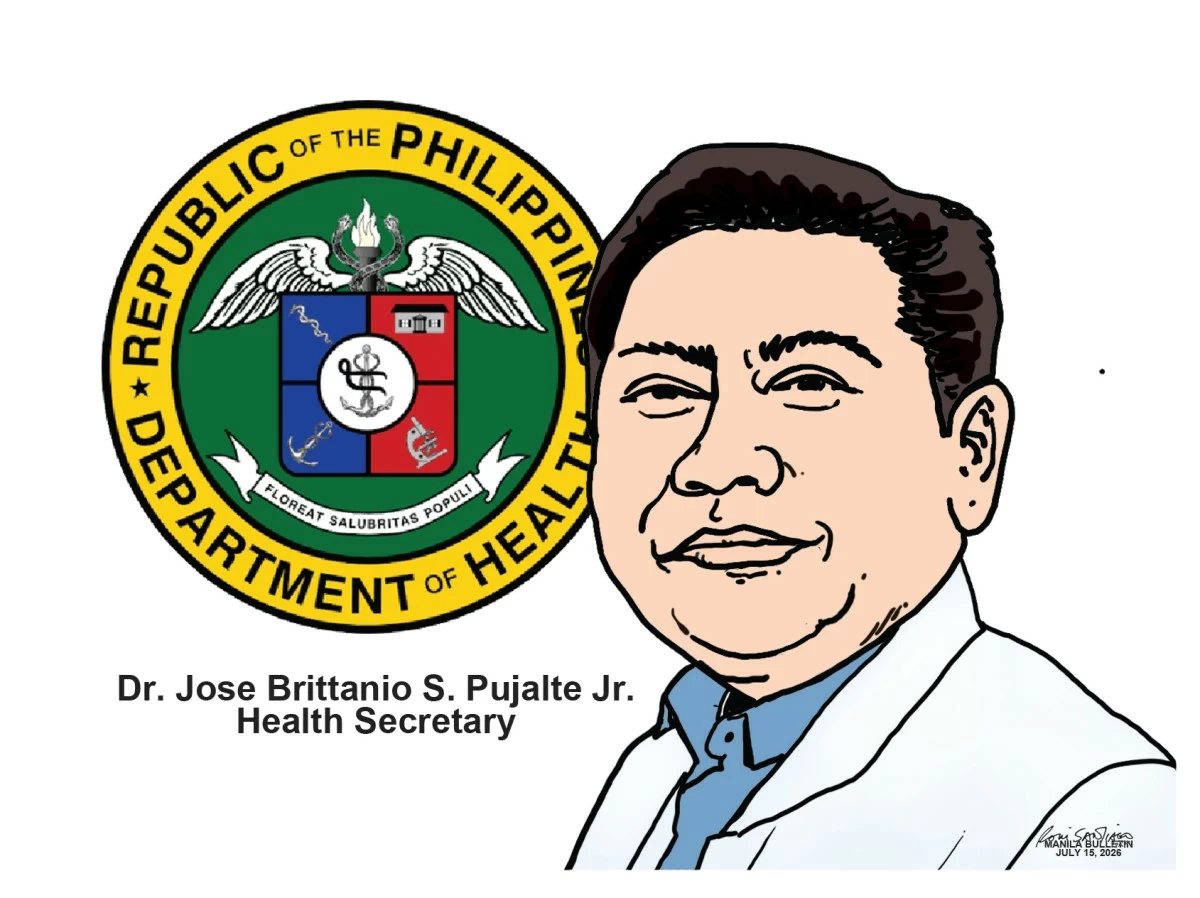
President Ferdinand Marcos Jr.’s appointment of Dr. Jose Brittanio S. Pujalte Jr. as Secretary of the Department of Health (DOH) is a clear statement that competence, experience, and professional excellence matter in public service. At a time when the country’s healthcare system continues to recover from the pandemic while confronting long-standing structural challenges, choosing a career physician and hospital administrator instead of a traditional politician reflects sound judgment and an encouraging commitment to evidence-based governance.
According to the Presidential Communications Office, Dr. Pujalte has devoted more than three decades to public healthcare, serving as a physician, educator, hospital administrator, and public servant. Having joined the DOH in 1991, completed his orthopedic residency at the Philippine Orthopedic Center (POC), and later serving as Medical Center Chief II since 2014, he has spent much of his professional life understanding the realities of Philippine healthcare from the ground up. His leadership at the POC, including the modernization of hospital facilities and expansion of patient services culminating in the opening of a new hospital building in 2022, demonstrates his ability to transform vision into tangible results.
Marcos deserves recognition for entrusting one of the government’s most critical agencies to someone whose credentials are rooted in medicine rather than politics. The country’s health system requires leaders who appreciate not only policy formulation but also the day-to-day realities faced by doctors, nurses, healthcare workers, and patients. Dr. Pujalte brings that invaluable perspective.
His extensive experience in hospital administration could prove instrumental in improving efficiency across government hospitals, reducing bureaucratic bottlenecks, and strengthening accountability in healthcare spending. Equally important, his academic background—a Doctor of Medicine from the University of the Philippines College of Medicine and a master's degree in Hospital Administration from the Ateneo Graduate School of Business—provides him with both clinical expertise and managerial competence, a rare combination for a Health secretary.
Yet the appointment also carries enormous expectations.
Among Pujalte’s foremost priorities should be the full and effective implementation of the Universal Health Care Act, and addressing questionable fund allocations at the DOH and a surge in preventable communicable diseases. While the landmark law promises equitable access to healthcare, many Filipinos, especially those in rural and underserved communities, continue to struggle with inadequate facilities, shortages of healthcare professionals, and limited access to specialized medical services. Turning the law’s promise into everyday reality will require decisive leadership, stronger coordination with local governments, and sustained investments in public health infrastructure.
He must also strengthen preventive healthcare, modernize disease surveillance systems, improve emergency preparedness, and address the persistent shortage and migration of Filipino healthcare workers. Equally vital is restoring public confidence in the DOH through transparency, efficient service delivery, and sound stewardship of public funds.
Former Health secretary and current House Deputy Speaker Janette Garin expressed optimism that Pujalte’s appointment would help rebuild public trust in the DOH and reinforce the government’s commitment to accessible healthcare. Her confidence reflects the respect Pujalte has earned within the medical community and his long-standing advocacy for protecting government specialty hospitals and ensuring that quality healthcare remains accessible to ordinary Filipinos.
Ultimately, the success of Pujalte’s tenure will not be measured by rhetoric and administrative reforms alone, but by shorter hospital queues, better-equipped rural health units, improved disease prevention, expanded access to quality medical care, and healthier Filipino families.
President Marcos has placed a seasoned physician at the helm of Philippine healthcare. Now comes the more difficult task: translating decades of medical expertise into national reforms that every Filipino can feel. If Dr. Pujalte succeeds in doing so, his appointment may well become one of the Marcos administration’s most consequential decisions—one that leaves a lasting legacy of stronger institutions, healthier communities, and a healthcare system that truly serves every Filipino.