






Manila Bulletin
 Philippines
National
Step up prosecution, conviction of personalities behind illicit tobacco trade--Valeriano
Philippines
National
Step up prosecution, conviction of personalities behind illicit tobacco trade--Valeriano
Philippines
National
Step up prosecution, conviction of personalities behind illicit tobacco trade--Valeriano
Step up prosecution, conviction of personalities behind illicit tobacco trade--Valeriano
Published Jul 14, 2026 09:37 am


At A Glance
- Rep. Rolando Valeriano urges law enforcement to prioritize prosecutions and convictions over mere confiscation of illicit tobacco products.
- He warns that without convictions, illicit trade remains unchecked, citing billions in lost government revenues and widespread illegal tobacco sales.
- Officials at the summit acknowledged weak case build-up, with most complaints lacking sufficient evidence, and stressed dismantling syndicates through stronger coordination and legal reforms.
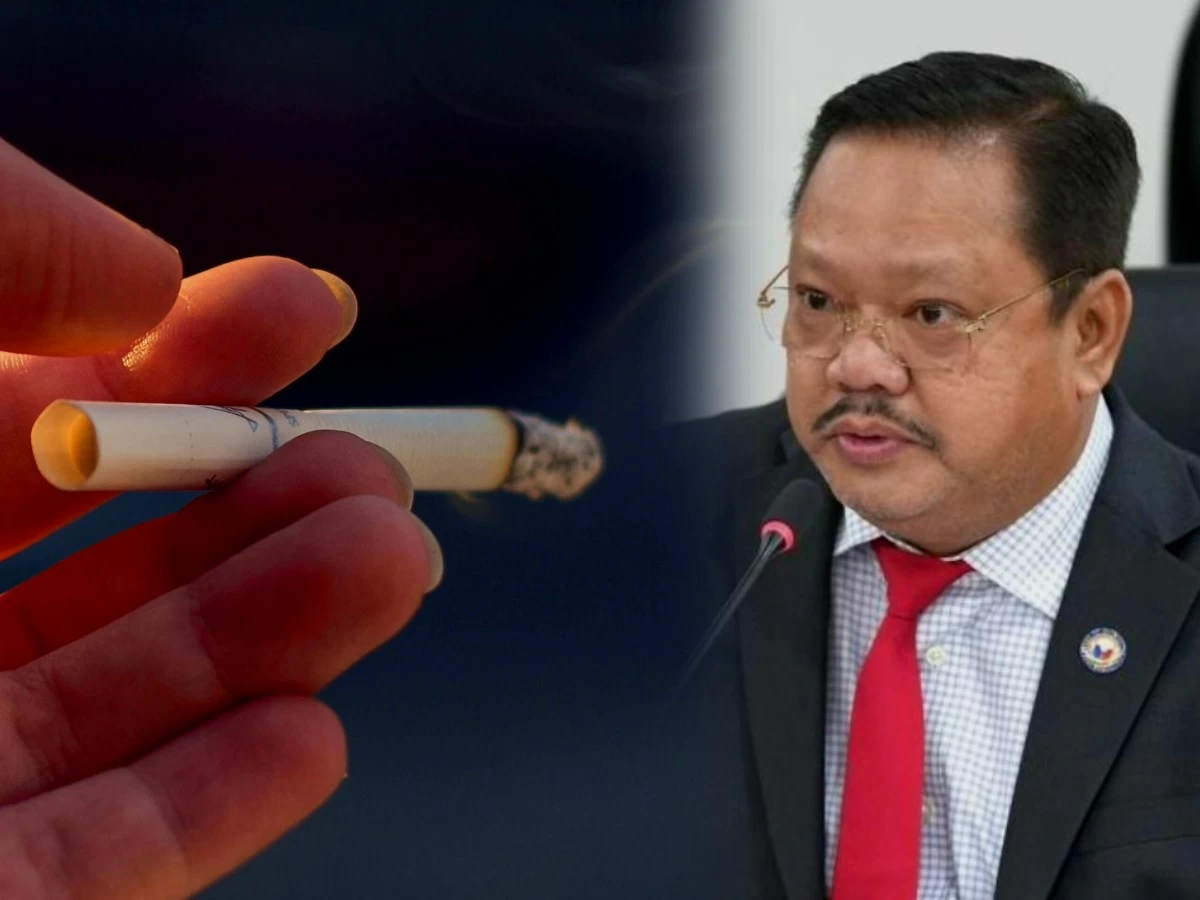
A cigarette, Manila 2nd district Rep. Rolando Valeriano (Unsplash, Contributed photo)
Manila 2nd district Rep. Rolando Valeriano has urged law enforcement agencies to shift their focus from merely confiscating illicit tobacco products to ensuring that those responsible are successfully prosecuted and convicted.
Valeriano, chairman of the House Committee on Public Order and Safety, made the call during the 3rd International Tobacco Summit held last June 18 at the Marco Polo Ortigas Manila in Pasig City, Philippines.
"As lawmakers, we often hear reports about successful seizures. We see photographs of confiscated products. We read about warehouses being discovered. Those are important victories," said Valeriano.
"But after the press conference, after the inventory, after the seizure, an important question remains: What happened to the case? Was somebody prosecuted? Was somebody convicted?" he asked.
According to the Manila congressman, the objective should be to make illicit trade "risky, costly, and ultimately unsustainable".
"If no one is convicted, no one is afraid and illicit trade will never stop," he pointed out.
His remarks came amid continuing concerns over the scale of the illicit tobacco market in the Philippines. A recent study by the EU-ASEAN Business Council and Euromonitor International estimated that the government lost at least $2.5 billion, or around P141 billion, in revenues over the past two years due to illicit tobacco products.
The study also found that one in every four cigarette sticks and more than four in five vape products sold in the country were illegal, contraband, counterfeit, or unbranded.
Valeriano said Congress could further strengthen the country's anti-illicit trade framework and “ensure our laws remain responsive to evolving threats".
One such possibility is a long-proposed Anti-Illicit Trade (AIT) measure that would improve prosecution mechanisms, enhance inter-agency coordination, and introduce technologies such as track-and-trace systems to monitor tobacco supply chains.
Government agencies have intensified enforcement operations against tobacco smuggling in recent months. On June 22, the Bureau of Internal Revenue (BIR) and the National Bureau of Investigation (NBI) seized 22 container vans loaded with illicit cigarettes at Manila's North Harbor.
The Philippine National Police (PNP) also reported conducting nearly 9,000 anti-smuggling and anti-illicit trade operations during the first half of 2026, while the Bureau of Customs (BOC) has confiscated billions of pesos worth of illicit tobacco and vape products.
Despite these operations, authorities acknowledged that securing convictions remains a challenge.
Prosecution numbers
During the summit, Prosecutor General Richard Anthony Fadullon said a significant majority of complaints filed under the Anti-Agricultural Economic Sabotage Act required further case build-up because available evidence was insufficient to sustain convictions in court.
To date, he said, the National Prosecution Service has filed 45 criminal complaints involving 164 individual respondents.
“Out of these cases, 10 have already progressed to indictments with appropriate charges already being filed with the Court of Tax Appeals, which now exercises exclusive jurisdiction over these offenses. However, more than 75% of the complaints were referred to concerned law enforcement agencies for further case build-up, having been found to contain insufficient evidence for preliminary investigation at the time of filing,” he lamented.
Department of Interior and Local Government (DILG) Secretary Jonvic Remulla likewise reiterated President Marcos' directive to focus enforcement efforts on dismantling syndicates behind illicit trade rather than targeting small-scale retailers.
According to Remulla, the DILG and the PNPwere working with industry stakeholders to strengthen intelligence gathering and ensure that no public officials provide protection to illicit trade operators.
Valeriano added that sustained coordination among law enforcement agencies, prosecutors, regulators, and lawmakers would be necessary to ensure that anti-smuggling operations result not only in seizures but also in successful prosecutions.