ADVERTISEMENT

Philippines' first airport city in Clark takes shape

Published Jul 14, 2026 03:48 pm

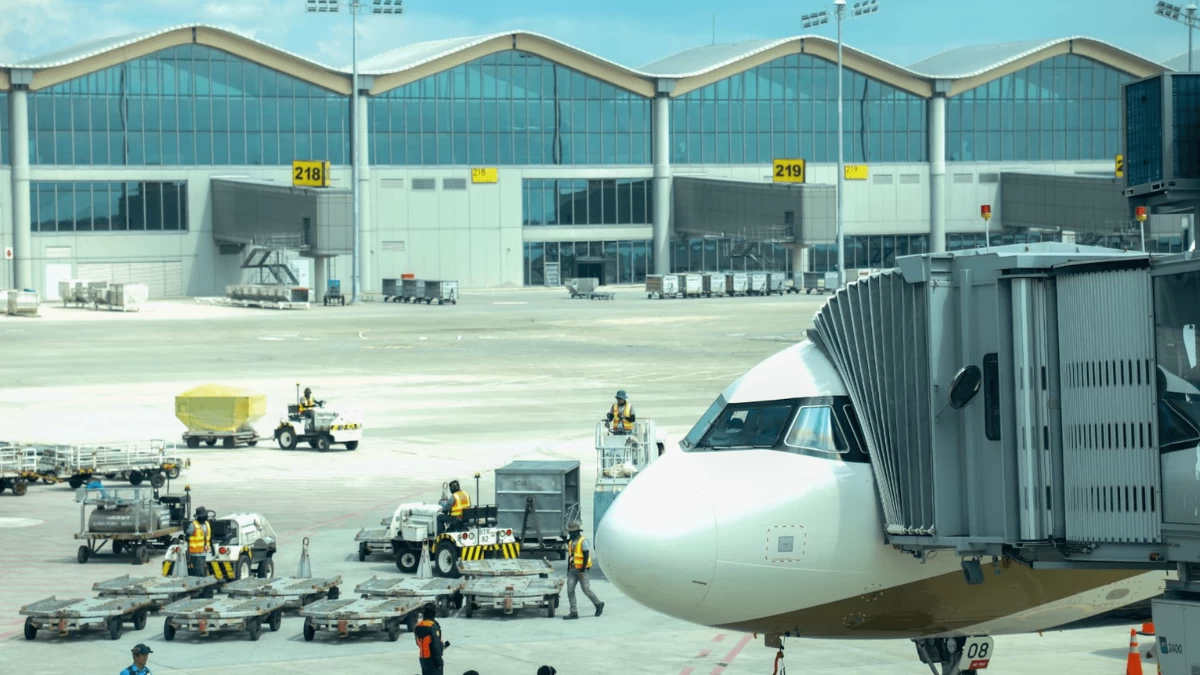
The Philippines will soon welcome its first airport city through Clark International Airport, which is being positioned as an integrated hub for aviation, logistics, and other developments.

Luzon International Premiere Airport Development (LIPAD) Corp., the airport operator, is developing the country’s first airport city, called Clark AeroDistrict, to expand its reach beyond airport operations and into other industries.

Designed by global engineering consulting firm AECOM, Clark AeroDistrict spans 759 hectares (ha) and is divided into four development zones.

These include dedicated areas for maintenance, repair, and overhaul (MRO) facilities; general aviation (GA) and freight services; cargo operations; and the passenger terminal and its future expansions.

LIPAD president and chief executive officer (CEO) Noel Manankil said Clark AeroDistrict is designed to strengthen the gateway’s role in driving economic growth by integrating different industries within a single development.

Central to this strategy is the future Cargo City, a 130-ha integrated cargo and logistics ecosystem within Clark AeroDistrict, which is envisioned to streamline freight operations and facilitate more seamless trade.

The development is also expected to accommodate commercial and mixed-use projects, including office and commercial establishments.

Manankil said the master plan for this zone will be completed before the end of the year. If all goes as planned, facilities within Cargo City will be operational within five years, he said.

LIPAD is open to any form of development for the project, including a potential public-private partnership (PPP) or joint venture (JV). It may also feature multiple locators or a single entity operating the entire zone.

Manankil said Clark AeroDistrict is LIPAD’s way of future-proofing its operations beyond relying solely on passenger demand, especially given the recent volatility in the aviation industry.

“It’s good from a financial point of view because the passenger majority is a bit challenging because the problem of airlines might not end,” he told a press briefing on Tuesday, July 14.

Clark International Airport’s passenger traffic reached 1.64 million from January to June, driven largely by international travelers, who accounted for nearly 54 percent of total.

However, international passenger volume declined by five percent year-on-year to 879,990 due to flight cancellations stemming from the conflict in the Middle East.

Domestic traffic, meanwhile, increased by nearly a quarter to 758,328 following the transfer of turboprop operations from main gateway Ninoy Aquino International Airport (NAIA) to Clark.

Amid persistent uncertainties in the aviation sector, LIPAD expects passenger volume this year to reach around 3.1 million, six percent below its initial target of 3.3 million.

Clark International Airport is expected to reach 3.3 million passengers next year and recover its pre-pandemic record of four million passengers by 2028.

Last year, the gateway recorded a total of 2.75 million passengers, eight percent short of its target of three million.

Related Tags

Clark International Airport
ADVERTISEMENT
.most-popular .layout-ratio{ padding-bottom: 79.13%; } @media (min-width: 768px) and (max-width: 1024px) { .widget-title { font-size: 15px !important; } }

{{ articles_filter_1561_widget.title }}

.most-popular .layout-ratio{ padding-bottom: 79.13%; } @media (min-width: 768px) and (max-width: 1024px) { .widget-title { font-size: 15px !important; } }

{{ static_articles_1562_widget.title }}

.most-popular .layout-ratio{ padding-bottom: 79.13%; } @media (min-width: 768px) and (max-width: 1024px) { .widget-title { font-size: 15px !important; } }

{{ articles_filter_1563_widget.title }}

{{ articles_filter_1564_widget.title }}

.mb-article-details { position: relative; } .mb-article-details .article-body-preview, .mb-article-details .article-body-summary{ font-size: 17px; line-height: 30px; font-family: "Libre Caslon Text", serif; color: #000; } .mb-article-details .article-body-preview iframe , .mb-article-details .article-body-summary iframe{ width: 100%; margin: auto; } .read-more-background { background: linear-gradient(180deg, color(display-p3 1.000 1.000 1.000 / 0) 13.75%, color(display-p3 1.000 1.000 1.000 / 0.8) 30.79%, color(display-p3 1.000 1.000 1.000) 72.5%); position: absolute; height: 200px; width: 100%; bottom: 0; display: flex; justify-content: center; align-items: center; padding: 0; } .read-more-background a{ color: #000; } .read-more-btn { padding: 17px 45px; font-family: Inter; font-weight: 700; font-size: 18px; line-height: 16px; text-align: center; vertical-align: middle; border: 1px solid black; background-color: white; } .hidden { display: none; }
function initializeAllSwipers() { // Get all hidden inputs with cms_article_id document.querySelectorAll('[id^="cms_article_id_"]').forEach(function (input) { const cmsArticleId = input.value; const articleSelector = '#article-' + cmsArticleId + ' .body_images'; const swiperElement = document.querySelector(articleSelector); if (swiperElement && !swiperElement.classList.contains('swiper-initialized')) { new Swiper(articleSelector, { loop: true, pagination: false, navigation: { nextEl: '#article-' + cmsArticleId + ' .swiper-button-next', prevEl: '#article-' + cmsArticleId + ' .swiper-button-prev', }, }); } }); } setTimeout(initializeAllSwipers, 3000); const intersectionObserver = new IntersectionObserver( (entries) => { entries.forEach((entry) => { if (entry.isIntersecting) { const newUrl = entry.target.getAttribute("data-url"); if (newUrl) { history.pushState(null, null, newUrl); let article = entry.target; // Extract metadata const author = article.querySelector('.author-section').textContent.replace('By', '').trim(); const section = article.querySelector('.section-info ').textContent.replace(' ', ' '); const title = article.querySelector('.article-title h1').textContent; // Parse URL for Chartbeat path format const parsedUrl = new URL(newUrl, window.location.origin); const cleanUrl = parsedUrl.host + parsedUrl.pathname; // Update Chartbeat configuration if (typeof window._sf_async_config !== 'undefined') { window._sf_async_config.path = cleanUrl; window._sf_async_config.sections = section; window._sf_async_config.authors = author; } // Track virtual page view with Chartbeat if (typeof pSUPERFLY !== 'undefined' && typeof pSUPERFLY.virtualPage === 'function') { try { pSUPERFLY.virtualPage({ path: cleanUrl, title: title, sections: section, authors: author }); } catch (error) { console.error('ping error', error); } } // Optional: Update document title if (title && title !== document.title) { document.title = title; } } } }); }, { threshold: 0.1 } ); function showArticleBody(button) { const article = button.closest("article"); const summary = article.querySelector(".article-body-summary"); const body = article.querySelector(".article-body-preview"); const readMoreSection = article.querySelector(".read-more-background"); // Hide summary and read-more section summary.style.display = "none"; readMoreSection.style.display = "none"; // Show the full article body body.classList.remove("hidden"); } document.addEventListener("DOMContentLoaded", () => { let loadCount = 0; // Track how many times articles are loaded const offset = [1, 2, 3, 4, 5, 6, 7, 8, 9, 10]; // Offset values const currentUrl = window.location.pathname.substring(1); let isLoading = false; // Prevent multiple calls if (!currentUrl) { console.log("Current URL is invalid."); return; } const sentinel = document.getElementById("load-more-sentinel"); if (!sentinel) { console.log("Sentinel element not found."); return; } function isSentinelVisible() { const rect = sentinel.getBoundingClientRect(); return ( rect.top < window.innerHeight && rect.bottom >= 0 ); } function onScroll() { if (isLoading) return; if (isSentinelVisible()) { if (loadCount >= offset.length) { console.log("Maximum load attempts reached."); window.removeEventListener("scroll", onScroll); return; } isLoading = true; const currentOffset = offset[loadCount]; window.loadMoreItems().then(() => { let article = document.querySelector('#widget_1690 > div:nth-last-of-type(2) article'); intersectionObserver.observe(article) loadCount++; }).catch(error => { console.error("Error loading more items:", error); }).finally(() => { isLoading = false; }); } } window.addEventListener("scroll", onScroll); });

Sign up by email to receive news.