






Manila Bulletin
 Philippines
National
MTerra solar project bolsters Philippines' power stability amid global energy disruptions — Marcos
Philippines
National
MTerra solar project bolsters Philippines' power stability amid global energy disruptions — Marcos
Philippines
National
MTerra solar project bolsters Philippines' power stability amid global energy disruptions — Marcos
MTerra solar project bolsters Philippines' power stability amid global energy disruptions — Marcos
Published Jul 14, 2026 04:08 pm


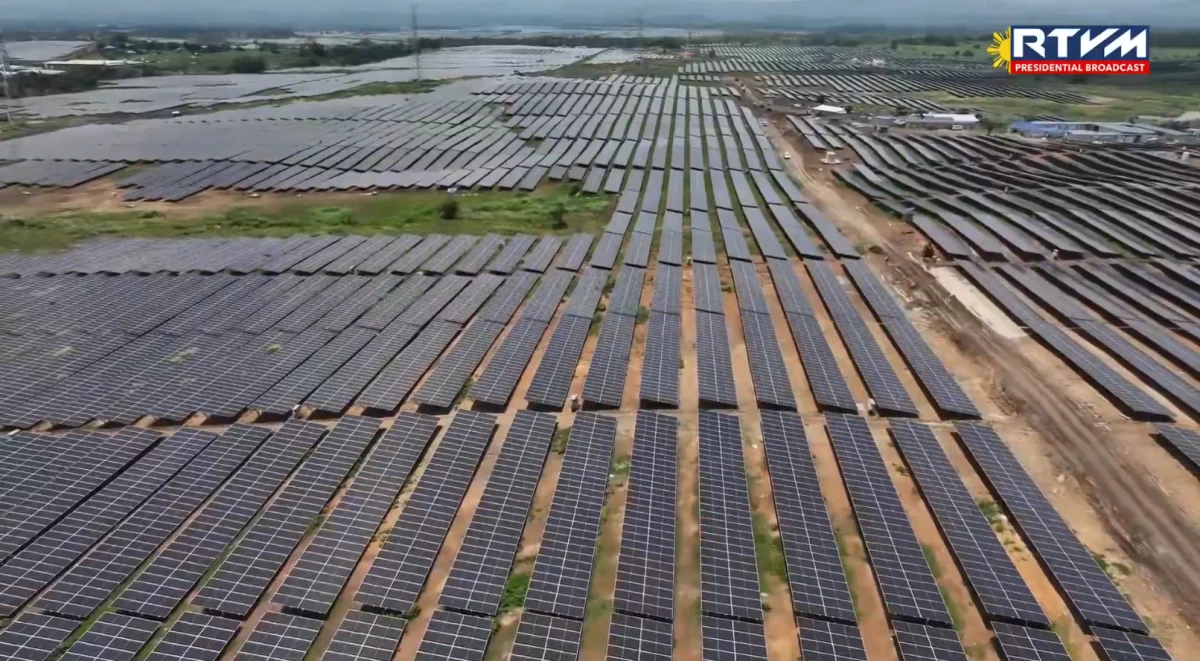
Meralco Terra (MTerra) Solar Project
Inaugurating Phase I of the Meralco Terra (MTerra) Solar Project, President Marcos said it would help shield the Philippines from global energy supply shocks.
During the inauguration led by Marcos and First Lady Liza Araneta-Marcos on Tuesday, July 14, in Gapan City, Nueva Ecija, the President said the inauguration of the project's phase 1 "comes at a time when the need to boost our energy sector has never been more apparent or more urgent."
Marcos stressed that the MTerra Solar Project forms part of the administration’s broader effort to transform the country’s energy sector into one that is more resilient, competitive, and capable of meeting the demands of a growing economy.
According to the President, the country's economy has relied heavily on conventional power sources for years. He cited that last year alone, coal accounted for 57 percent of the total power generation mix in the country, while renewables contributed only about 25 percent.
"Such an energy mix leaves us more vulnerable to fluctuations in global fuel prices and developments in the international market, as we have experienced in the last few months and it underscores the importance of diversifying our energy sources, and how we must be committed to moving that mix in the direction to favor renewables," he said.
"Recognizing this challenge, this administration has worked closely with our partners to accelerate the development of new RE (renewable energy) facilities," he added.
"This MTerra Solar Project stands as one of the clearest expressions of that commitment," the President further said.
Touted as the world’s largest integrated solar and battery storage facility, the project is expected to provide electricity to more than 2.4 million Filipino households and reduce carbon emissions by around 4.3 million metric tons annually once fully completed.
Phase I of the project has reached around 91 percent completion and is expected to become fully commercially operational by August 2026. Phase II began early this year and is targeted for completion by 2027.
Once both phases are completed, the facility will be capable of delivering up to 3,500 megawatts of solar power to the grid at peak, supported by 4,500 megawatt-hours of battery energy storage.
“These capabilities will help strengthen the stability of our power system while expanding the role of clean energy in our power generation mix. Equally important, its impact will be felt in the daily lives of our people,” Marcos said.
The project is also projected to generate nearly P23 billion in financial benefits over the next decade, while providing additional tax revenues and financial assistance to host communities.
“As operations expand, we look forward to even greater opportunities for our people: more jobs, stronger local government revenues, and sustained programs that promote community development,” Marcos said.
The President also recognized the contributions of the private sector, host communities, and other stakeholders to the project, saying the MTerra Solar Project demonstrates the country’s capability to deliver world-class infrastructure.
“Indeed, the MTerra Solar Project is proof that the Philippines is capable not only of envisioning world-class infrastructure, but also of delivering it,” he said.
Developed by Terra Solar Philippines Inc., a joint investment between SP New Energy Corporation and Actis, the MTerra Solar Project will span five municipalities across Nueva Ecija and Bulacan upon completion.