






 Business
The Economy
Every ₱1 spent on Pasig River public spaces could yield up to ₱8—ADB consultants
Business
The Economy
Every ₱1 spent on Pasig River public spaces could yield up to ₱8—ADB consultants
Every ₱1 spent on Pasig River public spaces could yield up to ₱8—ADB consultants


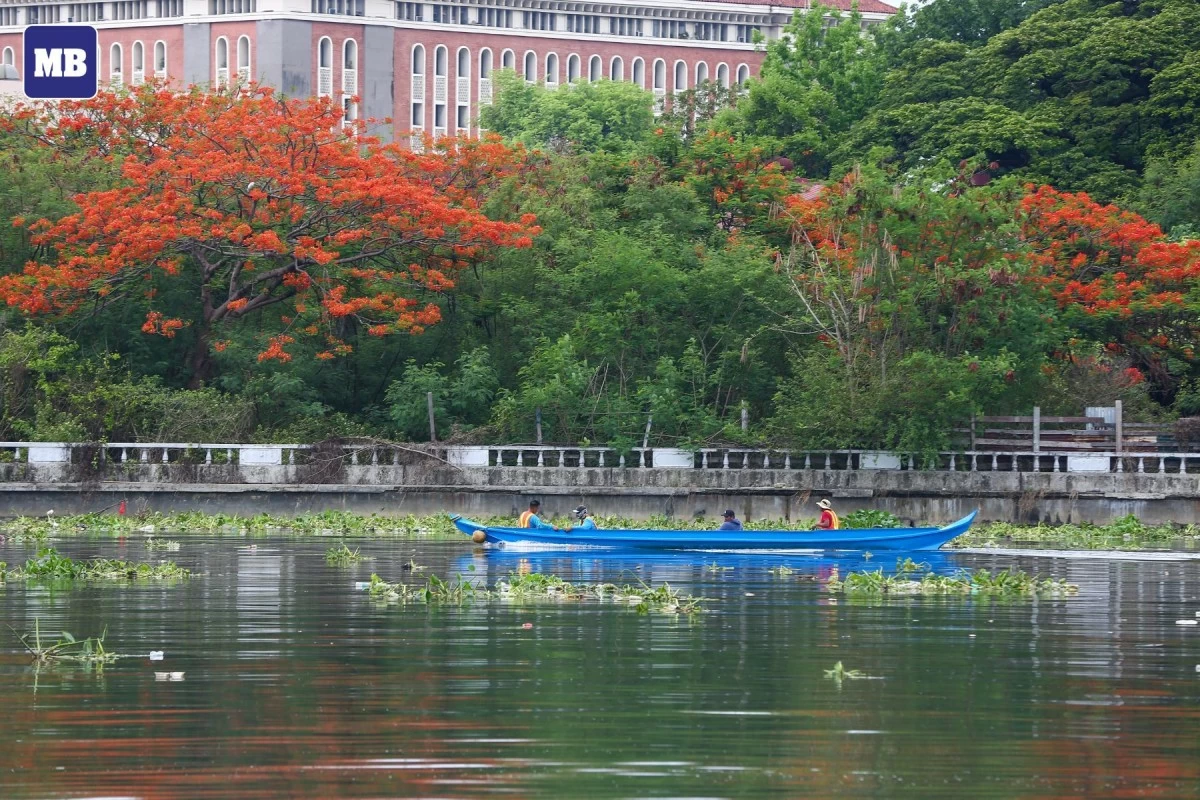
Redeveloping the Pasig River Corridor into a continuous network of parks, esplanades, and other public open spaces could yield ₱6 to ₱8 in economic, environmental, health, as well as social benefits for every ₱1 invested, according to consultants’ reports prepared for the Manila-based Asian Development Bank (ADB), which estimated that the transformation would require ₱22 billion to ₱32 billion in capital expenditure (capex) over the next 10 to 15 years.
The two recently published reports dated March 2026 estimated benefit-cost ratios of 6.5 to 7.8 for the proposed investments, with annual operation and maintenance (O&M) costs of ₱2 billion to ₱3 billion. According to the consultants, the investment could pay for itself many times over through higher property values, stronger business activity, improved public health, climate resilience, and environmental gains.
Prepared under the ADB’s technical assistance (TA) program Integrated and Innovative Solutions for More Livable Cities, the reports support the government’s flagship Pasig River Urban Development (PRUD) program, which aims to transform Pasig River into a world-class tourism, transportation, as well as economic hub. They also complement the ADB’s Rejuvenating Pasig River for a Livable Manila (REPALM) initiative, which seeks to enhance Metro Manila’s livability and resilience through river rehabilitation, expanded public open spaces, as well as improved connectivity.
The consultants said Pasig River offers Metro Manila a “generational opportunity” to create a connected “blue-green” public realm that supports economic growth, environmental restoration, and social inclusion.
Stretching about 25 kilometers (km) from Manila Bay to Laguna de Bay, Pasig River links six local government units (LGUs)—the cities of Manila, Makati, Mandaluyong, Pasig, and Taguig in Metro Manila, as well as Taytay town in Rizal province. The reports define the Pasig River Corridor as a 500-meter zone extending from both riverbanks, covering about 2,688 hectares (ha) and home to an estimated population of more than 540,000.
According to the reports, Metro Manila continues to lag many regional and international cities in public open space provision. Within the Pasig River Corridor, existing public open space totals about 1.17 million square meters (sqm), equivalent to roughly 2.2 sqm per person.
The consultants estimated that public open space in the corridor could increase to approximately 4.26 million sqm, or about 7.9 sqm per person, through the development of around 1.95 million sqm of identified opportunity sites and another 1.14 million sqm by incorporating public open space into mixed-use redevelopment of existing industrial land. The reports noted that approximately 5.7 million sqm of industrial land currently occupies parts of the corridor. If around 20 percent of these sites were allocated to public open space as they are redeveloped, the riverfront could become a stronger driver of urban regeneration while improving connectivity, environmental quality, and livability.
According to the ADB consultants, expanding public open spaces could increase nearby apartment values by three to 10 percent. Assuming a conservative three-percent increase within an 800-meter radius, this could translate into ₱143 billion to ₱175 billion in additional property values across an estimated 180,000 residential units while increasing local government revenues and supporting greater business activity, visitor spending, as well as employment.
Beyond the economic gains, the consultants said public open spaces would function as climate infrastructure by reducing urban heat, improving stormwater infiltration, lowering flood risks, and enhancing biodiversity. They estimated that expanded green spaces could generate environmental benefits valued at about ₱110 million to ₱130 million annually through carbon storage as well as reductions in ozone and particulate matter pollution, while recreational facilities could help reduce societal costs associated with heat stress, obesity, and depression, as well as create safer, more inclusive environments for women, older persons, and persons with disabilities (PWDs).
The consultants noted that many cities around the world have reclaimed rivers as public assets by creating accessible waterfronts that support recreation, mobility, environmental restoration, and economic activity. They said Pasig River offers Metro Manila a similar opportunity to reconnect communities with the river while boosting the capital region’s attractiveness for residents, businesses, and investors.
To realize these gains, the reports recommended moving beyond standalone riverfront projects toward a corridor-wide framework that integrates public open spaces with land development, transport improvements, climate resilience, and environmental restoration. They also called for preparing an operational framework for the Pasig River Corridor, adopting LGU-led open space development plans, strengthening coordination among national government agencies (NGAs) and LGUs, as well as aligning zoning regulations, land-use reclassification, and planning policies to facilitate public open space delivery.
The consultants also recommended using digital planning tools, land-value capture mechanisms, public-private partnerships (PPPs), and blended financing from the national government (NG), LGUs, the private sector, as well as development partners like the ADB to accelerate implementation and support the long-term O&M of the river’s public open space network. They said coordinated planning and sustained investment would be critical to transforming Pasig River into a dynamic economic, cultural, as well as ecological backbone for Metro Manila.