







Covid-19: What's new and should we be worried
The recent increase in reported Covid-19 cases reflects the need for vigilance—not alarm
Published Jul 14, 2026 09:35 am


Last week, I received a flurry of messages from friends and strangers when the Quezon City government announced a 265 percent increase in Covid-19 cases over the last three weeks. Despite the pandemic having ended three years ago, many people still get anxious whenever there is a spike in cases.
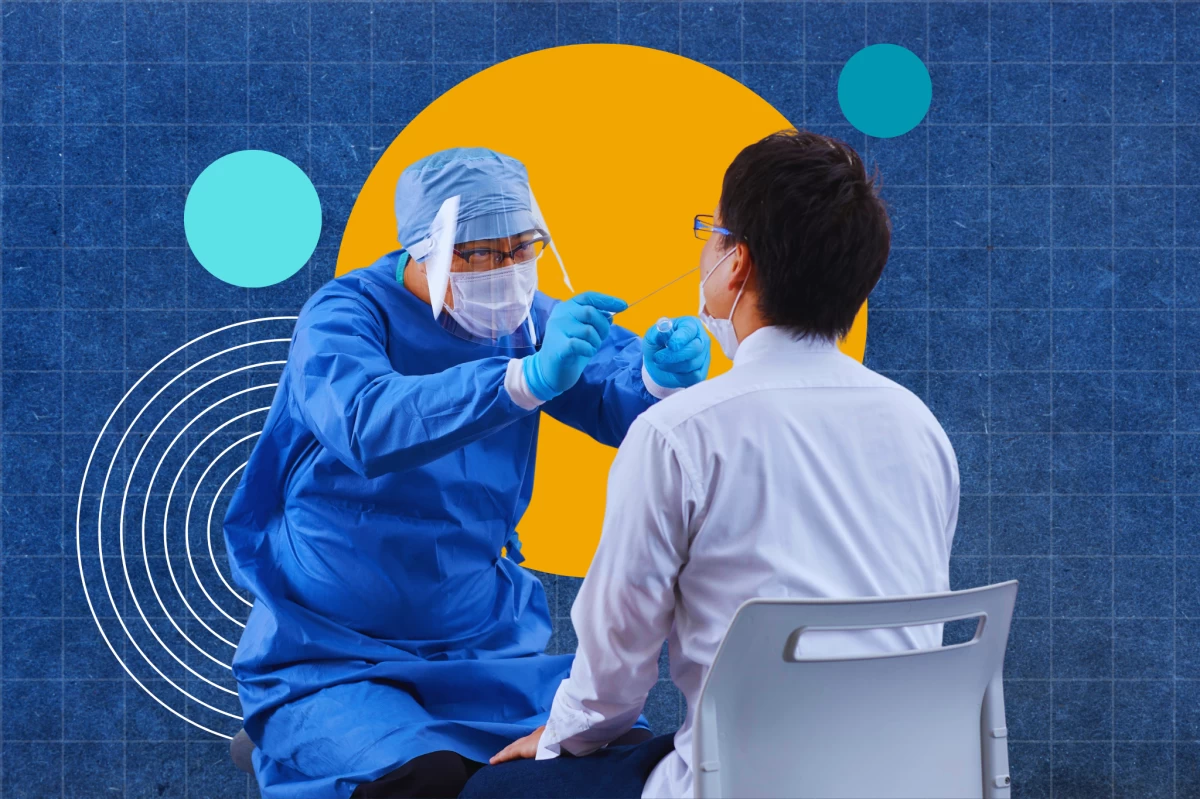
(Artwork: Nancy Marie Andam)
The unprecedented lockdowns and deaths during the pandemic are still seared into people’s memories. Many of us, especially health care workers, have some form of post-traumatic stress disorder from those terrible times.
While a 265 percent increase sounds alarming, it is important to put this into perspective. If you read the report closely, the actual numbers are an increase from 23 to 84 cases. A total of 146 cases have been recorded for 2026. Most of these were managed as outpatients and a little over 10 percent were admitted with no reported deaths. About 70 percent have recovered while 30 percent are still active cases as of this writing.
Addressing this concern, the Department of Health also pointed out that nationwide, total cases of Covid-19 are actually lower compared with last year, from 3,579 cases in 2025 to the current 719 cases as of June 20, 2026.
What are the possible reasons for this increase? First, these numbers likely represent only a small number of the actual cases circulating since routine testing for Covid-19 is no longer done. From a healthcare perspective, we only routinely test those patients who are at risk for progression to severe disease or who already have severe disease. Other reasons for testing might be routine surveillance by the health department as well as contact tracing for epidemiologic investigation. Without proper context, it is very difficult to determine whether this represents an accurate picture of case numbers in the community.
Second, overall trends are more important than one of two data points which can just be a random spike. Finally, it is important to look at these case numbers on a per capita basis since there are three million people who live in Quezon City, not counting transients.
Since Covid-19 has become endemic, we expect it to exhibit some seasonality just like other respiratory viruses like influenza. There will be some periods of the year where we will see an increase. This is part of the natural selection process where SARS-CoV-2 needs to find its niche among the different seasonal respiratory viruses like influenza and RSV. There are no new variants of SARS-CoV-2 that have recently made an appearance. The latest designated variant under monitoring (VUM) is still XFG, which was designated as such in 2025.
Unfortunately, we currently have no genomic data to describe the current cohort of cases, but unless the increase is sustained, there is no reason to believe that a new local variant is emerging.
Nevertheless, these increases in cases need to be carefully monitored like other seasonal viruses such as the flu. They can increase pressure on the healthcare system especially when more than one respiratory virus is resurgent. In addition, an increase in the number of cases should prompt mitigation strategies and risk reduction measures for the most vulnerable.
At these times, the elderly and the immunocompromised should wear good quality masks and be extra careful around crowds. We still don't have any updated vaccines that have been approved locally, but the old vaccines seem to still be protecting us. Mortality for previously vaccinated individuals who get Covid-19 remains low. Yearly updated vaccines are being released in the US and other developed countries. Unfortunately, our local FDA has not approved any of these updated vaccines for release.
Medications remain effective against the current SARS-CoV-2 circulating variants. We don't have remdesivir available locally anymore, but nirmatrelvir/ritonavir (Paxlovid) is still available and still works on the most recent variants. There are ongoing efforts by local medical groups such as the Philippine Society for Microbiology and Infectious Diseases (PSMID) to convince pharmaceutical companies to market remdesivir anew since it is the only approved drug for severe Covid-19.
Paxlovid remains effective for decreasing the risk of progression of mild and moderate Covid-19 to severe Covid-19. However, it is quite expensive compared to remdesivir. There is one other effective oral drug for preventing mild to moderate Covid-19 from progressing to severe Covid-19. Ensitrelvir, an inhibitor of the protease enzyme used by SARS-CoV-2, has been approved in Japan and is used in a similar fashion as Paxlovid but is currently not available or approved in the Philippines.
Most recently, ensitrelvir has been found to be effective when used as post-exposure prophylaxis. Post-exposure prophylaxis means that someone who has already been exposed to Covid-19 can take the medication to prevent the disease altogether. Ensitrelvir was found to decrease the risk of testing positive for SARS-CoV-2 on RT-PCR by 67 percent if taken shortly after exposure to a Covid-19 infected person. This is a significant development because neither remdesivir nor Paxlovid were ever shown to prevent the development of Covid-19 symptoms in similar post-exposure prophylaxis studies.
What has been previously effective for post-exposure prophylaxis has been monoclonal antibodies which are quite expensive and need to be infused intravenously. Moreover, some of the monoclonal antibodies lost efficacy as new variants emerged, which shouldn’t be a major issue with ensitrelvir since it isn’t an antibody. This means that there is now an oral drug that can be given to the vulnerable population if they are exposed to a known Covid-19 case, especially if they haven’t gotten an updated vaccine booster.
Covid-19 continues to evolve but it seems to be settling into an endemic niche and is no longer the deadly disease it once was. There is no indication of a more deadly and more transmissible new variant so there is no need to overreact or panic. We still have effective medications, and non-pharmacologic interventions such as masks. Listen to reliable sources of information and see your doctor if you get sick and are concerned it might be Covid-19.