






Manila Bulletin
 Business
Trade & Industry
Philippines weighs higher rice tariffs on Vietnam to shield local farmers
Business
Trade & Industry
Philippines weighs higher rice tariffs on Vietnam to shield local farmers
Business
Trade & Industry
Philippines weighs higher rice tariffs on Vietnam to shield local farmers
Philippines weighs higher rice tariffs on Vietnam to shield local farmers
Published Jul 13, 2026 12:00 am
|
Updated Jul 11, 2026 04:32 pm


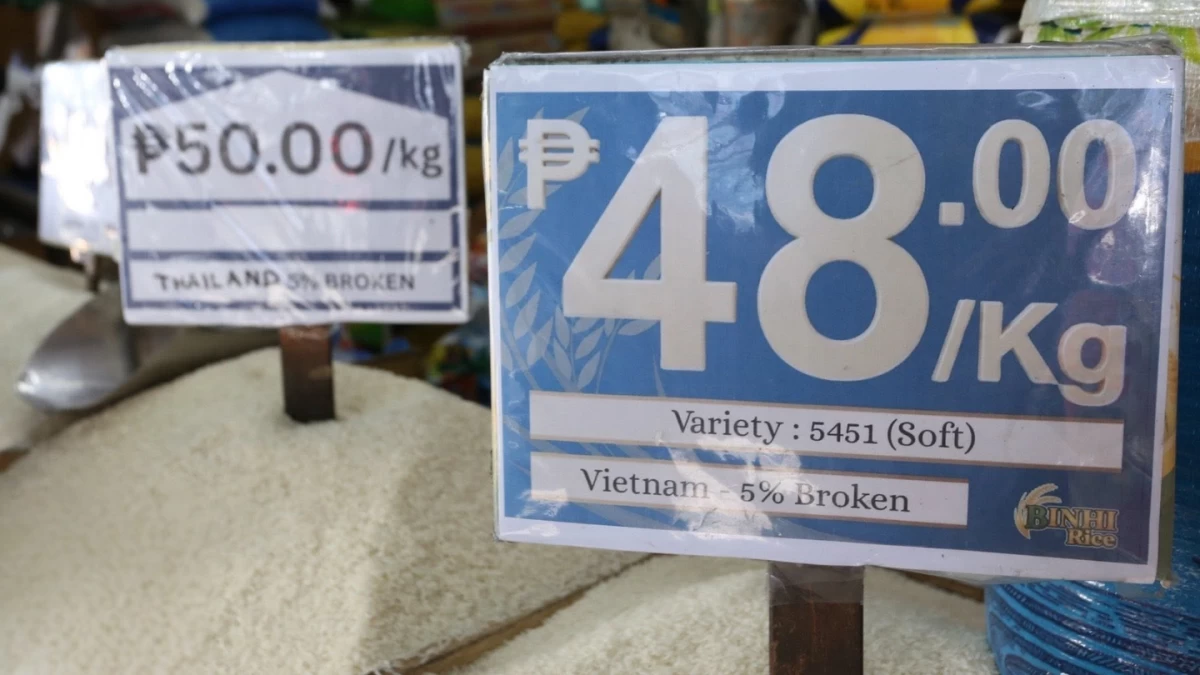
The Department of Agriculture (DA) is exploring the imposition of higher tariffs by at least 13 percentage points (ppt) on certain rice imports from four of its major suppliers, including Vietnam, as a safeguard measure to mitigate the impact of rising imports on the domestic rice industry.
Upon finding a causal link between increased rice imports and serious injury to the local rice sector, the DA’s Policy Research Service-Trade Remedies Office (PRS-TRO) has recommended the implementation of a tariff increase as the provisional safeguard duty against imported rice.
Based on its preliminary investigation report, the PRS-TRO said these tariffs will be in the form of a cash bond, applied only to rice classified under HS Code 1006.30, covering semi-milled or wholly milled rice.
It found that imports under this tariff line accounted for 16.82 million metric tons (MT) or around 82 percent of the total import volume of 20.54 million MT within the period of investigation beginning in 2020 and ending in August 2025.
In contrast, other varieties such as unmilled rice (HS 1006.10), husked or brown rice (HS 1006.20), and broken rice (HS 1006.40) only amounted to one percent, virtually zero percent, and 17 percent during the same period, respectively.
“The evidence demonstrates that the increase in imports causing serious injury or threat thereof, and the resulting price effects, are overwhelmingly attributable to HS Code 1006.30,” the report read.
The PRS-TRO said the tariff increase will only be limited to the principal sources of semi-milled or wholly milled rice, which include Vietnam, Thailand, Pakistan, and Myanmar.
The investigating body noted that Vietnam accounted for approximately 82 percent of the import volume during the period of investigation, followed by Thailand with eight percent, Myanmar with five percent, and Pakistan with four percent.
“The concentration of imports among a small number of major suppliers confirms that the rise in imports was not diffuse, but driven by identifiable exporting countries,” it said.
Based on the report, the country’s rice consumption increased from 9.61 million MT in 2020 to 11.87 million MT in 2024. During the same period, imported rice saw its market share expand from 22 percent to 37 percent, while the domestic industry’s share declined from 78 percent to 63 percent.
While the share of the domestic market slightly recovered to 69 percent during the first eight months of 2025, imports were found to be at a “historically elevated level.”
“This inverse movement between imports and domestic market share indicates that imports were increasingly taking a larger portion of domestic demand, resulting in a material loss of market position by domestic producers,” PRS-TRO said.
From 2020 to August 2025, the investigation showed that imported rice consistently entered the market at prices lower than locally produced rice, resulting in undercutting margins of between 14 percent and 35 percent.
Since imported rice is cheaper, these products naturally attract higher consumer demand, which places pressure on local producers. To remain competitive, the PRS-TRO said some producers refrain from increasing their prices even when production costs are rising.
This extends through the rice value chain, especially among millers and traders who have to adjust their purchasing decisions, including the prices they offer to farmers.
“Consequently, lower import prices are eventually passed on to the farm level, reducing farmgate prices and compressing farmers' margins,” it added.
In determining the specific amount of the safeguard duty, the PRS-TRO said it should be based on the average injury margin of the landed cost of imported rice and the domestic rice equivalent, which is around 13 percent.
“This average may serve as a conservative benchmark representing the minimum tariff adjustment necessary to neutralize the observed price disadvantage,” the report read.
This means the government is looking at increasing the current 15 percent tariff on imported rice by at least 13 ppt. If approved, the tariff level would be higher than the original 35 percent duty imposed on rice imports.
The PRS-TRO said in its report that the Tariff Commission (TC), through its formal investigation on the matter, would determine the specific safeguard duty if it finds the need to do so.
During last week’s preliminary conference, Pakistan questioned the government’s compliance with rules established by the World Trade Organization (WTO) in its planned imposition of a safeguard duty.
Pakistan trade and investment officer Fareeha Khan said the Philippines has failed to establish grounds for “unforeseen developments” when it comes to the increased entry of imported rice since this was driven largely by the government’s move to lower tariffs on foreign-source rice from 35 percent to 15 percent.
Under Article 19 of the General Agreement on Tariffs and Trade of 1994, WTO members like the Philippines may apply safeguard measures when a product is being imported in increased quantities to the point that it threatens to cause serious injury to the domestic industry, provided that it is the result of unforeseen developments.