






 Business
Trade & Industry
Philippines moves closer to tapping native hydrogen for power
Business
Trade & Industry
Philippines moves closer to tapping native hydrogen for power
Philippines moves closer to tapping native hydrogen for power


The Philippines is eyeing becoming the first country to develop native hydrogen as a power source, as Colorado-based Koloma Inc. is set to complete its exploration work before the end of the year.
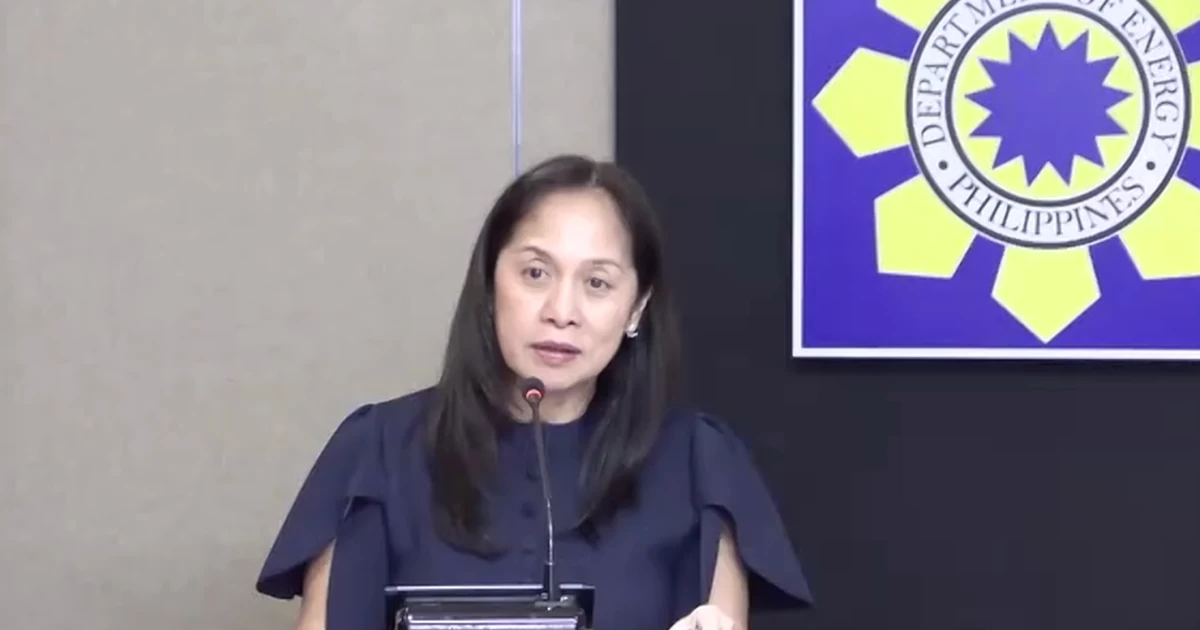
In a media briefing on Monday, July 13, Energy Secretary Sharon Garin reported that Koloma, a geologic hydrogen startup in the United States (US), has started its two-dimensional seismic survey to map subsurface geological structures and explore potential native hydrogen-bearing formations in Pangasinan and Zambales provinces.
Koloma is currently studying the resource in the town of Bugallon in Pangasinan and portions of Zambales. These areas are covered by Service Contract (SC) Nos. 84 and 83, awarded by the national government (NG).
“They will do an ultrasound to see what it looks like below. They will map it to see if we have a big reserve or if it’s spreading. Where is it? How deep is it? And especially the volume... Koloma is now coming up with implementation and everything so we can make a map. So we’ll see what we have,” she said.
If the findings show only small volumes of native hydrogen, the DOE said it would not proceed with drilling. However, if a substantial volume is found in the designated area, developers may utilize the resource for power and non-power applications.
Furthermore, the study is expected to be completed by the end of the year or by the first quarter of 2027.
Unlike conventional hydrogen, which undergoes an industrial production process, native hydrogen is found beneath the earth’s surface. This could provide an additional indigenous energy source to support the country’s ongoing clean energy transition.
According to the DOE, Koloma has completed 27,976.5 line kilometers (km) of aero-gravity and magnetic surveys to map the areas’ geological structures.
Meanwhile, the 132.6-line-km two-dimensional seismic survey will produce images of underground rock formations to determine the volume of naturally occurring hydrogen.