







Keeping the arbitral award alive
Published Jul 13, 2026 06:52 am


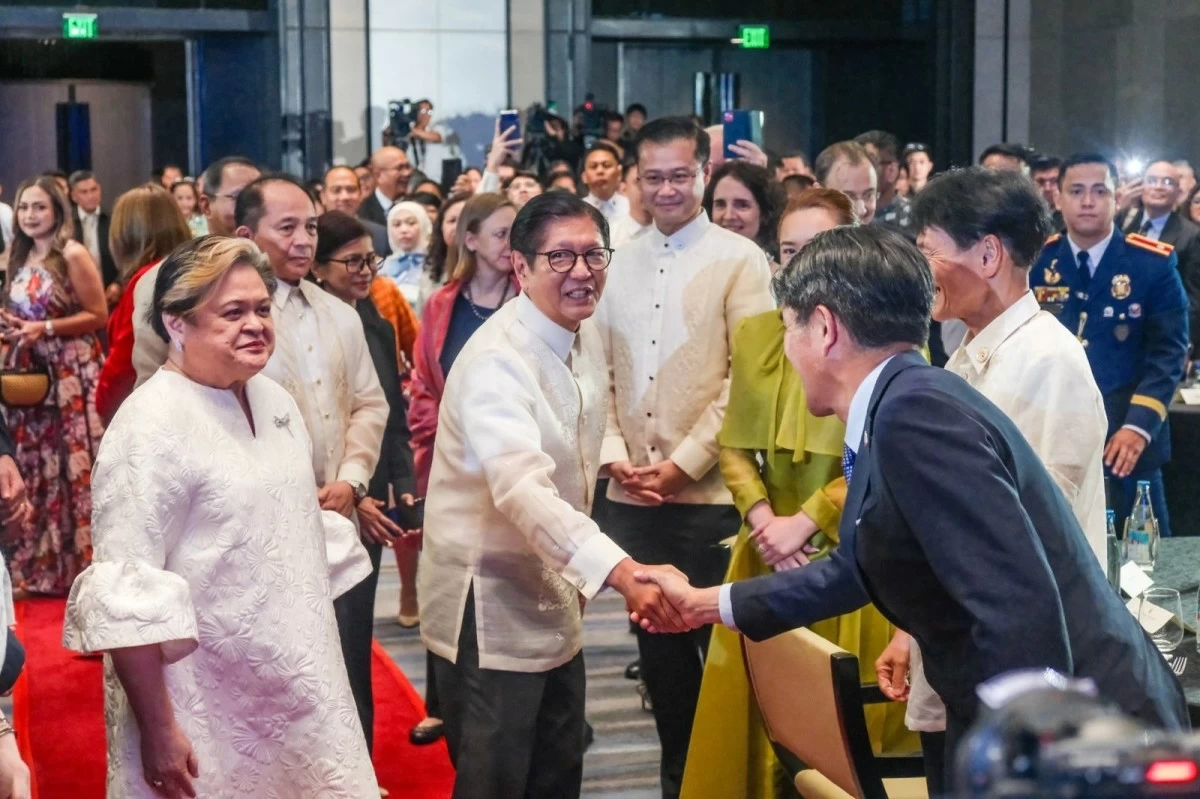
President Ferdinand R. Marcos Jr. at the diplomatic reception marking the 10th anniversary of the 2016 Arbitral Award at a hotel in Pasay City on Friday, July 10, 2026. The event, attended by members of the diplomatic corps, underscored the administration’s continued support for the landmark ruling, which affirmed the Philippines’ maritime entitlements under international law and invalidated China’s expansive claims in the South China Sea. (PPA Pool)
A legal victory may be handed down in a courtroom. Ensuring that it continues to shape international discourse requires diplomacy.
That was the message behind the Philippines’ commemoration of the 10th anniversary of the 2016 South China Sea Arbitral Award. Rather than simply marking the milestone, diplomats, maritime experts, scientists, legal scholars, policymakers, and senior government officials gathered in Manila this week for “A Decade Hence: The Enduring Promise of Peaceful Dispute Settlement,” reaffirming the award’s continuing significance to international law, maritime governance, and the peaceful settlement of disputes.
The event was also a reminder that winning a legal case is only part of the challenge. Ensuring that its principles remain understood and relevant requires sustained diplomatic engagement.
Secretary of Foreign Affairs Maria Theresa Lazaro captured that idea through a powerful metaphor.
“When the seas are calm, navigation is simple. But when the waters grow turbulent, when unilateral claims cloud the horizon, and when the shadow of coercion looms, nations need something far more permanent than political convenience,” she said.
“They need a lighthouse.”
It is a fitting image for how the Philippines now approaches the arbitral award. Rather than allowing the ruling to recede into history, Manila continues to use diplomacy to keep its principles visible, relevant, and understood by the international community.
That message was reflected in the diplomatic reception that followed. President Ferdinand R. Marcos Jr. joined Secretary of Foreign Affairs Maria Theresa Lazaro in welcoming members of the diplomatic corps, legal experts, academics, and senior government officials. Senate President Sherwin Gatchalian was among the Philippine officials present. Also in attendance were newly arrived United States Ambassador Lee Lipton, European Union Ambassador Massimo Santoro, Japanese Ambassador Kazuya Endo, Ukrainian Ambassador Yuliia Fediv, German Ambassador Andreas Pfaffernoschke, Spanish Ambassador Miguel Utray Delgado, and Malaysian Ambassador Dato’ Abdul Malik Melvin Castelino.
In diplomacy, who is in the room often carries its own message.
The Philippines and the United States are marking 80 years of diplomatic relations, with the 75th anniversary of the Mutual Defense Treaty to follow next year. Ukraine continues to defend its sovereignty against a larger neighbor. Malaysia remains a claimant state in the South China Sea. The European Union and its member states, along with Japan, have consistently emphasized respect for international law and a rules-based international order. The breadth of representation reflected the broader international interest the arbitral award continues to command.
Addressing the gathering, President Marcos reminded guests that the significance of the arbitral award extends well beyond maritime claims.
“At its heart, this award is about people. It is about our fisherfolk whose ancestors have cast their nets in these waters for many generations, and who deserve to fish in peace, in safety, and with the dignity to feed their own families. It is about our coastal communities whose survival is tied to the health and ecological integrity of our oceans.”
He later added:
“When we defend the rule of law, we are not merely defending lines on a map. We are defending the lives, the livelihoods, and the future of our peoples.”
The conference also coincided with the Department of Foreign Affairs’ (DFA) response to the Chinese Embassy’s latest statement questioning the validity of the ruling. The DFA categorically rejected claims that the award is “illegal, null and void,” reiterating that it remains final and binding under international law and has become “an unassailable part of the corpus of international law.”
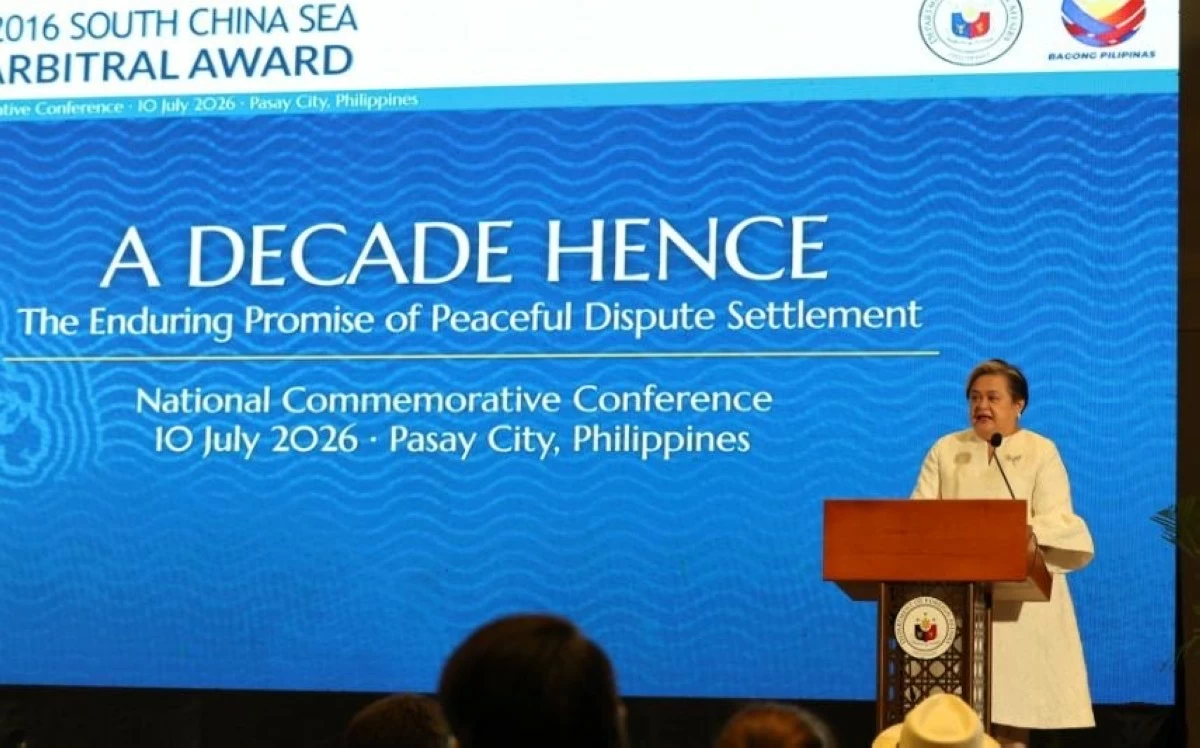
DFA Secretary Ma. Theresa Lazaro delivers her remarks. (Photo: DFA)
That exchange provided a timely reminder that while the legal proceedings concluded a decade ago, the diplomatic conversation surrounding them continues.
Rendered on July 12, 2016, by an arbitral tribunal constituted under Annex VII of the United Nations Convention on the Law of the Sea (UNCLOS), the award clarified how international law applies at sea, defining maritime entitlements, the legal status of features in the South China Sea, and states’ obligations to protect the marine environment. In doing so, it provided legal guidance that extends far beyond the Philippines and China.
The DFA also rejected claims that the Philippines had violated its obligations under UNCLOS, emphasizing that the tribunal itself found Manila had properly availed of the Convention’s dispute-settlement mechanisms after years of bilateral consultations failed to resolve the issues.
These findings matter not only because they concern the Philippines.
They matter because they provide greater legal certainty for every state that depends on predictable rules governing navigation, fisheries, marine resources, environmental protection, and the peaceful settlement of disputes. For smaller nations especially, international law remains one of the most important frameworks through which rights may be asserted regardless of military or economic power.
Reflecting that broader perspective, the conference examined the award through political, legal, economic, and scientific lenses. Discussions ranged from regional security and ocean governance to international jurisprudence and the peaceful settlement of disputes, illustrating how the ruling has evolved into a reference point well beyond the original case.
The participation of experts from the Philippines, Australia, Canada, Japan, New Zealand, the Netherlands, the United States, the European Union, and regional maritime organizations further underscored that message. A decade on, the arbitral award has become part of a wider international conversation on the rule of law at sea.
International rulings do not sustain themselves through legal authority alone. Governments must continue explaining them, defending them, and building international understanding around the principles they establish.
That may well have been the Philippines’ most important message this week. A decade after securing one of the most consequential legal victories in its diplomatic history, it continues to invest diplomatic capital to ensure that the arbitral award remains more than a chapter in history. It has become part of the continuing global conversation on international law, the peaceful settlement of disputes, and the rules-based international order.
For an archipelagic nation whose future is inseparable from the sea, that may be one of the Philippines’ most enduring contributions to the international community.