






 Business
Banking & Finance
Gov't eyes contactless fare payments for LRT-1 after LRT-2 launch
Business
Banking & Finance
Gov't eyes contactless fare payments for LRT-1 after LRT-2 launch
Gov't eyes contactless fare payments for LRT-1 after LRT-2 launch
By Derco Rosal


At A Glance
- Following the rollout of contactless fare payment on Light Rail Transit Line 2 (LRT-2), the government is targeting the launch of the same system on LRT-1 to ease payment bottlenecks and address ticket and Beep card shortages.
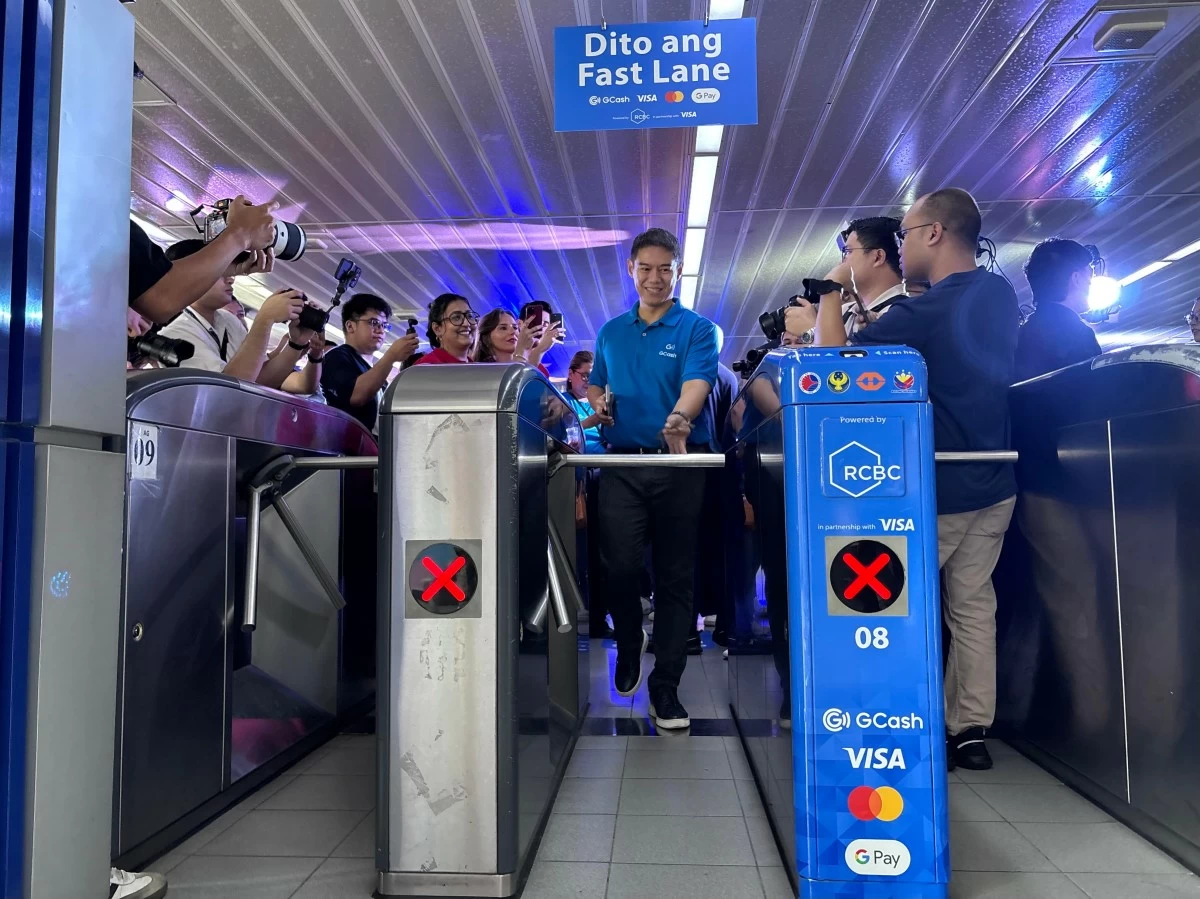
Following the rollout of contactless fare payments on Light Rail Transit Line 2 (LRT-2), the government is targeting the launch of the same system on LRT-1 to ease payment bottlenecks and address ticket and Beep card shortages.
Starting on Monday, July 13, LRT-2 commuters may use Visa or Mastercard debit, credit, or prepaid cards, as well as near-field communication (NFC)-enabled mobile wallets such as Google Pay and GCash QR codes, to pay for their fares.
This landmark initiative, powered by Yuchengco-led Rizal Commercial Banking Corp. (RCBC) in partnership with Visa, the Light Rail Transit Authority (LRTA), and the Department of Transportation (DOTr), marks the country’s first rail-based automated fare collection system to integrate open-loop EMV, mobile NFC, and QR payments into a single platform.
The system is designed to be interoperable, enabling commuters to use payment instruments issued by any participating bank or financial technology (fintech) provider, effectively eliminating the need for a dedicated transit card.
DOTr Undersecretary Timothy John R. Batan confirmed to reporters during the launch that the completion of the digital payment integration for LRT-1 is targeted for 2026, adding that the initiative is still being finalized. “Definitely, very soon, we will launch [this in] LRT-1,” he said.
Batan explained that LRT-2 was prioritized because of the larger capacity of its stations, whereas the smaller physical footprint of LRT-1 makes the installation “more challenging.”
RCBC Executive Vice President and Chief Innovations and Inclusion Officer Lito Villanueva noted the frictionless integration of everyday bank cards with public transportation. “For the first time, commuters can seamlessly use their everyday bank cards, mobile NFC wallets, and QR payments in one interoperable transit ecosystem,” Villanueva said.
According to RCBC, the modernization effort is expected to streamline fare collection for nearly 59 million commuters.
To encourage immediate adoption, RCBC has launched the “PISO Fare Cashback Promo,” which will run from July 13 to 31, 2026, for its cardholders.
Social Security System (SSS) cardholders may also use their cards, as the government is offering a ₱1 fare for two weeks, Finance Secretary Frederick D. Go said during the launch.
RCBC President and Chief Executive Officer (CEO) Reggie Cariaso noted that the initiative aligns with the government’s digital transformation agenda. “Beyond banking, we see digital finance as an enabler of more connected, seamless, and efficient daily experiences.”
This project follows similar digital transit implementations by Visa in the Philippines, including Metro Rail Transit Line 3 (MRT-3) and bus systems in the cities of Cebu, Mandaue, and Bacolod.
Jeffrey Navarro, Visa country manager for the Philippines, said the digital payments firm’s tie-up with RCBC and the government supports the company’s expansion efforts.
“Through our partnership with RCBC and the Philippine government, we are helping expand access to secure and interoperable digital payments that improve commuter convenience, urban mobility, and economic productivity,” Navarro said.
While the LRT-2 system is now active, the government is looking toward a broader rollout of contactless payment systems across the transport sector by 2026. This broader strategy aims to accelerate the country’s transition toward a digital economy while bringing local transit systems closer to global standards.
For its part, the Bangko Sentral ng Pilipinas (BSP) said this development reinforces its digitalization ambition.
“Our mandate is to build a payments ecosystem that works for every Filipino, not just those with bank accounts and smartphones in BGC, but the office employee in Marikina, the student in Cubao, the vendor in Recto,” BSP Deputy Governor Mamerto E. Tangonan said.
Tangonan noted that the Philippines is on track to achieve its 2028 goal, under which 70 percent of total payments are made through digital channels. He added that “the numbers tell us we are on the right track.”
Tangonan said digital payments now account for nearly three-fifths of all retail transactions in the Philippines, up from a mere one percent a decade ago. “That transformation happened because we built the rails: InstaPay, PESONet, QR Ph,” he said.
“Now we are bringing those rails to the commute. And when digital payments become as natural as boarding a train, the next step becomes possible: savings, credit, insurance, investments,” Tangonan added.