






Manila Bulletin
 Philippines
National
Filipino expert pushes integrated disease testing to speed up TB elimination
Philippines
National
Filipino expert pushes integrated disease testing to speed up TB elimination
Philippines
National
Filipino expert pushes integrated disease testing to speed up TB elimination
Filipino expert pushes integrated disease testing to speed up TB elimination
Published Jul 13, 2026 02:33 pm


At A Glance
- Dr. Rugaiya Calapis, chairperson of the Department of Health-National Capital Region South Tuberculosis Medical Advisory Council, said the proposed integrated multi disease testing system is not about introducing a new technology but about redesigning how diagnostic services are delivered.
- She explained that patients suspected of having tuberculosis often need to undergo additional tests for other infections, such as HIV, at separate facilities, resulting in repeated clinic visits, higher transportation costs, longer waiting times, and delayed treatment.
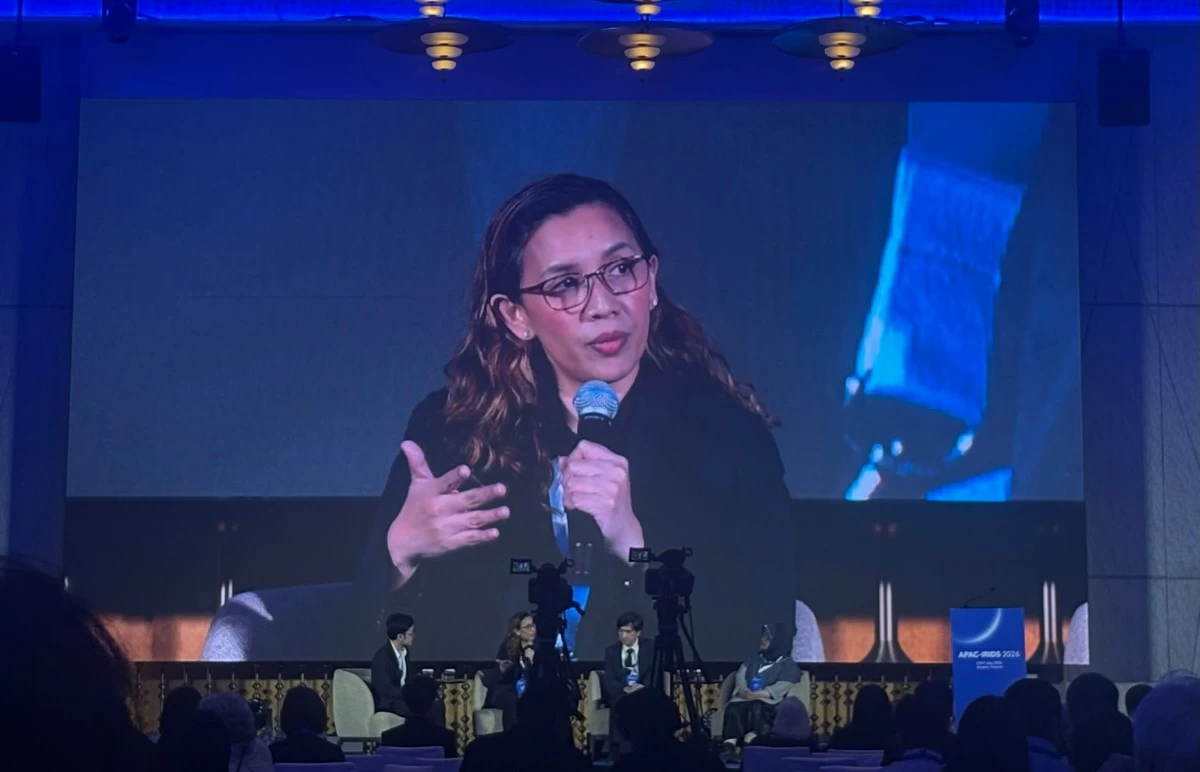
Dr. Rugaiya Calapis, chairperson of the Department of Health-National Capital Region South Tuberculosis Medical Advisory Council (Ellalyn De Vera-Ruiz/Manila Bulletin)
BANGKOK, Thailand — A tuberculosis (TB) expert is advocating for an integrated disease testing system that could help the Philippines detect tuberculosis earlier, reduce missed cases, and improve treatment outcomes by allowing laboratories to test for multiple diseases using shared diagnostic platforms.
Speaking at the Asia Pacific-International Roche Infectious Diseases Symposium (APAC-IRIDS 2026) held in Bangkok from July 8 to 9, Dr. Rugaiya Calapis, chairperson of the Department of Health-National Capital Region South Tuberculosis Medical Advisory Council, said the country's current disease specific approach to diagnostic testing no longer keeps pace with advances in rapid testing technology.
“Despite decades of progress, tuberculosis continues to place a high burden on countries in the Asia Pacific,” Calapis said.
“While we have better diagnostic tools these days, the way these tools are integrated into health systems is not at pace with how we are progressing in rapid diagnostic testing. Too often, diagnostic testing is disease specific, fragmented, and disconnected with one another,”she added.
Calapis said the proposed integrated multi disease testing system is not about introducing a new technology but about redesigning how diagnostic services are delivered.
“Our objective is straightforward. We aim to demonstrate how integrated multi disease testing systems can accelerate tuberculosis elimination while simultaneously strengthening rural health programs,” she said.
She explained that patients suspected of having tuberculosis often need to undergo additional tests for other infections, such as HIV, at separate facilities, resulting in repeated clinic visits, higher transportation costs, longer waiting times, and delayed treatment.
To explain the challenges faced during the process, Calapis shared the story of a patient who sought medical attention for a persistent cough and weight loss.
After waiting several days for tuberculosis test results, the patient was referred to another facility for HIV testing.
Faced with additional travel, expenses, and waiting time, the patient failed to return for follow up and remained untreated.
“The system's common reply is, ‘This is just the procedure.’ But this procedure has a name. It is called inequity. It is inefficiency,” she said.
Integrated approach
Under the integrated testing model, patients would continue to seek care at their local health facilities while specimens collected for different diseases would be transported through a common referral network to centralized molecular laboratories capable of performing multiple diagnostic tests on the same platform.
Results would then be transmitted electronically to healthcare providers, allowing patients to begin the appropriate treatment sooner.
“For the patient side, the patient gets to experience a one stop shop for multiple conditions. For the programs, they can share resources, reducing duplication and cost,” Calapis said.
She noted that the World Health Organization supports integrating diagnostic services across disease programs, saying such an approach allows countries to maximize existing laboratory infrastructure while improving efficiency and access to testing.
Evidence and impact
Calapis also cited findings from a Philippine health economics study comparing a centralized high throughput molecular testing strategy with the country's current decentralized approach.
The study found that the centralized system could correctly diagnose about 940 additional tuberculosis patients annually while identifying more than 13,000 additional drug resistant tuberculosis cases through expanded resistance testing.
Although the approach would increase treatment costs because more patients would receive appropriate therapy, the study concluded that the strategy is highly cost effective under Philippine health technology assessment standards.
Calapis said technology alone would not improve tuberculosis control without investments in specimen transport systems, laboratory information systems, and stronger coordination among disease programs.
She also stressed the need to sustain investments in tuberculosis services, noting that the Philippines continues to rely on international funding for testing and treatment.
“When it comes to testing, we should be sustainable on our own,” she said in a separate interview.
“The international funders really help us. But if support is reduced, there are many implications. There could be delayed diagnosis, incomplete treatment, or sometimes no treatment at all because we don't have the drugs. Our domestic investment in testing and treatment should be able to sustain these services,” she added.
Calapis emphasized that improving tuberculosis diagnosis is ultimately about ensuring patients receive timely and appropriate care.
‘TB elimination doesn't mean that we need to have better testing. It means we get to treat the right patient at the right time,” she said.