







DA expects stronger farm output in Q2


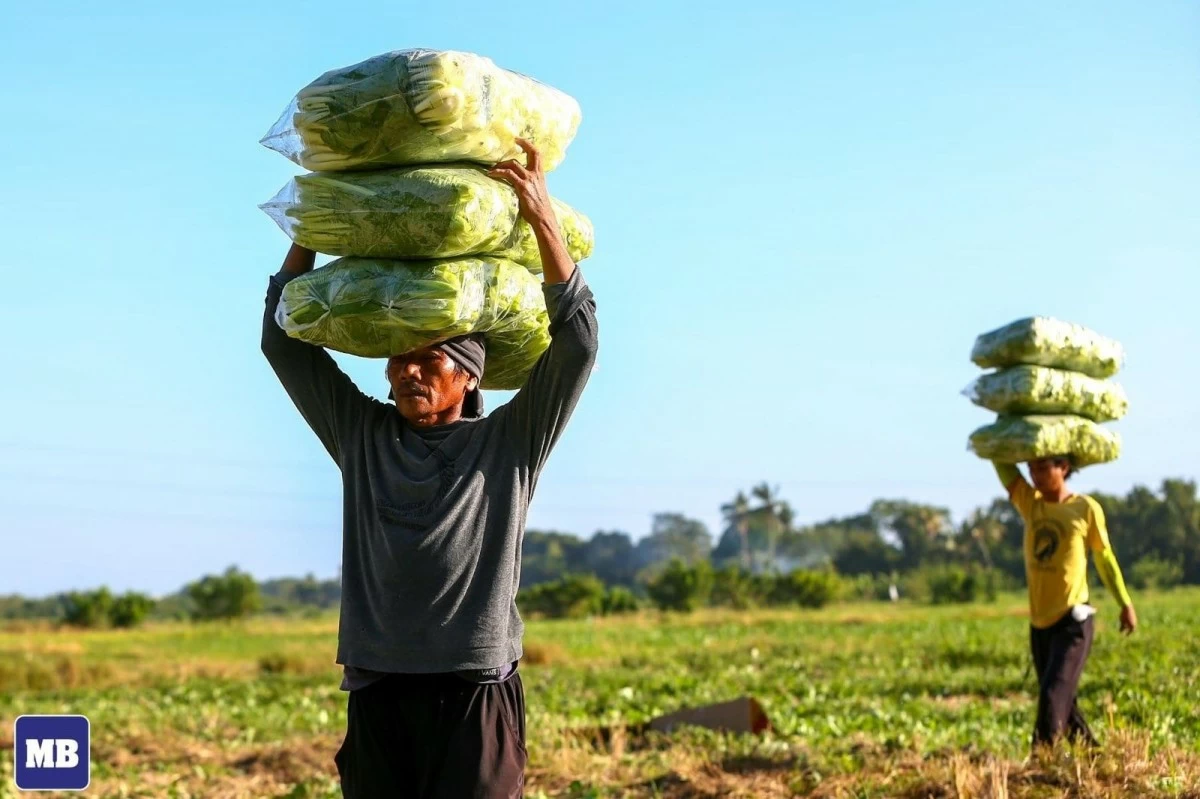
The value of the country’s agricultural output likely improved in the second quarter, driven by a projected recovery in the crops and fisheries sectors, according to the Department of Agriculture (DA).
DA Assistant Secretary and spokesperson Arnel de Mesa said the agency is confident that agricultural and fisheries production from April to June will rebound from the 0.3-percent decline in the first quarter due to improvements in crop output, especially in palay or unmilled rice.
“It’s hard to give an exact number, but we’re positive for [the second quarter],” he told reporters last week.
Citing initial Philippine Statistics Authority (PSA) findings, he said there were more palay harvests during the three-month period compared to the previous quarter, which was directly affected by typhoons during the latter part of last year.
PSA data showed that palay production value declined by 6.3 percent to ₱87.06 billion in the first quarter from ₱92.87 billion in the same period last year.
De Mesa said other crops are also expected to improve, especially export-oriented commodities, as stronger demand in foreign markets is pushing their prices higher.
At a broader level, the crops subsector declined by 2.4 percent to ₱243.62 billion in the three-month period from ₱249.61 billion in the same period last year.
The fisheries subsector, which was challenged by persistent structural and environmental setbacks in the first quarter, also showed signs of improvement, according to De Mesa.
The PSA said fisheries production value declined by 6.1 percent to ₱52.34 billion in the first quarter from ₱55.74 billion a year ago.
Overall, the value of the country’s agriculture and fisheries production, measured at constant 2018 prices, declined to ₱437.52 billion in the first quarter from ₱438.65 billion a year ago.
For the second half of the year, De Mesa warned that domestic output faces a dimmer outlook as higher fertilizer prices triggered by the Middle East conflict begin to take effect.
He also said the looming threat of an extreme El Niño could further undermine production, especially in the crops subsector, including palay. It is estimated that more than 50 percent of rice output is harvested during the third quarter.
Still, De Mesa said all hope is not lost, as the impact of El Niño would likely emerge in the fourth quarter, based on Philippine Atmospheric, Geophysical and Astronomical Services Administration (PAGASA) projections.
“If we look at the timing of El Niño, it’s possible that our third-quarter harvest will be spared,” he said.
Under this scenario, he said the impact of the prolonged dry spell would likely affect agricultural output from the fourth quarter of this year until the second quarter of next year.
The value of the country’s agriculture and fisheries output reached ₱1.77 trillion in 2025, up 2.6 percent from the ₱1.73 trillion recorded in 2024, according to the PSA.