ADVERTISEMENT

Community preparedness: Everyone's responsibility in disaster resilience

Published Jul 13, 2026 12:05 am  |  Updated Jul 12, 2026 03:54 pm
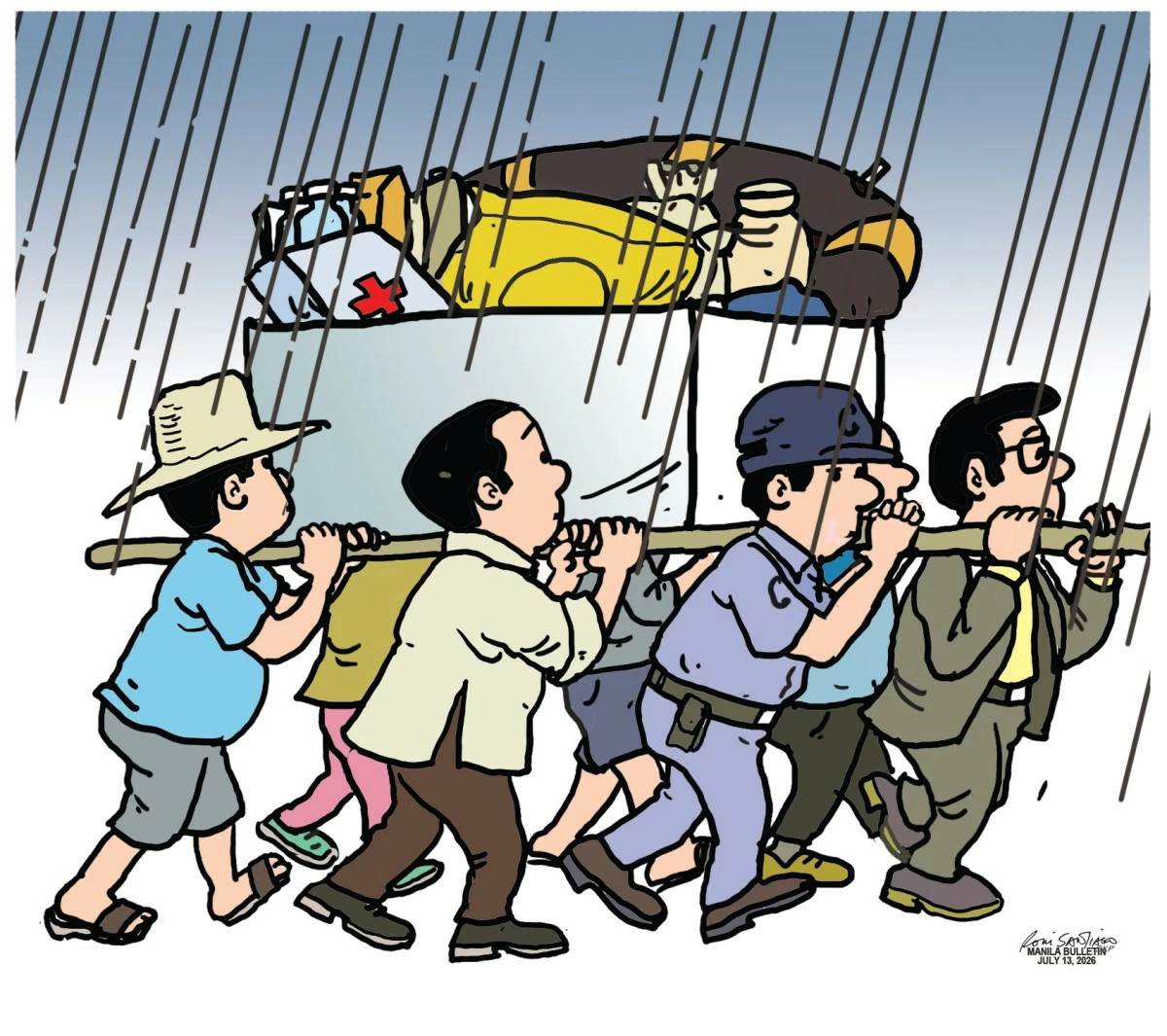
The observance of Disaster Resilience Week from July 13 to 19 reminds us that while natural hazards cannot be prevented, the loss of lives, livelihood, and property they bring can be significantly reduced through preparedness, cooperation, and shared responsibility.
The Philippines’ location along the Pacific Ring of Fire and within the typhoon belt makes disasters an unavoidable reality. Every year, powerful typhoons, earthquakes, volcanic eruptions, floods, landslides, and storm surges test the resilience of communities across the country. The effects of climate change have further intensified these threats, making extreme weather events more frequent and destructive.
Over the years, the country has made notable strides in disaster risk reduction and management. Republic Act No. 10121 institutionalized a comprehensive framework that shifted the focus from mere disaster response to disaster risk reduction, preparedness, prevention, mitigation, rehabilitation, and recovery. National and local governments have strengthened early warning systems, improved weather forecasting, conducted regular emergency drills, and invested in disaster-resilient infrastructure. The establishment of local disaster risk reduction and management councils has likewise brought preparedness closer to communities.
Yet every major calamity also reveals that preparedness cannot rest on government alone. Disaster resilience is ultimately measured not only by the capabilities of institutions but also by the readiness of citizens. Communities that are informed, organized, and proactive are better able to protect lives and recover more quickly from adversity.
This year’s observance appropriately emphasizes community and institutional preparedness. It recognizes that resilience is built when national agencies, local government units, schools, hospitals, businesses, civil society organizations, faith-based groups, and ordinary citizens work together toward a common objective. The effectiveness of emergency plans depends on the participation of every sector.
High levels of citizen awareness, concern, and commitment are indispensable. Every Filipino should know the hazards specific to his or her community, understand evacuation routes, prepare emergency supplies, and participate actively in drills and preparedness programs. Families should have emergency communication plans, while neighborhood organizations can organize volunteer response teams that complement the work of local authorities.
Schools play an equally vital role by teaching disaster preparedness as a life skill rather than merely an academic subject. Businesses, meanwhile, must ensure continuity plans that protect employees while minimizing disruptions to economic activity. Media organizations have the continuing responsibility to disseminate timely, accurate, and verified information before, during, and after emergencies, helping prevent panic and countering misinformation that can endanger lives.
An all-of-nation approach means recognizing that disaster resilience is everyone’s business. Government agencies must continue strengthening coordination and investing in resilient infrastructure, while the private sector contributes technology, logistics, innovation, and resources. Academic institutions can provide research and scientific expertise, while volunteer organizations and local communities bring invaluable grassroots knowledge and rapid response capabilities.
Preparedness is not measured by the number of relief goods distributed after disaster strikes. It is measured by the lives saved because warnings were heeded, evacuations were orderly, infrastructure proved resilient, and communities were ready long before danger arrived.
As we observe Disaster Resilience Week, let us renew our collective commitment to building a culture of preparedness that extends beyond commemorative activities. Every household prepared, every school trained, every community organized, and every institution ready strengthens the nation’s capacity to withstand future challenges.
True resilience is achieved not by government alone but by an informed, vigilant, and engaged citizenry working hand in hand with capable institutions. That is the essence of an all-of-nation approach—and the surest path toward a safer, more resilient Philippines.
ADVERTISEMENT
.most-popular .layout-ratio{ padding-bottom: 79.13%; } @media (min-width: 768px) and (max-width: 1024px) { .widget-title { font-size: 15px !important; } }

{{ articles_filter_1561_widget.title }}

.most-popular .layout-ratio{ padding-bottom: 79.13%; } @media (min-width: 768px) and (max-width: 1024px) { .widget-title { font-size: 15px !important; } }

{{ static_articles_1562_widget.title }}

.most-popular .layout-ratio{ padding-bottom: 79.13%; } @media (min-width: 768px) and (max-width: 1024px) { .widget-title { font-size: 15px !important; } }

{{ articles_filter_1563_widget.title }}

{{ articles_filter_1564_widget.title }}

.mb-article-details { position: relative; } .mb-article-details .article-body-preview, .mb-article-details .article-body-summary{ font-size: 17px; line-height: 30px; font-family: "Libre Caslon Text", serif; color: #000; } .mb-article-details .article-body-preview iframe , .mb-article-details .article-body-summary iframe{ width: 100%; margin: auto; } .read-more-background { background: linear-gradient(180deg, color(display-p3 1.000 1.000 1.000 / 0) 13.75%, color(display-p3 1.000 1.000 1.000 / 0.8) 30.79%, color(display-p3 1.000 1.000 1.000) 72.5%); position: absolute; height: 200px; width: 100%; bottom: 0; display: flex; justify-content: center; align-items: center; padding: 0; } .read-more-background a{ color: #000; } .read-more-btn { padding: 17px 45px; font-family: Inter; font-weight: 700; font-size: 18px; line-height: 16px; text-align: center; vertical-align: middle; border: 1px solid black; background-color: white; } .hidden { display: none; }
function initializeAllSwipers() { // Get all hidden inputs with cms_article_id document.querySelectorAll('[id^="cms_article_id_"]').forEach(function (input) { const cmsArticleId = input.value; const articleSelector = '#article-' + cmsArticleId + ' .body_images'; const swiperElement = document.querySelector(articleSelector); if (swiperElement && !swiperElement.classList.contains('swiper-initialized')) { new Swiper(articleSelector, { loop: true, pagination: false, navigation: { nextEl: '#article-' + cmsArticleId + ' .swiper-button-next', prevEl: '#article-' + cmsArticleId + ' .swiper-button-prev', }, }); } }); } setTimeout(initializeAllSwipers, 3000); const intersectionObserver = new IntersectionObserver( (entries) => { entries.forEach((entry) => { if (entry.isIntersecting) { const newUrl = entry.target.getAttribute("data-url"); if (newUrl) { history.pushState(null, null, newUrl); let article = entry.target; // Extract metadata const author = article.querySelector('.author-section').textContent.replace('By', '').trim(); const section = article.querySelector('.section-info ').textContent.replace(' ', ' '); const title = article.querySelector('.article-title h1').textContent; // Parse URL for Chartbeat path format const parsedUrl = new URL(newUrl, window.location.origin); const cleanUrl = parsedUrl.host + parsedUrl.pathname; // Update Chartbeat configuration if (typeof window._sf_async_config !== 'undefined') { window._sf_async_config.path = cleanUrl; window._sf_async_config.sections = section; window._sf_async_config.authors = author; } // Track virtual page view with Chartbeat if (typeof pSUPERFLY !== 'undefined' && typeof pSUPERFLY.virtualPage === 'function') { try { pSUPERFLY.virtualPage({ path: cleanUrl, title: title, sections: section, authors: author }); } catch (error) { console.error('ping error', error); } } // Optional: Update document title if (title && title !== document.title) { document.title = title; } } } }); }, { threshold: 0.1 } ); function showArticleBody(button) { const article = button.closest("article"); const summary = article.querySelector(".article-body-summary"); const body = article.querySelector(".article-body-preview"); const readMoreSection = article.querySelector(".read-more-background"); // Hide summary and read-more section summary.style.display = "none"; readMoreSection.style.display = "none"; // Show the full article body body.classList.remove("hidden"); } document.addEventListener("DOMContentLoaded", () => { let loadCount = 0; // Track how many times articles are loaded const offset = [1, 2, 3, 4, 5, 6, 7, 8, 9, 10]; // Offset values const currentUrl = window.location.pathname.substring(1); let isLoading = false; // Prevent multiple calls if (!currentUrl) { console.log("Current URL is invalid."); return; } const sentinel = document.getElementById("load-more-sentinel"); if (!sentinel) { console.log("Sentinel element not found."); return; } function isSentinelVisible() { const rect = sentinel.getBoundingClientRect(); return ( rect.top < window.innerHeight && rect.bottom >= 0 ); } function onScroll() { if (isLoading) return; if (isSentinelVisible()) { if (loadCount >= offset.length) { console.log("Maximum load attempts reached."); window.removeEventListener("scroll", onScroll); return; } isLoading = true; const currentOffset = offset[loadCount]; window.loadMoreItems().then(() => { let article = document.querySelector('#widget_1690 > div:nth-last-of-type(2) article'); intersectionObserver.observe(article) loadCount++; }).catch(error => { console.error("Error loading more items:", error); }).finally(() => { isLoading = false; }); } } window.addEventListener("scroll", onScroll); });

Sign up by email to receive news.