







7 feeding mistakes parents don't realize they're making
Nutrition advocates Harvie and Eizza De Baron share practical ways to help children build healthier eating habits
Published Jul 13, 2026 08:56 am


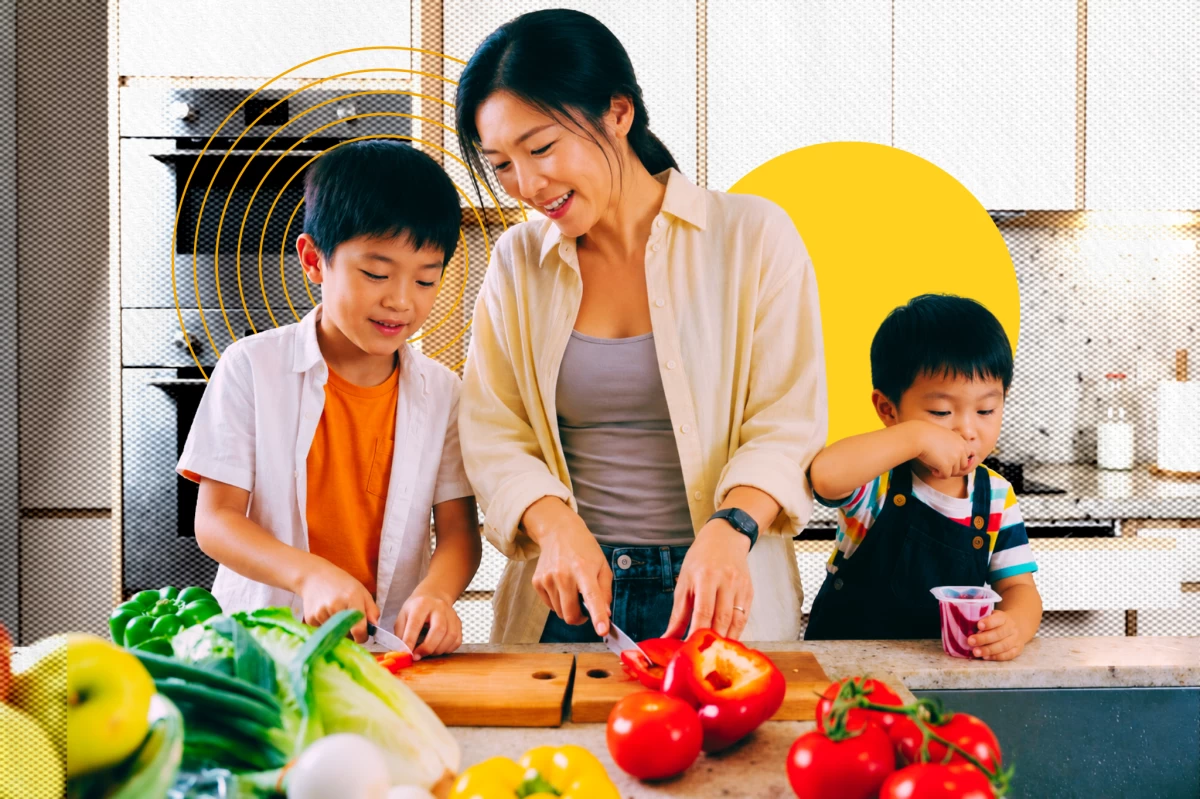
(Artwork: Nancy Marie Andam)
As the country observes Nutrition Month this July, many parents are taking a closer look at how everyday eating habits can affect their children's health. Most parents want the same thing: for their children to eat well and grow up healthy. Yet even with the best intentions, some feeding habits may be making healthy eating more difficult than they realize.
As parents to three children, Harvie De Baron, founder of Baron Method Inc., a Philippine nutritional coaching and food education company, and Eizza De Baron, the company's general manager, believe that raising healthy eaters isn't about perfection. It's about creating an environment where good choices become easy choices.

Eizza De Baron and Harvie De Baron
1. Making healthy food harder to reach than junk food.
One of the biggest mistakes, according to the couple, happens before mealtime even begins.
"Making eating healthy an inconvenience and making junk and fast food more readily available," says Eizza.
Instead of relying on willpower, make healthy choices the easiest option at home. Keep fruits within reach, stock nutritious snacks, and make unhealthy treats less convenient to grab.
"I always say do not make unhealthy food options readily available at home. This way, it would be inconvenient to consume."
2. Using unhealthy food to show love.
Many family celebrations revolve around fast food, sweets, or treats. While there's nothing wrong with enjoying them occasionally, Harvie believes problems arise when highly processed food becomes associated with comfort or affection from an early age.
Harvie believes one common mistake is thinking that unhealthy food is a way of showing love, especially when highly processed food is introduced at a very young age. Try creating family traditions around preparing balanced meals together or enjoying healthier versions of favorite dishes.
3. Let children decide what they eat.
Picky eating can test any parent's patience. But constantly giving in to requests may reinforce the habit. "I have always believed that a parent should parent," says Eizza. In their household, children are expected to eat what has been prepared before enjoying requested treats.
Positive reinforcement and consistent routines, she says, work better than constant negotiation.
Harvie agrees that parents should embrace their role in guiding children's eating habits, especially while they are still young.
4. Treating dessert as a reward.
Many parents promise dessert if children finish their vegetables. While Harvie says this may encourage younger children to try unfamiliar foods in the short term, the De Barons avoid using sweets as a reward.
Their family has one designated "cheat day" each week. Their children are encouraged to think about what dessert they truly want instead of eating whatever happens to be available. According to Eizza, this helps teach self-control and more mindful eating.
5. Expecting vitamins to make up for a poor diet.
Supplements have their place, but they should never become a substitute for balanced nutrition. "We are big advocates of supplementation. But it cannot make up for a bad diet. It is a supplement because it should just 'supplement' your food habits." Harvie agrees, adding that parents should choose supplements carefully and avoid products loaded with sugar or unnecessary artificial ingredients.
6. Filling lunchboxes with snacks instead of balanced meals.
Lunchboxes shouldn't rely on convenience foods alone. The De Barons prepare full meals for school, including unpolished rice, a protein, vegetables, and sometimes eggs. Fruit serves as the primary snack, while cleaner alternatives, such as organic chips, are occasional secondary treats.
“A well-fed, well-nourished child has more energy, better concentration, increased immunity," says Eizza. Harvie adds that children are also more likely to eat well when parents explain why those foods are important instead of simply telling them to finish everything.
7. Forgetting that children copy your eating habits.
Parents remain their children's first role models at the table. "Monkey see, monkey do," says Harvie. Children are far more likely to embrace healthier habits when they regularly see adults eating vegetables, choosing balanced meals, and enjoying nutritious food themselves.
For families hoping to make lasting changes, the De Barons recommend starting small. Try healthier pantry swaps, recreate favorite meals using better ingredients, or gradually add more vegetables into familiar recipes instead of making dramatic changes overnight. Small, consistent changes are often easier for children to accept and more likely to become lasting habits.