






Manila Bulletin
 Philippines
National
Typhoon Inday to exit PAR soon but continues to enhance habagat — PAGASA
Philippines
National
Typhoon Inday to exit PAR soon but continues to enhance habagat — PAGASA
Philippines
National
Typhoon Inday to exit PAR soon but continues to enhance habagat — PAGASA
Typhoon Inday to exit PAR soon but continues to enhance habagat — PAGASA
By Jel Santos
Published Jul 11, 2026 09:54 am


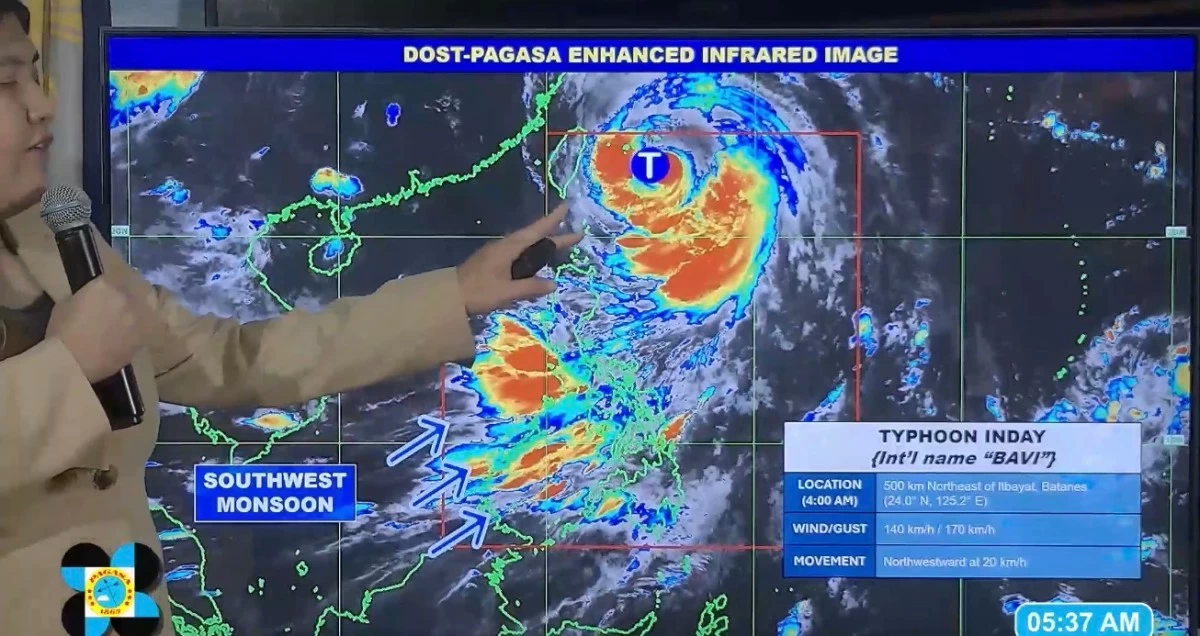
(DOST-PAGASA)
Typhoon Inday is expected to exit the Philippine Area of Responsibility (PAR) soon, but it will continue to enhance the southwest monsoon or habagat, bringing rains over large parts of the country, the Philippine Atmospheric, Geophysical and Astronomical Services Administration (PAGASA) said on Saturday, July 11.
PAGASA weather specialist Veronica Torres said Inday was last monitored at around 4 a.m. approximately 500 kilometers northeast of Itbayat, Batanes.
“May mino-monitor pa nga rin tayong bagyo na nasa loob ng ating Philippine Area of Responsibility—ito ay si Typhoon Inday. At kanina ngang 4 a.m. muli itong namataan nasa layong 500 kilometers sa may northeast ng Itbayat, Batanes. Nagtataglay ng pinaka malakas na hangin mula sa sentro na 140 kilometers per hour (kph) at bugso na aabot 170 kph (We are still monitoring a tropical cyclone inside the Philippine Area of Responsibility—Typhoon Inday. As of 4 a.m., it was spotted about 500 kilometers northeast of Itbayat, Batanes, packing maximum sustained winds of 140 kilometers per hour near the center and gusts of up to 170 kph),” she said.
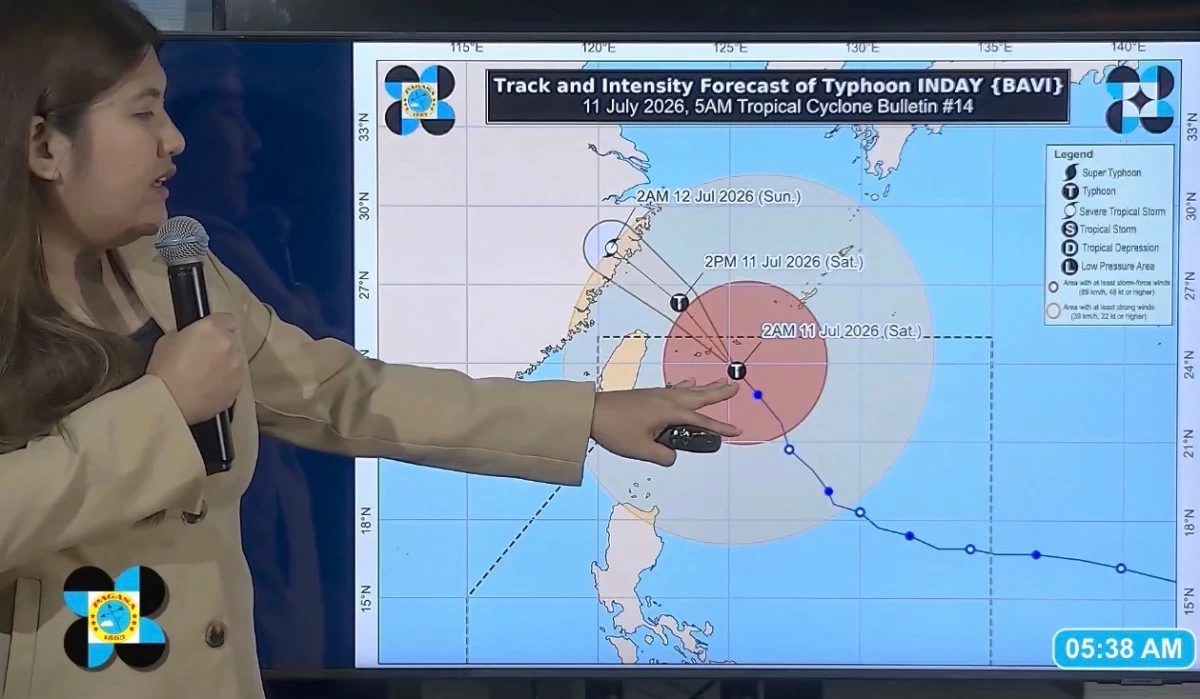
(DOST-PAGASA)
PAGASA said the typhoon is moving northwestward at 20 kilometers per hour.
According to Torres, Inday is already nearing the country’s monitoring boundary and is expected to leave the PAR.
“Nakikita nga natin na itong si Bagyong Inday ay papalapit na sa boundary ng ating PAR, at papalabas na nga ng ating area of responsibility (We are seeing that Typhoon Inday is already nearing the boundary of the Philippine Area of Responsibility and is about to exit our area of responsibility),” she said.
However, the state weather bureau stressed that the typhoon will continue to strengthen the southwest monsoon, which remains the dominant weather system affecting much of the country.
“Gayun pa man, kailangan pa rin nating mag-ingat kasi na-e-enhance nito ’yung southwest monsoon o habagat kaya nagiging maulan sa malaking bahagi ng ating bansa, lalo na nga sa may kanlurang bahagi ng Southern Luzon at sa may Visayas (Nevertheless, we still need to remain cautious because it is enhancing the southwest monsoon or habagat, resulting in rainy conditions over a large part of the country, particularly the western portions of Southern Luzon and the Visayas),” said Torres.