







Thailand eyes opportunities in Luzon Economic Corridor
Published Jul 11, 2026 01:08 pm


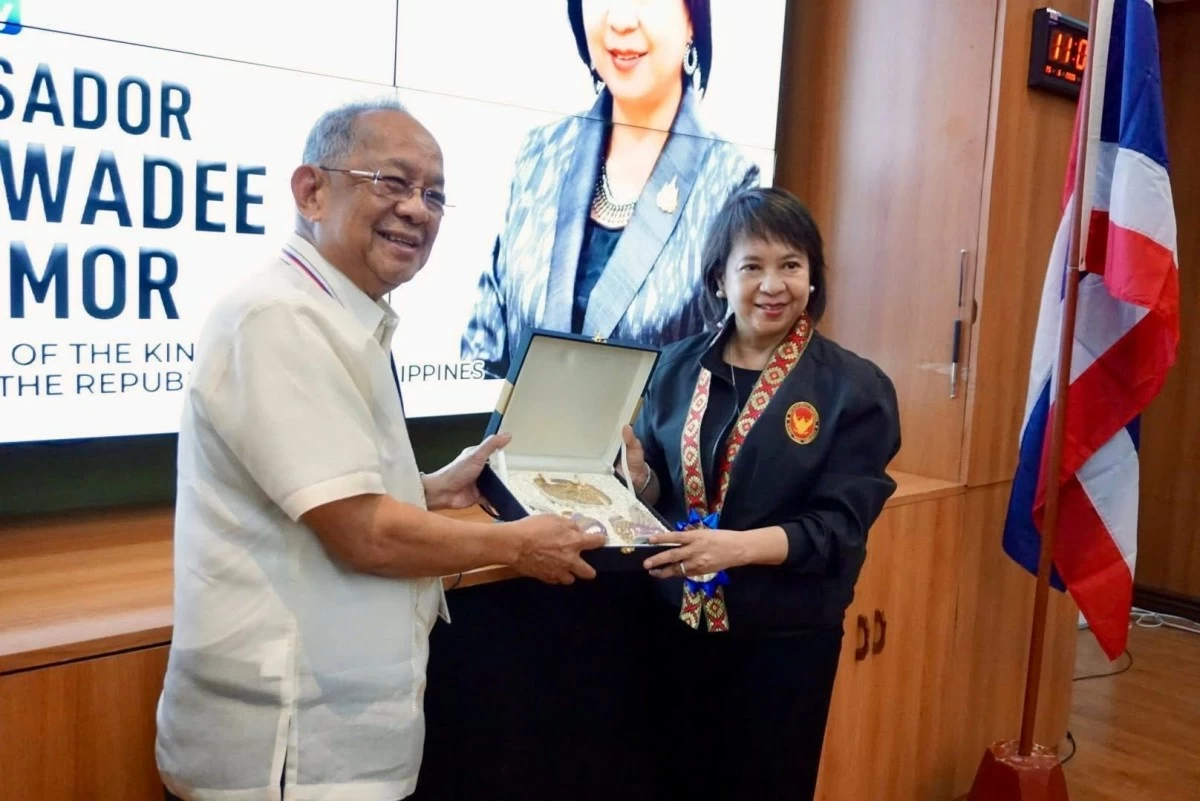
Subic Bay Metropolitan Authority Chairman and Administrator Eduardo Jose L. Aliño welcomes Thailand’s Ambassador Dr. Makawadee Sumitmor during the visit of the Embassy’s Economic Team to the Subic Bay Special Economic Zone. (Photo: Embassy of Thailand)
Thailand is looking more closely at the Philippines’ emerging investment landscape, with the Luzon Economic Corridor (LEC) drawing interest as a potential gateway for deeper economic cooperation between the two countries.
That was the focus of a recent visit by Thailand’s Ambassador Dr. Makawadee Sumitmor and the Embassy’s Economic Team to the Subic Bay Special Economic Zone, where they met with Subic Bay Metropolitan Authority (SBMA) Chairman and Administrator Eduardo Jose L. Aliño and senior officials to explore investment opportunities in one of the country’s fastest-growing economic hubs.
During the meeting, the ambassador reaffirmed the strong bilateral relationship between Thailand and the Philippines and expressed Bangkok’s commitment to further strengthening trade and investment ties.
Both sides agreed to work more closely to connect Thai and Philippine businesses, recognizing Subic Bay’s strategic location within the Luzon Economic Corridor and its growing potential as a destination for foreign investment.
Launched by the Philippine government in 2024, the Luzon Economic Corridor links Subic Bay, Clark, Manila, and Batangas as key centers for infrastructure, logistics, manufacturing, and clean energy development. It is the first economic corridor in the Indo-Pacific established under the G7’s Partnership for Global Infrastructure and Investment (PGI), with the goal of accelerating sustainable economic growth while attracting greater foreign investment.
For Thailand, Subic offers both geographic and commercial advantages. Located along the western coast of Central Luzon with direct access to the South China Sea, the freeport can be reached by sea from Thailand in approximately three to four days. Companies operating within the special economic zone are also eligible for investment incentives under the Philippine government’s investment promotion programs.
Following discussions with SBMA, the delegation visited PTT Philippines Corporation’s operations inside the Subic Bay Freeport Zone, where they were welcomed by company President and CEO Nattapong Kaewtakulpong and members of the management team.
The visit provided an opportunity to exchange views on the Philippines’ energy landscape as well as PTT’s long-term business strategy in the country.
PTT Philippines has operated in the Philippine energy sector since 1996, following the liberalization of the country’s petroleum industry. Its Subic facility serves as both a storage depot and distribution hub for imported petroleum products arriving through the Port of Subic, supporting supply chains across Central Luzon and other parts of the country.