






Manila Bulletin
 Philippines
National
Drilon says it's 'immaterial' if VP Duterte meant death threat or not
Philippines
National
Drilon says it's 'immaterial' if VP Duterte meant death threat or not
Philippines
National
Drilon says it's 'immaterial' if VP Duterte meant death threat or not
Drilon says it's 'immaterial' if VP Duterte meant death threat or not
By Dhel Nazario
Published Jul 11, 2026 04:05 pm


At A Glance
- Former Senate President Franklin Drilon said Vice President Sara Duterte's intent behind her alleged assassination threat is not the central issue in the impeachment trial.
- Drilon criticized the focus on technical objections over the authenticity of the video, saying the proceedings could have been shortened through stipulations on undisputed facts, particularly since Duterte has not denied making the statements.
- The former justice secretary said the prosecution holds an early advantage for keeping the proceedings centered on the constitutional issues raised by Duterte's own statements, while warning that the defense's argument that she was under extreme stress may raise more questions about her judgment and fitness for office.
Former Senate President Franklin Drilon said the impeachment trial of Vice President Sara Duterte should focus on whether or not her controversial death threats amount to a betrayal of public trust.
According to Drilon, the case is about constitutional accountability rather than criminal liability.
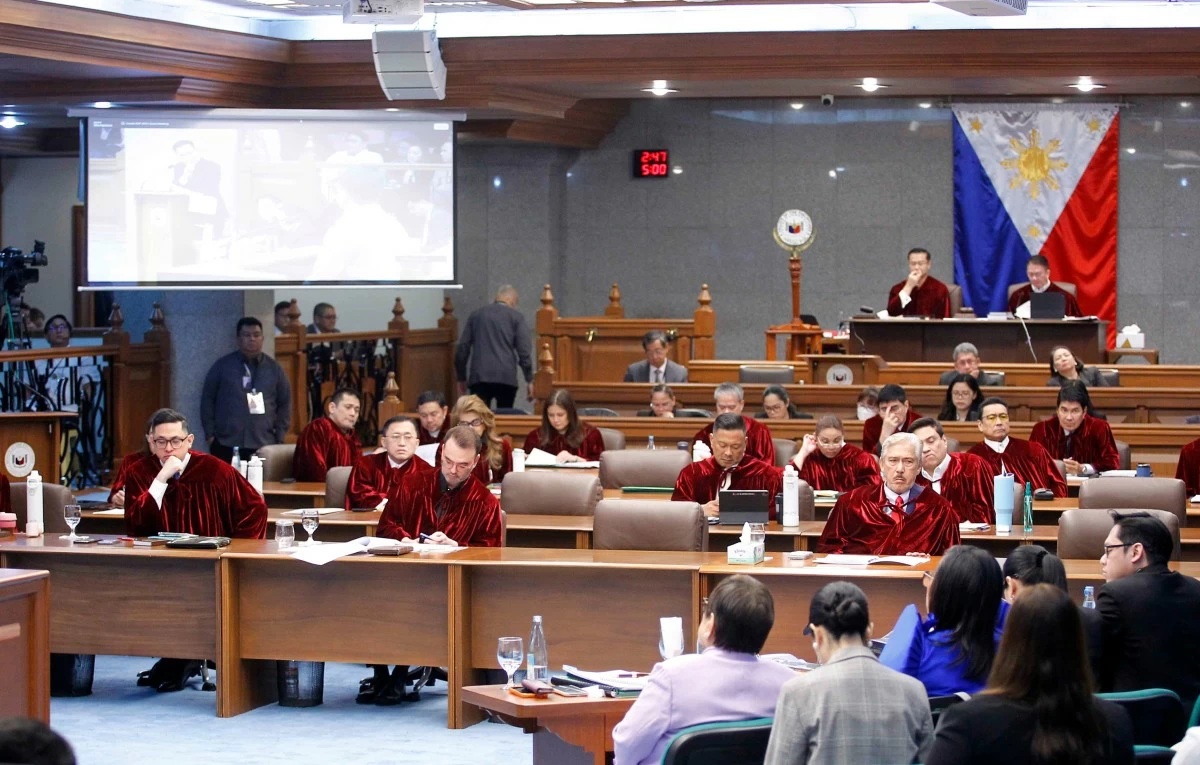
Scenes during the second day of the impeachment trial of Vice President Sara Duterte at the Senate Session Hall in Pasay City on Tuesday, July 7, 2026. (Mark Balmores)
In a statement issued after the first week of Senate impeachment trial, Drilon said it was ultimately immaterial whether or not Duterte actually intended to carry out her alleged assassination threat against President Marcos, or if her statements were merely rhetorical or hyperbolic.
"The defense may attempt to bury it behind technicalities, but procedural objections cannot overshadow the constitutional questions the impeachment court is duty-bound to resolve," Drilon said.
The former justice secretary made the remarks after the trial's first three days were largely consumed by disputes over the authentication and identification of a video showing Duterte's controversial statements.
The impeachment proceedings are set to resume Monday with Vice President Duterte's chief of staff, Zuleika Lopez, expected to testify.
Drilon said the Senate, sitting as an impeachment court, must instead determine whether Duterte's conduct met the standards expected of the country's second-highest official.
"The more fundamental issue is a constitutional one: Do we, as a nation, expect and require our highest public officials to speak and conduct themselves in this manner?"
"If such statements were in fact made, are they consistent with the dignity, restraint, and sense of responsibility that the office demands? Those are ultimately questions of constitutional accountability, not merely criminal law."
According to Drilon, impeachment differs from a criminal prosecution because the Constitution recognizes "betrayal of public trust" as a separate ground for removing an official from office.
Speaking in a separate interview over DWIZ, Drilon said the lengthy presentation of the National Bureau of Investigation witness and the defense's repeated objections could have been avoided had both parties first agreed on undisputed facts, particularly the authenticity of the video.
He noted that Duterte has never denied making the statements shown in the recording.
"Ang dapat, magkaroon ng stipulation of facts. Iyon ba ay in dispute o hindi? Para ang pag-uusapan na lang ay kung ito ay impeachable offense. Ang nangyari ay humaba (There should be a stipulation of facts. Was that disputed or not? So that the discussion will be if this is an impeachable offense. What happened was this dragged on)," he said.
Drilon stressed that the impeachment court is not trying Duterte for the crime of grave threats but is instead determining whether her actions constitute an impeachable offense.
"Hindi ito trial kung guilty siya ng grave threats o hindi. Ang trial ay kung yung bang behavior ay karapat-dapat sa isang bise president. Is that betrayal of public trust kung sinabi mong papatayin kita (This is not a trial if she's guilty of grabe threats or not. The trial is if her behavior is becoming of a vice president. Is that betrayal of public trust if you said that you'll kill someone)," he explained.
"Whether it is a grave threat or a threat, it does not matter. Sa akin po, ang importante ay kung ito po ay act na sapat upang siya ay ma-declare na guilty. Hindi criminal offense ang pinag-uusapan dito kung hindi betrayal of public trust ((For me, what's important is if this act is enough to declare her guilty. We're not talking about criminal offense here but betrayal of public trust)," he added.
Video authenticity
Drilon also questioned why the defense continued to dispute the authenticity of the video despite having relied on the same recording during the presentation of Lopez.
He further said the defense may have hurt its own case by arguing that Duterte was under extreme stress when she made the remarks, saying such an explanation could raise more concerns about her judgment and fitness for office.
For now, Drilon said the prosecution appears to have the upper hand, not because it has already proven its case, but because it has succeeded in keeping the proceedings centered on Duterte's own statements—the subject of one of the articles of impeachment.
"The trial is, of course, still in its early stages, and much evidence remains to be presented. But after three days, the prosecution would seem to hold a modest advantage, both in terms of keeping the legal issues centered on the constitutional inquiry and, perhaps just as importantly in a proceeding of this nature, in shaping the broader public narrative surrounding the case," he said.