






Manila Bulletin
 Business
Trade & Industry
PetroGreen taps RCBC for ₱636 million to build battery energy facility
Business
Trade & Industry
PetroGreen taps RCBC for ₱636 million to build battery energy facility
Business
Trade & Industry
PetroGreen taps RCBC for ₱636 million to build battery energy facility
PetroGreen taps RCBC for ₱636 million to build battery energy facility
Published Jul 10, 2026 03:10 pm


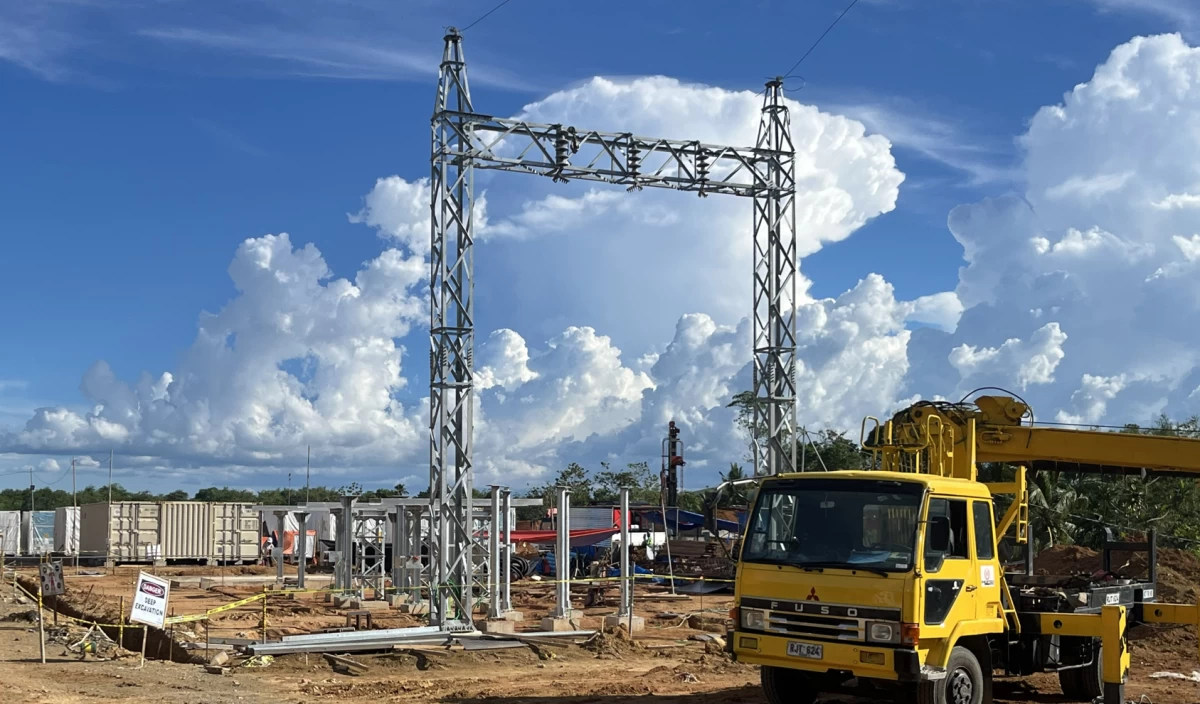
The 20MW/40MWh Panitan BESS construction now in full swing; showcases the first deployment in the
Philippines of the Huawei Luna2000-5015-2S battery, helping set a benchmark for future battery energy storage installations in the country.
Yuchengco-led PetroGreen Energy Corp. (PGEC) has secured a ₱635.90-million loan from sister company Rizal Commercial Banking Corp. (RCBC) to fund construction of a battery storage facility in the central Philippines.
In a statement on Friday, July 10, PGEC said the partial funding agreement will bankroll the development of a 20-megawatt, 40-megawatt-hour battery energy storage system (BESS) in Panitan, Capiz.
The project is the first deployment of Huawei Technologies Co.’s Luna2000-5015-2S battery infrastructure in the Philippines, which the developers expect will establish a technical framework for future storage systems nationwide.
Development of the infrastructure comes as grid operators face chronic capacity bottlenecks and distribution failures. The Visayas grid, which services the central islands including Capiz, has been repeatedly placed under “red” and “yellow” alerts over the past year due to generation deficits and unscheduled plant outages.
The project is being developed under PetroGreen’s subsidiary, EcoSolar Energy Corp., to stabilize transmission bottlenecks within the volatile Panay sub-grid.
“EcoSolar’s Panitan BESS project is being developed to help strengthen the stability and reliability of the Panay sub-grid,” Maria Victoria M. Olivar, PetroGreen senior vice president for business development and commercial operations, said.
On-site construction is on track for physical completion by August, with technical testing and grid-commissioning protocols scheduled to commence in September. The storage facility marks PetroGreen’s initial operational expansion into commercial energy storage technology.
The transaction marks the fourth energy project financed by RCBC and arranged by its investment banking unit, RCBC Capital Corp., for the energy developer within the last three years. Both the bank and the utility company operate under the corporate umbrella of the Yuchengco Group, reflecting deepened intra-group capital deployment to capture the local market's infrastructure transition.
Commercial lenders in the Philippines face mounting regulatory and investor pressure to pivot away from coal and fossil-fuel financing. The corporate sector has framed battery deployment as a necessary counterweight to the volatility inherent in wind and solar assets, which can cause grid frequencies to fluctuate violently without adequate buffer capacity.
“Through this financing, RCBC recognizes its role in supporting projects that mitigate rolling blackouts, address the intermittent nature of renewable energy, and reduce the country’s reliance on fossil fuels,” Elizabeth Coronel, head of RCBC’s institutional banking group, said.
The lender aims to expand credit exposure to industrial upgrades that provide local consumer markets and industrial centers with more predictable, cheaper, and climate-aligned utility supplies. (Gabriell Christel Galang)