

ADVERTISEMENT

Impeach court spox on Padilla's post: Senator-judges are bound by sub judice rule

Published Jul 10, 2026 05:23 pm

At A Glance

  • Senate Impeachment Court spokesperson Atty. Regie Tongol said senator-judges are covered by the court's sub judice rule, which prohibits them and other parties from publicly discussing the merits of the impeachment case to preserve the tribunal's impartiality.
  • He, however, declined to say whether Senator-Judge Robin Padilla violated the rule through his Facebook post defending his questions on the authenticity of video evidence.
  • Senator Padilla questioned the chain of custody of video evidence against Vice President Sara Duterte during the trial and later defended his line of questioning on Facebook amid criticism.
Senator-judges are bound by the Senate impeachment court's sub judice rule and are expected to avoid public statements on the merits of the case to preserve the fairness and impartiality of the proceedings.
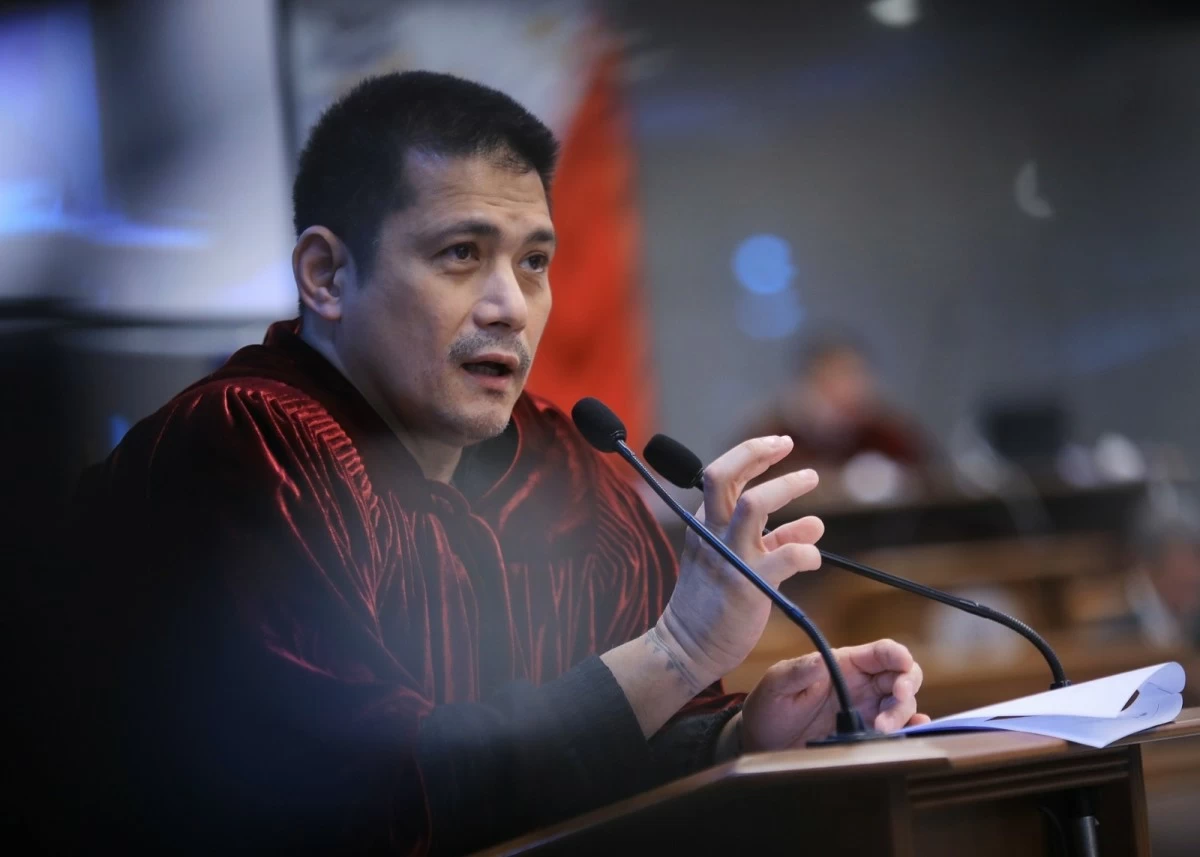
Senator-judge Robin Padilla (Senate PRIB photo)
Senate Impeachment Court spokesperson Atty. Regie Tongol made the clarification on Friday, June 10, after Senator-judge Robin Padilla defended on Facebook his questions during the impeachment trial of Vice President Sara Duterte regarding the authenticity of video evidence presented by the prosecution.
Asked whether Padilla's social media post discussing issues surrounding the video evidence could fall under the sub judice rule, Tongol pointed to Rule 18 of the Senate impeachment rules.
"When you read Rule 18 of the Senate Impeachment Rules, it clearly states that senator-judges, House prosecutors, defense counsels, and private counsels are not allowed to speak about the merits of the case," Tongol said.
However, he stopped short of saying Padilla had violated the rule.
"I am not saying Senator Judge Robin committed a violation. I'm not a senator to make that determination," Tongol said, adding that if concerns are formally raised, fellow senator-judges or the presiding officer could decide whether a reminder is warranted.
He said he does not expect the presiding officer to cite a senator-judge in contempt over such an issue.
Pressed whether senator-judges themselves are covered by the sub judice rule, Tongol replied, "Actually, they are even more covered."
He explained that because impeachment is inherently a political process involving elected officials, the rules impose restrictions to prevent the appearance that senator-judges have already formed opinions on the case before rendering a verdict.
Tongol warned that public comments suggesting bias or prejudice could undermine confidence in the impeachment court.
"If they are seen to have any impropriety or even the semblance of bias or prejudice, the public may lose respect and confidence in the impeachment court's decision," he said, adding that the rules seek to ensure the tribunal is viewed as fair, unbiased, and impartial.
The issue arose after Padilla questioned the chain of custody of a video presented as evidence during the impeachment trial. He asked whether investigators had secured the original video file or an affidavit from the person who made the original recording.
An agent from the National Bureau of Investigation acknowledged that investigators did not obtain the original file and instead preserved a copy taken from a video publicly available online using OBS screen recording software.
Padilla stressed that obtaining the original file was necessary to establish whether the video evidence was authentic.
Following criticism of his line of questioning, Padilla defended himself in a Facebook post, saying critics were misleading the public and urging the media to question the "new graduate" involved in the case instead of someone with decades of experience in mass media.

Related Tags

Robin Padilla impeachment court Vice President Sara Duterte regie tongol
ADVERTISEMENT
.most-popular .layout-ratio{ padding-bottom: 79.13%; } @media (min-width: 768px) and (max-width: 1024px) { .widget-title { font-size: 15px !important; } }

{{ articles_filter_1561_widget.title }}

.most-popular .layout-ratio{ padding-bottom: 79.13%; } @media (min-width: 768px) and (max-width: 1024px) { .widget-title { font-size: 15px !important; } }

{{ static_articles_1562_widget.title }}

.most-popular .layout-ratio{ padding-bottom: 79.13%; } @media (min-width: 768px) and (max-width: 1024px) { .widget-title { font-size: 15px !important; } }

{{ articles_filter_1563_widget.title }}

{{ articles_filter_1564_widget.title }}

.mb-article-details { position: relative; } .mb-article-details .article-body-preview, .mb-article-details .article-body-summary{ font-size: 17px; line-height: 30px; font-family: "Libre Caslon Text", serif; color: #000; } .mb-article-details .article-body-preview iframe , .mb-article-details .article-body-summary iframe{ width: 100%; margin: auto; } .read-more-background { background: linear-gradient(180deg, color(display-p3 1.000 1.000 1.000 / 0) 13.75%, color(display-p3 1.000 1.000 1.000 / 0.8) 30.79%, color(display-p3 1.000 1.000 1.000) 72.5%); position: absolute; height: 200px; width: 100%; bottom: 0; display: flex; justify-content: center; align-items: center; padding: 0; } .read-more-background a{ color: #000; } .read-more-btn { padding: 17px 45px; font-family: Inter; font-weight: 700; font-size: 18px; line-height: 16px; text-align: center; vertical-align: middle; border: 1px solid black; background-color: white; } .hidden { display: none; }
function initializeAllSwipers() { // Get all hidden inputs with cms_article_id document.querySelectorAll('[id^="cms_article_id_"]').forEach(function (input) { const cmsArticleId = input.value; const articleSelector = '#article-' + cmsArticleId + ' .body_images'; const swiperElement = document.querySelector(articleSelector); if (swiperElement && !swiperElement.classList.contains('swiper-initialized')) { new Swiper(articleSelector, { loop: true, pagination: false, navigation: { nextEl: '#article-' + cmsArticleId + ' .swiper-button-next', prevEl: '#article-' + cmsArticleId + ' .swiper-button-prev', }, }); } }); } setTimeout(initializeAllSwipers, 3000); const intersectionObserver = new IntersectionObserver( (entries) => { entries.forEach((entry) => { if (entry.isIntersecting) { const newUrl = entry.target.getAttribute("data-url"); if (newUrl) { history.pushState(null, null, newUrl); let article = entry.target; // Extract metadata const author = article.querySelector('.author-section').textContent.replace('By', '').trim(); const section = article.querySelector('.section-info ').textContent.replace(' ', ' '); const title = article.querySelector('.article-title h1').textContent; // Parse URL for Chartbeat path format const parsedUrl = new URL(newUrl, window.location.origin); const cleanUrl = parsedUrl.host + parsedUrl.pathname; // Update Chartbeat configuration if (typeof window._sf_async_config !== 'undefined') { window._sf_async_config.path = cleanUrl; window._sf_async_config.sections = section; window._sf_async_config.authors = author; } // Track virtual page view with Chartbeat if (typeof pSUPERFLY !== 'undefined' && typeof pSUPERFLY.virtualPage === 'function') { try { pSUPERFLY.virtualPage({ path: cleanUrl, title: title, sections: section, authors: author }); } catch (error) { console.error('ping error', error); } } // Optional: Update document title if (title && title !== document.title) { document.title = title; } } } }); }, { threshold: 0.1 } ); function showArticleBody(button) { const article = button.closest("article"); const summary = article.querySelector(".article-body-summary"); const body = article.querySelector(".article-body-preview"); const readMoreSection = article.querySelector(".read-more-background"); // Hide summary and read-more section summary.style.display = "none"; readMoreSection.style.display = "none"; // Show the full article body body.classList.remove("hidden"); } document.addEventListener("DOMContentLoaded", () => { let loadCount = 0; // Track how many times articles are loaded const offset = [1, 2, 3, 4, 5, 6, 7, 8, 9, 10]; // Offset values const currentUrl = window.location.pathname.substring(1); let isLoading = false; // Prevent multiple calls if (!currentUrl) { console.log("Current URL is invalid."); return; } const sentinel = document.getElementById("load-more-sentinel"); if (!sentinel) { console.log("Sentinel element not found."); return; } function isSentinelVisible() { const rect = sentinel.getBoundingClientRect(); return ( rect.top < window.innerHeight && rect.bottom >= 0 ); } function onScroll() { if (isLoading) return; if (isSentinelVisible()) { if (loadCount >= offset.length) { console.log("Maximum load attempts reached."); window.removeEventListener("scroll", onScroll); return; } isLoading = true; const currentOffset = offset[loadCount]; window.loadMoreItems().then(() => { let article = document.querySelector('#widget_1690 > div:nth-last-of-type(2) article'); intersectionObserver.observe(article) loadCount++; }).catch(error => { console.error("Error loading more items:", error); }).finally(() => { isLoading = false; }); } } window.addEventListener("scroll", onScroll); });

Sign up by email to receive news.