







PH Eagle rescued in Bukidnon; PEF seeks probe
Published Jul 9, 2026 05:40 pm


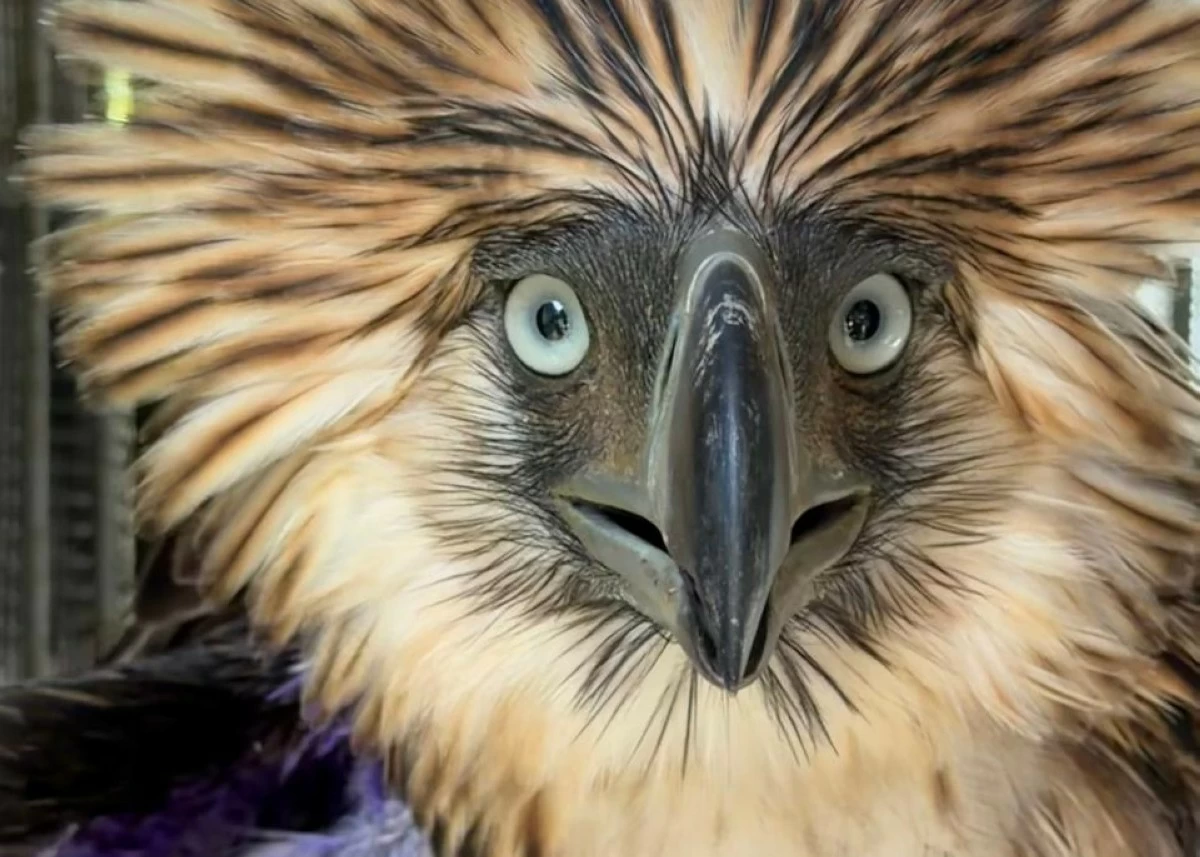
PHILIPPINE Eagle ‘Sawaga-Dalwangan’ (PEF)
DAVAO CITY – The Philippine Eagle Foundation (PEF) is calling for a multi-agency investigation of the rescue of an injured Philippine Eagle in the hinterlands of Malaybalay City in Bukidnon last week.
The PEF urged authorities to intensify the campaign against the proliferation of gas-powered “jolen” guns and different types of pellet guns in eagle territories.
Dr. Jayson Ibañez, PEF director of operations, said that they are requesting the Department of Environment and Natural Resources (DENR), Philippine National Police (PNP), National Bureau of Investigation (NBI), indigenous people’s leaders, barangay government of Dalwangan, and the local government Malaybalay to conduct a thorough investigation into the circumstances surrounding the capture of the Philippine Eagle named “Sawaga-Dalwangan.”
Ibañez urged concerned government agencies to establish the facts, identify any violations of wildlife protection laws, and recommend appropriate legal actions.
In a report from the PEF, residents surrendered Sawaga-Dalwangan to the DENR in Malaybalay City on July 3.
The PEF said they received a notification the same day, prompting them to dispatch PEF veterinarian Danielle Pasion, senior animal keeper Dominic Tadena, senior biologist Rowell Taraya, and community development officer Roxette Arellano.
Upon initial checkup, the eagle’s wing was heavily soiled and severely infested with maggots, showing the urgent need for rescue and veterinary treatment, according to PEF.
Ibañez believes that the raptor may have been on the ground for a long time before it was turned over to the DENR.
“We received reports that it was said to be mobbed by 30 macaque monkeys after the eagle reportedly captured one of their babies. That’s how the eagle was injured and later found along Sawaga River in Dalwangan according to the locals,” he said.
However, the seasoned PEF conservationist said that examination showed that the eagle's legs had rope burns, indicating that it may have been tied on to the ground.
“The wounds, together with her severe dehydration, soiled feathers, damaged plumage, and the advanced maggot infestation, suggested that her injuries were not recent. She had likely been unable to move normally for several days. But what caused those injuries is still unknown,” the PEF said.
It added that the eagle was later identified as female and was already very weak, dehydrated, and unable to fly. “The feathers on her wings and body were dirty, broken, and badly worn. These signs suggested that she had been on the ground for quite some time.”
Ibañez disclosed that X-ray results also showed that the rescued Philippine Eagle has two pellets inside its body.
However, the entry wounds were no longer visible, indicating that the eagle may have been shot for quite some time, he added. The rescued eagle is still being closely monitored by veterinarians while undergoing treatment and rehabilitation.
The PEF vowed to strengthen their conservation, education, and public awareness campaign in Dalwangan and neighboring indigenous communities in partnership with the Philippine National Police (PNP) through their Kontra Boga Program.
Under the Kontra Boga program, Ibañez said that it could help strengthen wildlife protection, discourage hunting activities, and promote community stewardship of the Philippine Eagle.
Oplan Kontra Boga is a flagship program of the PNP campaign dedicated to eliminating loose, unregistered, and unlicensed firearms in local communities.
Ibañez said the PEF is reiterating its appeal to the provincial government of Bukidnon to intensify its campaign to regulate the use of pellet guns or jolen guns in the province since it is a known home to 23 pairs of Philippine Eagles.
He said Dalwangan in the Mount Kitanglad Range Natural Park is among the Philippine Eagle’s ancient nesting area.
The PEF official added that the area is recognized as a historic nesting territory and is the second-oldest known breeding territory for the species, with breeding consistently documented since 1986. Today, fewer than 400 breeding pairs of the Philippine Eagle are believed to remain in the wild.