ADVERTISEMENT

Filipino educator reveals the hard truth about giving kids unregulated screen time

Published Jul 9, 2026 12:03 am  |  Updated Jul 8, 2026 05:08 pm
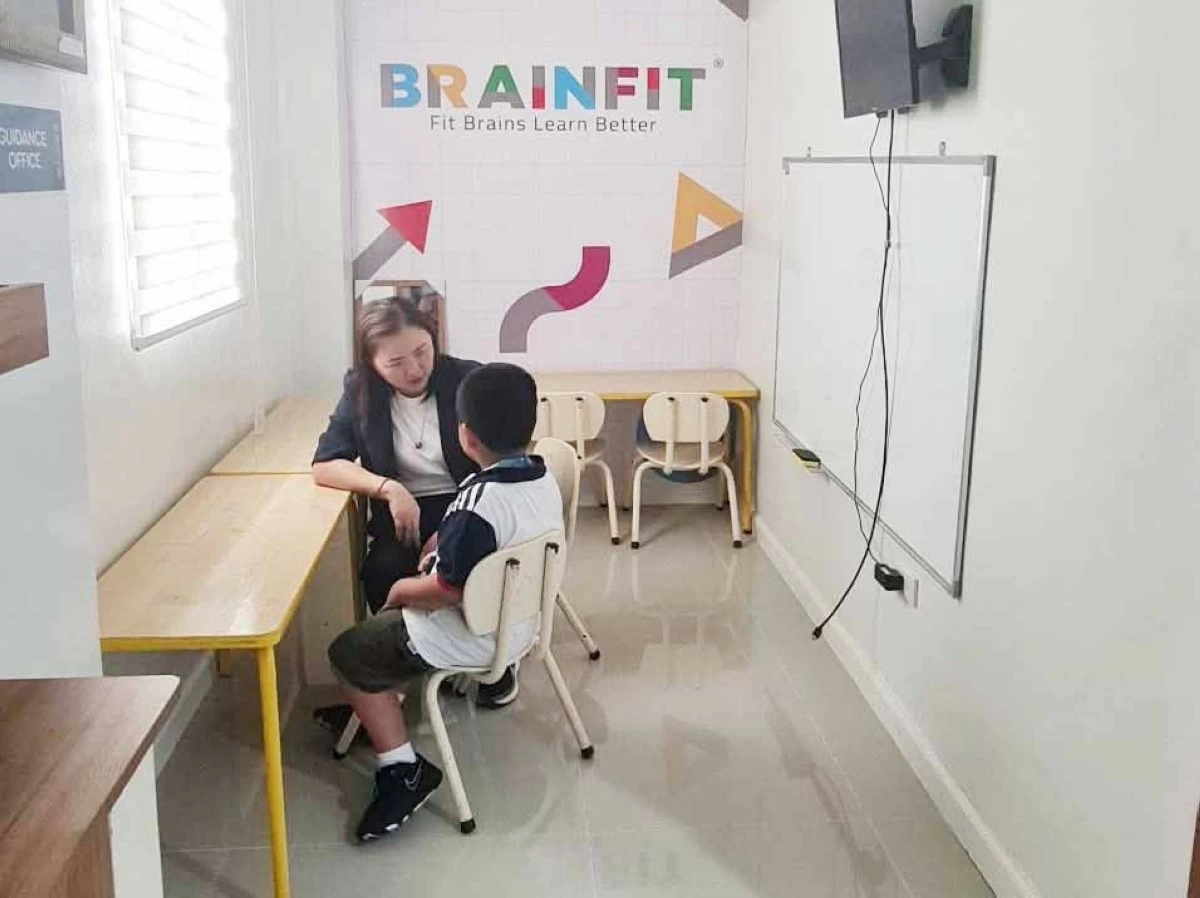
BrainFit Philippines Managing Director Sheryll Ong has a one-on-one session with one of the students of the neuroscience-backed training center.

Despite the many warnings and precautions made against giving children excessive screen time, many parents still let their kids watch unlimited amounts of TV and allow them to use gadgets for video games or social media without any supervision.
It could be said that some parents are just lazy or negligent; some might even excuse their consent for indulgence or too much trust in their kids. Whatever the reason, it is high time that parents start paying attention and take control over what their kids see and hear on TV and the world wide web.
Children practice what they see
The World Health Organization (WHO) has recommended that children less than a year old should not be exposed to TV, while those two years old and up should not get more than one hour of TV and computer game time a day.
BrainFit Philippines Managing Director Sheryll Ong is in agreement, as she has noticed how damaging excessive and unmonitored screen time is to a kid's emotional and mental growth.
“We see a massive correlation between screen time and behavior. The media, videos, and content children consume online heavily influence how they interact with their peers in real life. If they witness aggressive or exclusionary behavior modeled on a screen, they are far more likely to experiment with those power dynamics in the classroom,” she said.
BrainFit Philippines is a neuroscience-based training center for children aged nine months to 18 years that helps improve their focus, memory, and emotional regulation. They have branches in Greenhills, Alabang, Bacolod, Cebu, and Davao. Ong is also the owner of the school Bright Kids Plus in Bacolod City, which caters to preschool to elementary grade levels.
Ong shared that they enforce a strict policy regarding technology, as cell phones and video game consoles are not allowed on campus. While the rules might be different at home, Ong said that they maintain that firm boundary at school so that students can enjoy a focused, wholesome, and safe learning environment.
Ong also disapproved of social media use among students, as it opens a Pandora's box for cyberbullying and online addiction, among other things.
“It frequently serves as a breeding ground for exclusion, secrecy, and interpersonal conflicts that happen out of sight, making it incredibly difficult for parents to monitor,” warned Ong. “Cyberbullying is a massive issue today, and the emotional wounds it inflicts often run far deeper and last much longer than physical ones.”
Developmental delays
Another red flag that Ong has linked to excessive screen time and gadget use is developmental delays. “As an educator, I am deeply concerned about early gadget use. I have seen how it destroys the brain of our toddlers, with some mimicking signs and symptoms of autism spectrum disorder (ASD) and Attention-Deficit/Hyperactivity Disorder (ADHD),” she cautioned.
Ong added that screen addiction robs children of the chance to form friendships and relationships, as they get desensitized to reality. More often than not, she said that children who are addicted to TV and video games find reality “incredibly boring” and they get easily frustrated and irritable when they are offline.
“Excessive, unmonitored screen time is fundamentally changing how kids develop socially. When children spend hours glued to fast-paced, high-stimulation videos or aggressive video games, their brains get flooded with unnatural amounts of dopamine,” she said.
“But the biggest issue is that time spent looking at a screen is time stolen from real human interaction,” Ong continued. “You can only learn empathy by looking at a real face. You have to see your classmate’s eyes fill with tears, or notice their shoulders slump when their feelings are hurt. Screens wipe out those real-life feedback loops. When a child's brain doesn't practice reading those real-world reactions, they become numb to the impact of their words, making it far easier to treat real people like disposable characters in a game.”

Related Tags

FILIPINO EDUCATORS SOCIAL MEDIA FOR KIDS GAMING
ADVERTISEMENT
.most-popular .layout-ratio{ padding-bottom: 79.13%; } @media (min-width: 768px) and (max-width: 1024px) { .widget-title { font-size: 15px !important; } }

{{ articles_filter_1561_widget.title }}

.most-popular .layout-ratio{ padding-bottom: 79.13%; } @media (min-width: 768px) and (max-width: 1024px) { .widget-title { font-size: 15px !important; } }

{{ static_articles_1562_widget.title }}

.most-popular .layout-ratio{ padding-bottom: 79.13%; } @media (min-width: 768px) and (max-width: 1024px) { .widget-title { font-size: 15px !important; } }

{{ articles_filter_1563_widget.title }}

{{ articles_filter_1564_widget.title }}

.mb-article-details { position: relative; } .mb-article-details .article-body-preview, .mb-article-details .article-body-summary{ font-size: 17px; line-height: 30px; font-family: "Libre Caslon Text", serif; color: #000; } .mb-article-details .article-body-preview iframe , .mb-article-details .article-body-summary iframe{ width: 100%; margin: auto; } .read-more-background { background: linear-gradient(180deg, color(display-p3 1.000 1.000 1.000 / 0) 13.75%, color(display-p3 1.000 1.000 1.000 / 0.8) 30.79%, color(display-p3 1.000 1.000 1.000) 72.5%); position: absolute; height: 200px; width: 100%; bottom: 0; display: flex; justify-content: center; align-items: center; padding: 0; } .read-more-background a{ color: #000; } .read-more-btn { padding: 17px 45px; font-family: Inter; font-weight: 700; font-size: 18px; line-height: 16px; text-align: center; vertical-align: middle; border: 1px solid black; background-color: white; } .hidden { display: none; }
function initializeAllSwipers() { // Get all hidden inputs with cms_article_id document.querySelectorAll('[id^="cms_article_id_"]').forEach(function (input) { const cmsArticleId = input.value; const articleSelector = '#article-' + cmsArticleId + ' .body_images'; const swiperElement = document.querySelector(articleSelector); if (swiperElement && !swiperElement.classList.contains('swiper-initialized')) { new Swiper(articleSelector, { loop: true, pagination: false, navigation: { nextEl: '#article-' + cmsArticleId + ' .swiper-button-next', prevEl: '#article-' + cmsArticleId + ' .swiper-button-prev', }, }); } }); } setTimeout(initializeAllSwipers, 3000); const intersectionObserver = new IntersectionObserver( (entries) => { entries.forEach((entry) => { if (entry.isIntersecting) { const newUrl = entry.target.getAttribute("data-url"); if (newUrl) { history.pushState(null, null, newUrl); let article = entry.target; // Extract metadata const author = article.querySelector('.author-section').textContent.replace('By', '').trim(); const section = article.querySelector('.section-info ').textContent.replace(' ', ' '); const title = article.querySelector('.article-title h1').textContent; // Parse URL for Chartbeat path format const parsedUrl = new URL(newUrl, window.location.origin); const cleanUrl = parsedUrl.host + parsedUrl.pathname; // Update Chartbeat configuration if (typeof window._sf_async_config !== 'undefined') { window._sf_async_config.path = cleanUrl; window._sf_async_config.sections = section; window._sf_async_config.authors = author; } // Track virtual page view with Chartbeat if (typeof pSUPERFLY !== 'undefined' && typeof pSUPERFLY.virtualPage === 'function') { try { pSUPERFLY.virtualPage({ path: cleanUrl, title: title, sections: section, authors: author }); } catch (error) { console.error('ping error', error); } } // Optional: Update document title if (title && title !== document.title) { document.title = title; } } } }); }, { threshold: 0.1 } ); function showArticleBody(button) { const article = button.closest("article"); const summary = article.querySelector(".article-body-summary"); const body = article.querySelector(".article-body-preview"); const readMoreSection = article.querySelector(".read-more-background"); // Hide summary and read-more section summary.style.display = "none"; readMoreSection.style.display = "none"; // Show the full article body body.classList.remove("hidden"); } document.addEventListener("DOMContentLoaded", () => { let loadCount = 0; // Track how many times articles are loaded const offset = [1, 2, 3, 4, 5, 6, 7, 8, 9, 10]; // Offset values const currentUrl = window.location.pathname.substring(1); let isLoading = false; // Prevent multiple calls if (!currentUrl) { console.log("Current URL is invalid."); return; } const sentinel = document.getElementById("load-more-sentinel"); if (!sentinel) { console.log("Sentinel element not found."); return; } function isSentinelVisible() { const rect = sentinel.getBoundingClientRect(); return ( rect.top < window.innerHeight && rect.bottom >= 0 ); } function onScroll() { if (isLoading) return; if (isSentinelVisible()) { if (loadCount >= offset.length) { console.log("Maximum load attempts reached."); window.removeEventListener("scroll", onScroll); return; } isLoading = true; const currentOffset = offset[loadCount]; window.loadMoreItems().then(() => { let article = document.querySelector('#widget_1690 > div:nth-last-of-type(2) article'); intersectionObserver.observe(article) loadCount++; }).catch(error => { console.error("Error loading more items:", error); }).finally(() => { isLoading = false; }); } } window.addEventListener("scroll", onScroll); });

Sign up by email to receive news.