






Manila Bulletin
 Philippines
National
Teodoro: Deal for 5 Japanese warships completed, delivery likely in 2 to 3 years
Philippines
National
Teodoro: Deal for 5 Japanese warships completed, delivery likely in 2 to 3 years
Philippines
National
Teodoro: Deal for 5 Japanese warships completed, delivery likely in 2 to 3 years
Teodoro: Deal for 5 Japanese warships completed, delivery likely in 2 to 3 years
Published Jul 8, 2026 11:27 am
|
Updated Jul 8, 2026 03:09 pm


At A Glance
- Department of National Defense (DND) Secretary Gilberto Teodoro Jr. said the Philippines has completed negotiations to acquire five decommissioned Japanese Abukuma-class destroyer escort ships, with only administrative requirements remaining before the transfer.
- Teodoro said the vessels could be delivered within two to three years, depending on the compatibility of their existing systems with Philippine requirements and the completion of home port preparations.
- The defense chief also called China's reported submarine-launched ballistic missile test in the Pacific a "provocation" and an "implied threat," saying the Philippines should speak out in support of regional peace and stability.
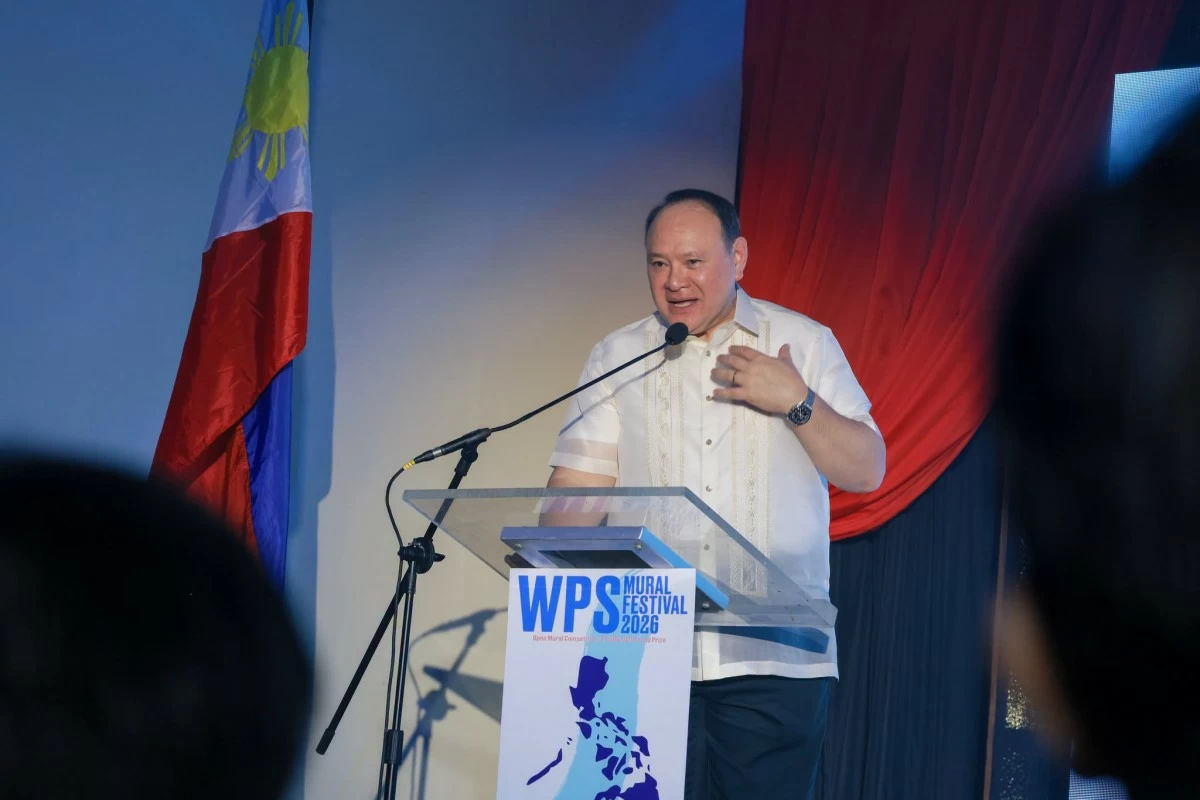
Department of National Defense (DND) Secretary Gilberto Teodoro Jr. speaks during the West Philippine Sea (WPS) Mural Festival at the National Library in Manila on July 7, 2026. (Photo: DND)
Department of National Defense (DND) Secretary Gilberto Teodoro Jr. said the Philippines has completed negotiations to acquire five decommissioned Japanese Abukuma-class destroyer escort ships, with only administrative requirements left before the transfer moves forward.
Speaking to reporters on Tuesday, July 7, during the West Philippine Sea (WPS) Mural Festival at the National Library in Manila, Teodoro said the acquisition has already been settled.
“The final details are only administrative. It's already done,” he said.
Asked how many ships the Philippines would receive, Teodoro replied: “Five. Five Abukuma.”
The defense chief said he expects to receive an update on the delivery schedule next week but estimated that the vessels could arrive within two to three years.
He said the timeline will depend on how compatible the ships' existing systems are with Philippine requirements.
“We will see whether their current condition and the systems inside match our requirements. If they do, it will be faster,” Teodoro said.
He added that the government also has to prepare facilities where the vessels will be based.
“We also have to build their home port because we have many warships arriving and we have to determine where they will berth,” he noted.
Teodoro described the transfer as "a sign of goodwill" from Japan and said Manila continues to pursue other defense projects with Tokyo.
“We have many other undertakings with the Japanese government, such as radar and other projects,” he bared.
Manila continues to deepen defense cooperation with Tokyo amid growing security concerns in the region. Japan has become one of the country’s key defense partners through equipment transfers, capacity-building programs, and expanding military cooperation.
The defense secretary made the remarks after attending the awarding ceremony for the West Philippine Sea Mural Festival, one of the activities marking the 10th anniversary of the 2016 Arbitral Award that invalidated China's sweeping claims in the South China Sea.
China's missile test condemned
During the same interview, Teodoro also criticized China's reported submarine-launched ballistic missile test in the Pacific, saying it was an unnecessary show of force.
“That is not a threat. It is a provocation. There is no reason for them to conduct an exercise in that area because they are not a South Pacific country,” he said.
He said the launch reflected “a demonstration of force that is unnecessary,” especially in the South Pacific where China has been expanding its influence.
“It shows forward positioning and capability. It is an implied threat. It is a provocation. Nothing else,” he added.
China's People's Liberation Army (PLA)-Navy announced that one of its nuclear submarines launched a strategic missile carrying a training dummy warhead at 12:01 p.m. on Monday, July 6. It said the missile landed accurately in a designated area of the Pacific Ocean.
The Chinese military described the activity as part of its annual training program, stating that relevant countries had been notified in advance and insisting that the test complied with international law and international practice. It also said the launch “is not directed against any specific country or target.”
Citing officials, Chinese Communist Party (CCP)-controlled propaganda outlet Global Times said the missile used in the launch was likely the JuLang (JL) submarine-launched strategic missile.
It said the missile was first displayed during China's military parade in Beijing last year and “likely exceeds 8,000 kilometers,” making it an intercontinental ballistic missile (ICBM) allegedly capable of striking targets far beyond the Asia-Pacific region.
China conducted its first publicly acknowledged ICBM test into the Pacific Ocean in September 2024. Beijing then said the missile carried a dummy warhead and was launched as part of a routine training exercise.
Teodoro said the missile test did not occur within Philippine waters or the country's exclusive economic zone. However, he said Manila should still express concern because regional peace and stability are at stake.
“We can certainly raise our concerns for regional peace and stability because we are a Pacific country. We cannot remain silent,” he said.